
When No Gender Fits: Washington Post Article
Posted: September 24, 2014 Filed under: coming out | Tags: androgyny, article, coming out, gender, gender identity, genderqueer, lgbt, lgbtqia, media, non-binary, queer, trans, transgender 17 CommentsAbout five months ago, I did a phone interview with Monica Hesse of the Washington Post, as a potential candidate for an upcoming article about non-binary genders. She was planning on spending a few days with the person / people she selected; it wasn’t just a matter of chatting with her over coffee. It sounded really intensive and potentially uncomfortable at times. I thought the interview went well, and I talked to my partner about the possibility of her hanging around with us for a while. My partner was game. I was game.
I got back to her with a few reservations: When might this be, exactly? (I really love being able to plan ahead.) And, would you be coming to my work?!! (I am not out at work as non-binary, and I could not fathom her being there with me, at all.) She assured me that it was not a necessary part of her article, and it’d totally depend on who she ended up going with and what everyone was comfortable with. She seemed well versed in trans issues and understood the need for partial anonymity or a potentially incomplete story.
She had a lot more phone interviews to get through, and as we messaged back and forth, it became clear her interest in me was waning. I was pretty bummed. It sounded like something I was ready to challenge myself with! Of course, the disappointment faded with time. I’ve been looking forward to catching the finished article. Here it is!!!
When No Gender Fits: A Quest to Be Seen as Just a Person
I think this article is really well done. It covers important ground: pronouns, the internal isolation such an identity can bring (when society has no starting point for understanding), family and friend relationships, coming out issues. There is nothing sensational or hyped up about it – the reporter seems well informed and sensitive.
A major thing struck me. This article is about a very young person. Kelsey is 18 years old. They are at a completely different life stage than I am at. The article follows them over the entire summer. It appears that the reporter spent many many days with Kelsey, over a matter of 4 months or so. We get a glimpse into what’s going on, as they have concerns about clothing. As they have difficult conversations with their mom. As they go to a therapy appointment to discuss the possibilities of going on a low dose of testosterone. As they talk about teenaged things with their teenaged friends. As they meet someone they found through OKCupid, for the first time in person. As they pack up and plan for life at college.
“They will go to college. They will study engineering. They will get a job. They will find a partner and make a home. They will begin with finding a T-shirt.” This quote sums up the tone of the article.
Had I been the subject, it would have been nothing like this at all. I’ve been to college (glad that’s over with!!!). I have a job. I have a partner. We have made a home. I have a T-shirt. In fact, I have many T-shirts. Haha.
This story is no doubt important. However (and I’m definitely biased here, bordering on ageist maybe) I think it’s really really necessary that there are representations of older, established non-binary people. It’s not just a young people’s thing. (Not to imply that young people will be growing out if it – they won’t be!) I just mean that it’s not just something someone is focusing on at the time when they are naturally growing into their identities, just at the beginning of starting new chapters of their lives. There is, relatively speaking, a lot of representations (if even just online only) of young people, starting to question and figure these things out.
Gender identity issues are multi-generational. They are lifelong, and they come with different sets of challenges at different stages in life. I hope more media outlets will start jumping on the bandwagon (in respectful ways!) and more articles will pop up, with more frequency, soon. And that those articles will focus on other identities within non-binary genders, and different age brackets, different ethnic backgrounds, different socioeconomic backgrounds, etc.
And if I’m not seeing it, I’ve toyed with the idea of writing my own article, here. Like, pretending I am a reporter, looking in. Look for that in the near future, maybe!
Words we use to describe ourselves
Posted: August 12, 2014 Filed under: coming out | Tags: androgyny, coming out, creativity, gender identity, genderqueer, identity, language, lgbtq, lgbtqia, non-binary, queer, trans, transgender 3 CommentsI recently mentioned an article called “A Gender Not Listed Here: Genderqueers, Gender Rebels, and OtherWise,” which is based on findings from a survey conducted in 2008. One of the most intriguing points to come from that (in my opinion) was all of the unique words and phrases respondents came up with to describe their gender. Some of those were: “jest-me,” “twidget,” “best of both,” “gender blur,” “cyborg,” and “genderqueer wombat fantastica.”
I also mentioned I had a list somewhere, where I had jotted down other terms. I found that list! So, to expand upon what respondents said:
- a variation of nature
- hybrid
- pangender
- ftx
- tranarchist
- and my favorite so far, “freemale.”
Also recently, Micah posted an ongoing poll which is generating a lot of great responses, as well. A few faves from that, so far:
- maverique
- limp-wristed butch
- boything
- gender-meh
- Alien Space Prince
- fae
- Royalty
- kinda like an old, beaten-in sneaker
- boydyke
- feyboi
- plastic
- epicene
This language is so important. Even if this is only how you see yourself internally, and you’d never actually use these words when you talk about yourself to others, the personal meaning behind it is rich with feelings of who we are, at our core.
As we try to sort out our identities, it is an amazing gift to have these options, all these creative bursts of self-expression, on hand for inspiration. Looking back roughly 12 years ago, when I was first considering the nuances of gender identitiy, I started to learn of the terms “butch,” “transgender,” “genderqueer,” and not a whole lot more. I remember someone referring to me as a “baby dyke” (because I’m so not butch), and that seemed maybe about right, but actually, no not really at all. At the time, I thought I felt like neither gender, like there was a void where there should be gender. I’ve come across dozens of ways to describe this experience lately, but at the time, I struggled with describing what that was, even if just to myself.
These days, I do not feel devoid of gender. The way I replied to Micah’s survey was, “A kaleidoscope of all genders.” That feels exactly right. It feels like a rich mixture, flowing through my being, and constantly shifting internally, but held together by a relatively stagnant vessel (my body). I mean, my body is in motion, but it’s not changing as much as many people who are trans. Nor does my gender expression shift much. It’s an internal feeling.
I wanna recommend this blog post, from a mother’s perspective. She showed her son Micah’s question about how you describe your gender and they talked about some of people’s responses. And it really seemed to open something up for him. This is the kind of stuff we need!
Got descriptive words to add? Join the conversation!
Gender identity related “to-do list”
Posted: August 7, 2014 Filed under: coming out | Tags: coming out, gender identity, genderqueer, lgbtq, lgbtqia, marriage, non-binary, queer, relationships, same-sex marriage, testosterone, trans, transgender 5 CommentsAbout a month ago, I switched my Androgel dosage slightly. From one pump of 1% daily to one pump of 1.62% daily. I didn’t do this because I’m looking for more masculinizing changes. (I’m not looking for this, still.) I did it for these reasons:
- I started on 1.62% initially, so I still had extra bottles of it. I hate wasting things.
- I have been told by pharmacists, twice, that 1% is going to be discontinued, and I should get my doctor to switch my prescription to 1.62%. I’ve even been given coupon incentives to switch to 1.62%. I think that the pharmacists are lying to me, and I will continue to ask for 1% until I absolutely cannot get it any longer. It really freaked me out though, so I want to “test out” whether I’d be alright on 1.62% in case I abruptly need to switch in the future.
- I’ve been feeling low, emotionally, and somewhat anxious. I was hoping a slight increase might help jump-start me out of this funk. (This has not happened, unfortunately. I fully expect to be back to my normal self once summer is over though.)
- My biggest reservation in increasing to this dosage, was my voice dropping. That seemed like the one change that was on the precipice to shift, and I was really resistant to that for a very long time. (Over a year.) I continually brought it up in therapy. (Her responses: “Why? Because you depend on your voice for x, y, and z?” “Why? Because you need your vocal range to stay exactly the same?” “Why? Because your singing range is of utmost importance?” Etc. Haha.) For whatever reason, I’ve been letting go of that. It’s no longer a worry. And I’m fairly sure my “voice” is largely the same still, while my vocal range has indeed shifted, if that makes sense.
Another big change to highlight in my gender identity journey:
I finally came out to all of my extended family, on both my mom and dad’s side of the family. I did this through emails. (I’ve talked with my nuclear family in person.) I largely did this because in some cases, I hadn’t shared anything personal about myself in a very long time, if ever (the fact that I’m in a relationship, the fact that we got married, etc.) So it seemed like in sharing long-overdue news, I might as well throw in this other important-to-me stuff. In other cases, I was inviting relatives to our having-gotten-married party (happening in 2 days!), and I needed them to know these things about me in advance.
Almost everyone at the party will be referring to me using male pronouns (my friends have been consistently doing this for years now which feels awesome), and I wanted those who didn’t know, to at least know. I shared that I don’t feel either male nor female. I shared that I’ve been on a low-dose of testosterone, and what that’s doing for me specifically. I shared that my partner and I don’t use the terms “lesbians,” “wife,” etc. to refer to ourselves. I shared that I prefer male pronouns, and I may legally change my name in the near future. I welcomed any questions.
The most common response I got was: no response. Which is OK. A few people replied in affirming ways, acknowledged what I’d told them, and that felt so awesome. No one had any questions. No one disparaged me or said anything inflammatory or negative. None of the responses (or non-responses) surprised me. None of this process changed the way I relate to my family. In some ways, I’d like to change the way I relate to my family. I would like to be closer with them. But I’m not going to put all the pressure on the coming out process as a way to get me there… If I did, everything would fall flat.
Next up on my gender-identity related to-do list: come out at work. YIKES!
Also, just a note: I’ll be on a “true vacation” next week – one devoid of using the computer!!! I’m psyched about this (and kinda really need it), but I will surely miss keeping up on blogs (it’s become a major part of my daily routine.) I have a post scheduled, but other than that, I won’t be around for a while…
“A Gender Not Listed Here”
Posted: July 30, 2014 Filed under: Uncategorized | Tags: androgyny, coming out, gender identity, genderqueer, lgbtq, lgbtqia, non-binary, Philadelphia Trans-Health Conference, queer, statistics, survey, trans, transgender 7 CommentsI attended the Philadelphia Trans-Health Conference back in mid-June and wrote a summary of the workshops I made it to, but I left out the details of one workshop because I felt it warranted a post all to itself. I stumbled into “A Gender Not Listed here” late Saturday afternoon, feeling a little bit drained, but excited about the topic, which was going to be a summary and discussion of an article that was published in April, 2012. The information was based on findings of a study completed by the National Gay and Lesbian Task Force and the National Center for Transgender Equality in 2008. It surveyed 6,450 T-GNC-GQ (transgender, gender non-conforming, genderqueer) individuals from all 50 states, the District of Columbia, Puerto Rico, Guam, and the U.S. Virgin Islands. It is by far the largest sample size of this population to date.
(The presenters commented that they got a lot of flak from peers ahead of time – their colleagues thought it was foolish to put forth a 70 question survey, claiming people would not fill it out in its entirety. To then see the number of completed surveys that came back is really a testament to how much this community craves to be heard, to share their thoughts, opinions, and identities.)
So, to reiterate, the survey was for anyone who identifies as transgender / gender non-conforming. Question #3 of the survey asked, “What is your primary gender identity today? 1.Male/man, 2.Female/woman, 3.Part time as one gender, part time as another, 4.A gender not listed here, please specify _________” This workshop honed in on the 13.3% of people who answered question #3 of the survey with option #4. Most of the data was about how this statistically relates to other factors such as age, ethnicity, education, region, household income, and discriminatory factors (employment, health and health care, violence, etc.)
It was totally eye opening! I had no idea this data has been out there, for a couple of years now. Even just the knowledge that about 13% of people who identify as transgender also identify as neither male nor female (or living part time as such) is mind-blowing. Not mind-blowing as in it’s surprisingly lower or surprisingly higher than I might have imagined (it’s not). But mind-blowing as in there actually is a statistical estimate out there, at least for the US. And why is this study not more widely known?!!
I’m not going to pick apart all the details of the statistical analyses, but I hope you might want to take a glance. Here is a summary of the report, broken down really nicely: Check out this modified version!
If you’re feeling ambitious and want to read the full 12 page report, it is here: Genderqueers, Gender Rebels, and OtherWise!
A general overview might go something like this: Those people who wrote in their own gender tend to be younger, more educated, less financially stable, and less likely to live in the midwest or south, and less likely to be white than their transgender counterparts. Also, it has been determined that:
“Despite their resilience and ability to define themselves in broader terms and to hold [different] ideas of identity in mind than conventional notions, overall Q3GNL participants face greater discrimination, risk, and violence than their transgender counterparts in most of the survey categories.”
Of course factors of privilege come into play, and it’s so convoluted to suss out what factors may lead to or predict other factors. It’s simply a large data set from which future research can build from. That’s part of the beauty of it – this information is public. So, for example, if you’re a grad student who needs a thesis topic, or you’re just really good at stats and have lots of free time on your hands, there is plenty of work still to be done and conclusions to draw from the raw data. Hopefully many will work with it in the future.
One other interesting point to highlight is word choice: Since the question made room to fill in the blank, the range of terms for self-expression ended up being huge. 39% of Q3GNL participants wrote in “genderqueer,” 9.5% wrote in “both/neither, in-between, or non-binary,” 2.2% wrote “fluid.” …
16.8% chose another term all together, and that generated a list of over 100 unique words / phrases, including “jest-me,”twidget,” “best of both,” “gender blur,” “cyborg,” and “genderqueer wombat fantastica” hahaha. I know I wrote down a list of a lot more, at the conference. The presenters did a powerpoint presentation and the slide with all these identity ideas generated a lot of discussion. As soon as I find that list, I will post whatever else it was that I wrote down.
Feels like I wanna get more creative with how I might describe myself!
Why I prefer male pronouns
Posted: June 30, 2014 Filed under: Uncategorized | Tags: androgyny, coming out, gender identity, gender neutral, genderqueer, language, lgbtq, non-binary, preferences, pronouns, queer, trans, transgender 22 CommentsI am someone who is inhabiting a world in between genders. There is a growing set of words, a subculture of sorts, and there are political agendas surrounding this experience. And in theory, I am on board with all I’ve seen (and let me clarify that what I’ve seen is almost entirely online at this time, and not reflected in the world I actually live in). But in actuality, not every part of it appeals to me personally. Which is OK – I can still support it while simultaneously getting the word out that not all non-binary people have the same needs, preferences, and agendas.
I’m going to go with a break-down of three categories: Pronouns, Bathrooms, and Legal Designations / Forms. And talk a little about the discussions I’ve seen, but also how I personally feel.
Pronouns: I prefer to be referred to with male pronouns: He/Him/His. The reason for this is: because it is my preference. It really is as simple as that – no explanation needed. It feels the most right (although no pronouns actually feel “right” for me). That’s all it comes down to – a feeling.
Many non-binary people go by They/Them/Their, along with a myriad of more obscure pronouns. Some people have assumed that I go by They/Them/Their, because I identify as non-binary. That is fine. It’s not my preference, but I’m not offended by this assumption, nor do I mind being referred to in this way. I have felt some pressure (from within myself only) to adopt the They/Them/Their/ set in order to align myself more with an idea of a non-binary identity, and to take a stand / stand-out more for what some people truly feel they need (which is to be referred to with gender neutral pronouns – it is definitely a need for some people). But, bottom line, it does not feel right for me. Male pronouns feel (more) right.
(And I imagine if I really break it down, this correlates to how I see my gender: I do not feel as if I am without gender, genderless, agender, or gender neutral. Instead, I feel as if I am an amalgam of genders, a kaleidoscope. And so it feels right that I view my identity’s make-up as pieces from all genders, rather than a rejection of anything that is gendered.)
I have seen many preferred sets of pronouns online (such as Ze/Hir/Hirs, Ey/Em/Eir/Eirs, Xe/Xem/Xyr/Xyrs and also ones based off of nouns). But in actual real life, I have come into contact with only one person, so far, with a preference for a set like this – and I immediately proceeded to mess it up when talking out loud. I have met a couple of people who prefer They/Them/Their, and that feels immediately do-able in real life, because these are words we’re all familiar with pronouncing. And… that’s kinda the difference – much of the online world is written, it’s visual. And it’s easy to backspace and try again. The real world involves much more talking out loud, at a conversational pace, and I personally am a long way from incorporating these newish words naturally into a conversation. That doesn’t mean I’m not willing to. It doesn’t mean I don’t support it. It means, in practice, I have a lot of work to do. And that work is difficult to do if I do not have people in my life who want to be referred to in this way – it’s hard to practice if I’m not actively practicing, essentially. And, since I am someone who identifies as non-binary, I might be, in theory, someone on the most sensitive, most open, end of the spectrum, in terms of the general populous. I have a lot of trouble with it, from a practical perspective, at this time.
To summarize: Incorporating these newer pronouns is do-able. I support it. For some people, it is not a preference, but a need, in order to feel comfortable. I personally do not need or prefer to be referred to by gender neutral pronouns. I have a long way to go in terms of enacting this language. Which, I believe, means the general population has a much longer way to go. It’s hard to make progress if I’m not actively using the words in regular conversation. At this time, I am not actively using the words in regular conversation. This is where I’m at with pronouns. It’s hard to gauge where the world at large is at, but I imagine progress will be very very slow. I’m just thinking pragmatically here. Ideally, I wish it were easy.
This got a lot longer than I thought it would. It’s complicated! So again I’m going to break the topics up; look forward to yet another series! Up next: part 2 – Bathrooms and part 3 – Legal Designations / Forms.
Tattoos and shock jock radio
Posted: May 25, 2014 Filed under: coming out | Tags: coming out, gender identity, genderqueer, lgbt, lgbtq, lgbtqia, non-binary, queer, radio djs, shock jock, tattoos, trans, transgender, transphobia, work 2 CommentsThis past week, I had two opportunities to come out to someone at work, and I ended up not taking either. And… I feel OK about it. I haven’t been beating myself up about the lost chance; I know more will come along. I’m not putting pressure on myself for taking the easy way out – I’ve stopped looking at these types of situations in those terms. What’s important is that these opportunities felt within my grasp, and that’s a new thing! Now that I’ve felt that, I’ll imagine opportunities will start popping up left and right. Because once it feels like that door is open, conversations that did not previously feel like opportunities, suddenly do. And, I will get there.
Both of these conversations occurred one-on-one, with the head of the kitchen (someone I don’t work with, but have a somewhat comfortable rapport with). I don’t see her on a regular basis, but when I fill in for my supervisor during the day-time hours, we have plenty of time to sit and chat.
1. She was describing a tattoo she was planning on getting. She showed me a picture on her iPhone of the tattoo she wants. We discussed tattoos at length. I told her all about my partner’s tattoos, and about how her brother is a tattoo artist. Finally, I told her I have a tattoo. She didn’t act surprised or ask to see it (she knows I scare easily, haha.) At a later time, she again brought up her plans to get a tattoo. I took that opportunity to show her mine, which is located below my right clavicle. She was nonchalant and didn’t ask what it is or what it means. And I didn’t tell her, but it felt like I could have, which is new.
What it is: It’s the trans* symbol, except it’s disassembled and rearranged (I came up with the idea long before I got the tattoo). I guess it just means that I’ve felt simultaneously connected and disconnected from identifying as transgender, for a very long time. I feel that the term is accurate in describing me, but it also feels splintered, fractured / I feel disengaged. If she had asked, I wouldn’t have said this exactly; I’m not sure what I would have told her!
2. On Wednesday, this town’s worst shock jock radio hosts Kimberly and Beck were suspended indefinitely from their radio station, after making hateful comments against the transgender community. There was such an outpouring as a result, that they were fired by Entercom Radio on Thursday morning. I have my head in such a hole, that I didn’t know anything about it. The head of the kitchen mentioned it to me around lunch-time on Thursday. She showed me the article on her iPhone. (I was super elated by this news. I have strongly disliked Kimberly and Beck for years. I looked it up, and they’ve been on the air, every morning, for 13 years!!!)
We discussed how they crossed a line, and how you just don’t say shit like that. I was so close to telling her that I know a lot of transgender people, and that I am transgender. In my head, I got hung up on the part where I tell her how I identify, specifically, I guess because it’s not that straightforward / I want to be taken seriously when I do tell people. So I just let the moment pass, but, again, the potential of it felt new and interesting. Like I could see the conversation starting to formulate, and that’s exciting.
Work is like the final frontier, in my head. If I could come out at work, it would be an incredible accomplishment. And this is how I would do it – start with one person, start with one-on-one conversations, and see what happens. Even though I didn’t get there this week, I will. And more importantly, IGNORANT SHOCK JOCK DJS TALKING SHIT GOT FIRED FOR THEIR SHIT!!! And the radio station seemed to do the right thing every step of the way. They even had two local trans* activists on air to discuss some issues. This is incredible!!!
Convincing doctors that hormones are not that complicated
Posted: May 13, 2014 Filed under: Testosterone | Tags: androgyny, coming out, doctors, gender identity, genderqueer, hormone replacement therapy, lgbt, lgbtq, medical treatment, non-binary, queer, testosterone, trans, transgender 14 CommentsI just got back from my first appointment with a new doctor at a women’s health group (unintentional!) This has been an ongoing saga, and although it’s not a perfect fit, it’s good enough, at least for now. Looking for more backstory?
Back in January, I decided I was fed up with my doctor, and that I could do better.
By the end of February, I’d found a promising candidate, only to realize she’s part of a women’s health group.
My last appointment with my doctor, at the end of March, was an absurdist performance piece.
It has been challenging to find appropriate health care where I live, but I’ve plowed ahead anyway because: 1)I know what I am trying to get, and 2)I don’t see any reason why I should not get it. This new doctor has no expertise in trans* identities, and I knew that going in. But I did find her through the local gay alliance’s resource page, so that was a start. When I told her that this is how I came to be here, she replied, “Well… yes, I am LGBT friendly, but I don’t know how I got on that list.” What does that mean???
When I told her the reason I’m here is to get more Androgel, she replied that she does not feel qualified to prescribe hormones. That was the start of the discussion, but by the end, she was giving me a prescription for exactly what I said I’ve been on for over a year already, and she was changing her tune to, “I suppose I could for the time being, but the long-term health risks are too great, and it’s not my area of expertise.”
I told her I’ve been going to the one trans* specific doctor in the area who treats adults (that I know about), and I want to switch because I do not like him. She used her laptop to confirm she knew of no local doctors, aside from the clinic that treats adolescents and young adults. She suggested I could use her as my PCP and still go to my other doctor for the hormones. I told her I was not going to do this. She then suggested she might be able to get me in at the adolescent clinic for a one-time visit, so that she can then be advised by them about my care. I told her that would be amazing. She will be following up with me on this, and I would be happy to go.
I told her how I perceive my gender identity, why I’m taking testosterone, and that it does not involve much health risk for me personally. She said, even so, she did not know enough about it. I asked her, “What if a woman wanted to take testosterone to address issues with a low sex-drive?” (Women do this.) She said that she would not use testosterone as a treatment. It’s not been proven to be effective. She continued on to say that she does have some male patients (husbands, sons, etc. of patients, who want to come here), and some have low testosterone levels, and she’s not the one to prescribe them testosterone. I found this difficult to believe.
I showed her a copy of my latest blood tests, and this is when the tables started to turn. I saw her open up. I illustrated what I knew by telling her what “normal” female and male ranges were, and where I fall within that. I told her that risks such as increased blood pressure, red-blood cell count, cholesterol, etc., are real concerns that can be monitored through blood work, but I believe I counteract those risks anyway with my lifestyle (vegetarian diet, active profession, don’t smoke, drink only moderately.)
I told her, bluntly, “It’s not that complicated.”
And, in the end, she seemed OK with it. She was asking me what diagnosis I would like her to put for insurance purposes. I told her that Gender Identity Disorder is in the DSM – “I don’t like it, but it’s there.” She responded with, “What about ‘hormone treatment for transgender patients?’ Well, you don’t identify as transgender…” I told her that I do, that “transgender” is an umbrella term, and that diagnosis works OK.
I went by this new name I’m trying out, at the doctor’s office. I figured this is a compartmentalized atmosphere, and a good place to see what it feels like. I gotta say, it didn’t feel great. I’m not sure what that’s about yet. If that means this just isn’t the name for me, or if I’d actually feel this way about any new name, because any and all would feel foreign at first. I’m sure my gut will tell me. And time. Time will tell me. I also told her I’d like to go by male pronouns. She said, “We can do our best with this. You’ll probably have to remind us, but we’ll try.” Her body language while she said this conveyed, “I don’t get it. I’m not really going to try, but feel free to try to get us to try.”
And this is where things are.
Ruling with elf wisdom
Posted: May 6, 2014 Filed under: coming out, name change | Tags: androgyny, coming out, gender identity, genderqueer, lgbt, lgbtq, media, names, non-binary, pen names, queer, trans, transgender 20 CommentsThe term, “ruling with elf wisdom” is linked to the names, “Aubrey” (f) and “Avery” (m/f). They are of English origin. In the case of Avery, the meaning is derived from the Old English words aelf, meaning elf, and raed, meaning counsel. What does this mean exactly? Elves have made appearances throughout time in different cultures’ storytelling and mythology, most notably Germanic and Norse mythology (which may be the basis for today’s understanding of elves as helpers to Santa Claus, of the North Pole.) Not to mention Tolkein’s imaginings. According to Wikia, a website for fandom,
“The elves were originally imagined as a race of minor nature and fertility gods, who are often pictured as youthful-seeming men and women of great beauty, living in forests and underground places, like caves, or in wells and springs. They have been portrayed to be long-lived or immortal and as beings of magical powers. In Norse paganism, Light elves were beautiful creatures and were considered to be ‘guardian angels.’ Light elves were minor gods of nature and fertility; they could help or hinder, humans with their knowledge of magical powers. They also often delivered an inspiration to art or music.”
In contrast,
“The Dark Elves hated the sun and it’s sunlight, because if they were touched or exposed to it they would immediately turn into stone. They use to annoy and threaten humans, to the point that nightmares were thought to be produced by the Dark Elves.These elves could also haunt animals, especially horses. They are also known as dwarfs. “
Elves are known to be playful, mischievous, and flighty, yet loyal and duty-bound. So, to rule with this wisdom can only be a good thing! To “rule with dwarf wisdom,” if there were such a thing, might be something else entirely.
__________________________________________
I have not heard any follow-ups from the Washington Post reporter in over a week, so I’m assuming she went with someone else. I’m kinda bummed – it felt like it would have been a good personal challenge. Maybe I’ll have more opportunities to talk with more people in the future… I’ll share the link to the story as soon as I come across it.
Having the chance to talk with her via phone and then to think about the potential of her coming here to hang out with me as I live my life definitely made some specific types of thoughts more pronounced, for many many days in a row. Mainly, what do I want to share with others, and what feels too vulnerable? Hypothetically, to what extent would I choose to be anonymous? These questions have been on my mind quite a bit for a while, but suddenly it felt like I might need to make some definitive choices. And even though the pressure’s off on those decisions, I’m still pressing myself about it, at least some of it. I finally decided to settle on a new name.
The name situation has been a thing I haven’t directly addressed but have thought about for roughly 10+ years (like a lot of particulars about my gender identity). I do not like to go by my legal name, or the name I used growing up. Somewhere in my mid-twenties, I skewed it slightly, and that started to stick – almost everyone knows me by this slightly masculinized version of a pretty feminine name. But ultimately, it’s not what I want. I’ve toyed with the idea (off-and-on) of going by a male name. The biggest contenders were Adam (this is my drag persona) and Konrad (just because I like it).
But, I have to admit that ultimately, it would be too hard for me to request a name like that if I’m not ever going to be appearing definitively male. I wish it were no big thing. And to many people, I imagine it wouldn’t be, and they’d easily make the switch. Just… it would be too awkward for me. I already know.
Ideally, I’ve wanted to go by a name that is right in the middle of androgyny. I mean, a lot of names can be male or female names, but usually, they’re much more commonly used for one over the other.
I talked to my partner about a potential new name about a week ago. This is a conversation we’ve had at other points in time, for sure. But it was always more whimsical – sort of like, what if?… This time it was more like, OK, I really need to pick now. I have this piece of writing I want to submit to our local LGBT literary magazine, and it’s due in 3 days, and I need a pen name!
That ended up being pretty tense; note to self – don’t try to rush these kinds of decisions. Haha. But we got through it; she helped me come to a name that I’m going to start using ASAP as a pen name. Avery. And if I still like it, I’ll start using it more and more online, and then if I’m still liking it, the big switch to real life (which I envision will involve legally changing it as well.) But all that feels pretty scary, so for now, it’s just a pen name.
“Avery” definitely seems androgynous to me – maybe skewed more to masculine, but feels like either, for sure. I looked up the origin / what it means, and that pretty much sealed the deal. A few websites confirmed, “the name literally means, ‘ruling with elf wisdom.'”
Not sure if I could find a better fit!!!

I am a known elf.
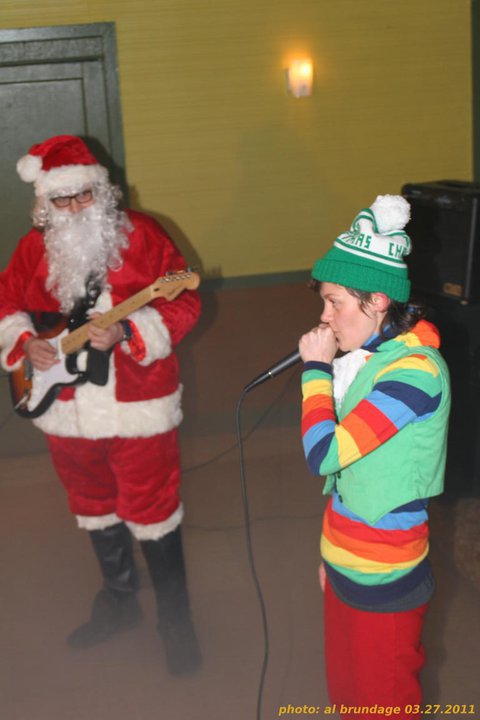
I rule all.
If you picked out your name, how did you come to it / narrow it down???

more evidence

never not an elf.
Off the record
Posted: April 24, 2014 Filed under: coming out | Tags: androgyny, coming out, gender identity, genderqueer, human interest story, interview, lgbt, lgbtq, media, non-binary, queer, reporters, trans, transgender 11 CommentsLast night, I talked “off the record” with a reporter from the Washington Post, on the phone. Completely surreal and surprisingly fulfilling. It’s ironic that just a few days ago, I wrote about a difficulty in sharing who I am with others, and then suddenly I’m talking to a big time newspaper about core beliefs and feelings, how I got to where I am, how I navigate daily life, etc.
I was at work while we talked. The phone call was scheduled ahead of time, so I just cleaned a little faster than normal so I’d have more time toward the end of my night. I kicked back at a teacher’s desk (shhhh, don’t tell) and waited for the call. I even wrote myself a pep talk on an index card so I wouldn’t psych myself out too much. It’s still in my pocket. It says, “Anything you have to say – big or small – is worthwhile and interesting. Talking to people is a huge part of her job. Let her do the work and steer things, but also give yourself space to say everything you want to say.” We ended up talking for about 35 minutes, which was starting to feel a little long. I think I was being pretty verbose (maybe even actually eloquent at times), contrary to my fears of not being able to answer clearly or not elaborating enough.
The reporter is currently talking to a lot of people who identify as non-binary. Who live in between, and how they negotiate that. She’ll be narrowing it down to one person, or a couple of people, to then go and spend time with face-to-face, get a real sense of how they go about their days. If you would like to talk to her too, you can! Let me know, and I’ll send you her email address so you can share a little about yourself first. Or, you can read more details here.
I got a good vibe from her, but I definitely have some strong reservations going on at the same time. She’s open to, and flexible with, issues of anonymity, so that’s certainly a good sign. On the other hand, I worry that even if we were to connect well and I felt understood, that wouldn’t mean the article would reflect what I think it should be saying. I’d have no control over the final product whatsoever. But, I feel like I’m at a point in my life where I could handle that. Even if I were to not feel too good about it, I could move on from there and still feel like it’s worthwhile to put myself out there and be a voice for this community. I’m getting waaaaaaay ahead of myself here though. I might not be the person they’re looking for, in the first place.
I’m just pretty proud of where I find myself these days. A year ago, for example, I wouldn’t have even comprehended doing something like this. Now I feel like it’s doable, and not nearly as nerve-racking as I’d imagined.
Thanks to Micah for telling me about this opportunity! You keep opening up doors to new possibilities!
While I was “out,” part 3 – coming back
Posted: April 21, 2014 Filed under: coming out | Tags: androgyny, coming out, gender identity, genderqueer, lgbt, lgbtq, non-binary, queer, trans, transgender 5 CommentsThis is the last part (for now) on the topic of being “out.” It was starting to get really long, which is why I broke it up into segments.
Part 1 is about how language has changed over just a short time.
Part 2 is about feeling disconnected from the LGBT community.
This is more about how I’m finding my way back. How was I involved in the LGBT community before it started feeling overwhelming? Mostly, I was connecting on personal levels with people, whether that was through a group (for example, I was in a gender identity group therapy dynamic from 2004-2006), at conferences (I went to a handful between 2004 and 2006), or just hanging out one-on-one and talking about difficult stuff. I did an AIDS walk, I volunteered for the local LGBT film festival, things like that.
In my late-teens / early-twenties, I would say I was only partly out of the closet, while being very involved in the community, because I was not specifically hiding anything, but I wasn’t vocal in the least, either. It’s easy to not really talk about who you are when you rarely talk at all to begin with. And this, specifically, is what I’ve been working on, because my ultimate goal is to feel comfortable as a social person. I don’t talk much at all, on a daily basis. I have a handful of people who I talk to a lot, (just ask my partner!) and beyond that, I don’t talk to people – not about the weather, not about myself, not about local news, etc. I am slowly, slowly, trying to change this.
So when I say I want to come out, what I mean is that I want to be comfortable talking to any and everyone, to varying degrees, about my life, about what I’m doing, and about my take on who I am. I’m a pro at hearing all about this stuff from everyone else, but I have a ways to go. I want to stop filtering. I want to be able to just casually say, “My partner and I did _____ this weekend.” And actually use her name and her pronouns. In more advanced situations, I want to include more about my gender identity. I started to come out to some family members recently, but there’s a whole lot more to do.
All along, there’s been one way I’ve always been “out,” and that’s been through my appearance. I never compromise on that; not while growing up (and I was fortunate to have parents who didn’t meddle too much), and certainly not now. I appear how I want to appear. I wear what I want to wear. And people can come to assumptions easily based on that. The assumptions are probably pretty far off from how I actually identify, but I can live with that. It’s much better than feeling uncomfortable with how I look. In retrospect, I think that the fact I’ve been so uncomfortable in my body is the reason why I’ve always given myself a lot of leeway on the things I can control: clothing, shoes, accessories, hairstyles. Essentially: gender presentation. I have rarely cared what others think, in terms of the way I look. And I’ve been fortunate to have never gotten too much flak about it (or, perhaps, I’ve been oblivious…)
Why do I want to come back to the LGBT (specifically the T) community? Some of the reasons are selfish. I started testosterone, and the community now feels more relevant to my life again. But another way to phrase that exact same notion would be, “I’ve finally found where I belong, in a positive way, and it’s within the trans* community. Now that I’ve gotten through the bulk of the personal struggles, I want to give back.” I’m not sure how, exactly, yet, but some pretty safe bets would be:
– through writing
– through connecting personally with others
– through local community involvement
-And specifically, one day, I’d like to present at conferences and/or be a gender identity youth coordinator. We’ll see…

 janitorqueer