Outdated trans programs pt. 1
Posted: September 24, 2015 Filed under: coming out | Tags: estrogen, ftm, gender, gender identity, hormone replacement therapy, lgbt, lgbtq, medical treatment, mtf, queer, television, testosterone, trans, transgender 8 CommentsMy partner and I were recently sorting through / condensing our VHS collection. We came across one that was labeled “transgender videos,” and it sparked a memory. I was in a support group in 2005-2006, and one of the facilitators put together this tape and made copies for everyone. It has 4 parts. Parts 1 and 2 are from 2002 – a program on the Discovery Channel called Changing Sexes. My partner and I watched this over the weekend.
We knew it was going to be really bad, but we could not envision how utterly atrocious it turned out to be. This was only 13 years ago, and it’s amazing how far we’ve come; it’s like a public opinion time capsule…
First off, the term “transsexual” was used, and they got it wrong. They referred to FTM trans people as “transsexual women” and MTF trans people as “transsexual men.”
Part 1 was about MTF trans people, and they focused on the stories of 3 people. One was just coming out, one had been out for about a year, living her “real life test,” and one was getting ready to have surgery. A LOT of time was devoted to her (Angela’s) journey toward surgery; they even followed her to Montreal and were in the operating room with her and her wife. Angela was 59 and had just recently come out and starting taking hormones. This last step would “complete her.” (Her words.) They pointed out how lucky she was, in that she could pass and in that her wife stayed with her. She lived in Fresno, CA, and hosted a monthly support group in which people came from upward of 100 miles away to attend.
There were a lot of sensationalistic soundbites. A couple:
“What pushes men to risk everything they have to become women?”
“Believing you were born in the wrong body may be a delusion that won’t be corrected with surgery.”
“Self-diagnosed illness.”
“Watching a parent change from male to female is bound to leave a strong mark on a child’s psyche.”
A therapist was quoted as saying, basically, that people may be convinced they are a transsexual, but once they start the theraputic process, they may come up with alternatives to having to go through a sex change.
Kenneth Zucker, from the Toronto Centre for Addiction and Mental Health, was on the program, basically saying that transsexual tendencies come from one’s upbringing, and that kids have developmental plasticity, even if there is a biological predisposition. I recently read this blog post, partially about Zucker – apparently he is still around, but his clinic is under review, and is not accepting new patients.
Part 2 started out with, “The story of four transsexual women, and their quest to live as men.”
Someone named Thomas Wise, MD, from Johns Hopkins, was quoted liberally in both sections. More than once, he made an analogy to people struggling with anorexia. Basically, would you allow them to continue to make changes to their bodies because they see themselves as too fat? No? Why should we allow people who see themselves as the other gender make changes to their bodies?
One of the stories was about someone named Dirk. He was getting testosterone through a urologist, and he was binding with a combination of ace bandages and sports bras (no mention of how dangerous this is.)
More sensational sound bites:
“What defines a man? Can women ever become one?”
“Are they real men? Imposters? Or something else?”
“She has started hormone injections, rendering him virtually unrecognizable.”
Again, the segment focused heavily on surgeries (both top and bottom), again with footage from the OR.
Twice, a study was brought up, from the Netherlands, in which scientists thought they may have pinpointed a part in the brain, the BSTC structure. In autopsied MTF people, the size was closer to that of a biological woman, and in FTM people, the opposite. Other scientists debunked the findings, saying that it was the cross-hormones that changed the brain structure. It was unclear what finding or not finding this evidence might imply for trans-people.
This program was worthwhile in showing human stories, and that’s what I remember taking away when I first watched it in 2006. Although it was invasive and sensationalistic, these were real people going through real adversity, and it felt important to me at the time. I told a friend who was also in the group that I had unearthed this video, and he said he has purposefully never watched it. I don’t blame him. I mean, it’s not something I would consider “supportive” of trans people. (That’s a huge understatement). So for it to be given out at a support group – I mean, that’s all that was available at the time – it’s what was out there.
It’s reassuring to see that public opinion is changing, but there are still plenty of people who hold on to archaic notions about “transsexuals.”
Stay tuned for part 2 – talking about an Oprah show about transgender children, and an A&E investigative reports: Transgender Revolution.
2.5 years on T without noticeable masculinizing changes
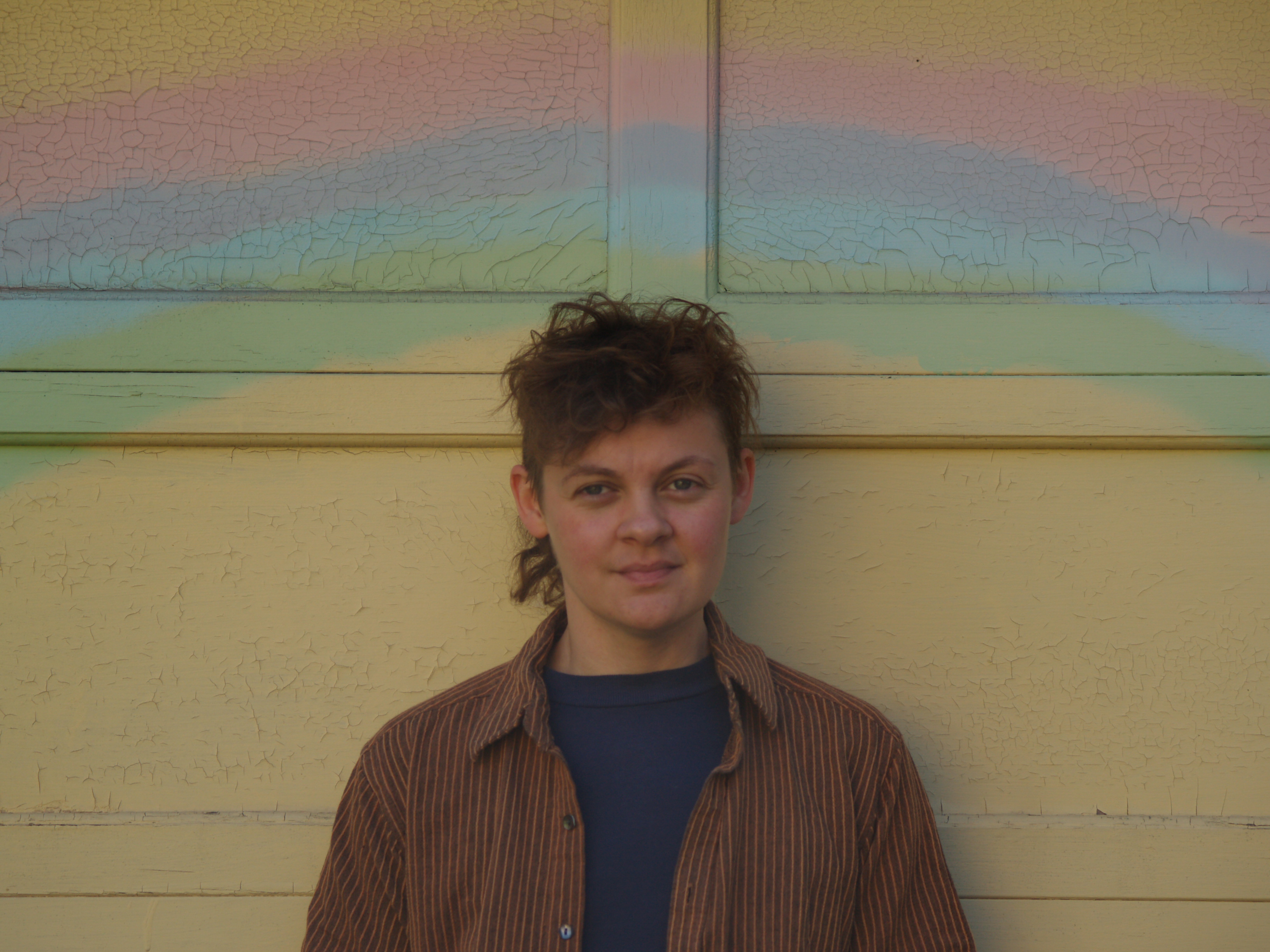
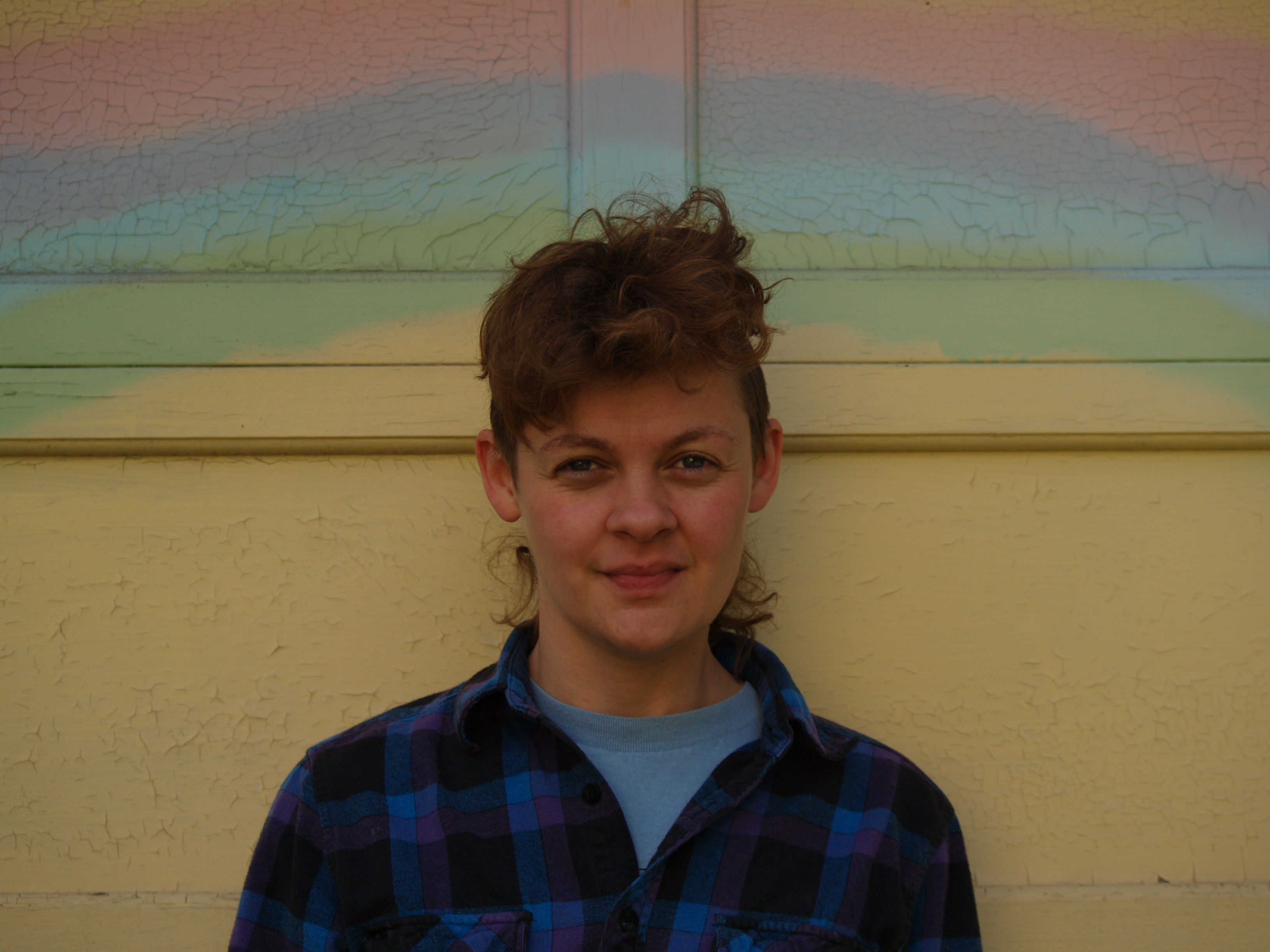
Posted: September 18, 2015 Filed under: Testosterone | Tags: Androgel, androgyny, coming out, gender, gender identity, genderqueer, hormone replacement therapy, lgbt, lgbtq, non-binary, queer, testosterone, trans, transgender 4 CommentsIt’s strange to stick to this same title, “without noticeable masculinizing changes,” because lately, I have started to aim for masculinizing changes. But it still fits because nothing of note has changed yet. About 6 weeks ago, I doubled my dose. I’d like to see my face change shape, and I’d like my voice to drop. Ultimately, I’d like for strangers to gender me as “male,” as the default, instead of “female.” At least more than half of the time. As of now it’s maybe 10% of the time. We’ll see. So far all I’ve noticed is more acne… Oh, also some beginnings of a “happy trail,” which I’ve always hoped to have!
So I’ve jumped from 1 pump of 1.62% to 2 pumps. I might even go up to 3 pumps just to see. Alternately, I might stop all together, just to see. I have my whole life to be on testosterone or not be on testosterone, and now that I’m finally starting to feel more mentally stable again, I’m just kind of really curious.
Here are some other posts from this series, to fill in more information:
2.25 years on T
1.5 years on T
1 year on T
5 months on T
As of now, I feel more sure about other transitional steps than I ever have before. I just can’t seem to get there yet. I feel sure about legally changing my name and about top surgery. And I can imagine some first steps. I just can’t wrap my head around implementing them. A part of me feels like this attitude is a hold-over from feeling so unstable for so long. Not a good time to pursue permanent changes. Just wait for more forward momentum to kick in naturally. A part of me wonders if I should just push myself to get the ball rolling, and positive feelings about it will follow. Right now, I just feel scared. And I guess I’ll sit with that. I don’t think it will last forever. I reached a tipping point with testosterone. (That one, in my mind, felt comparatively easy, I guess!) There’s no reason I won’t reach that point with other changes. I don’t want to force it.
The newest change is that my mom told extended family about my new name (super grateful to her), and people (almost everyone) were using it at a recent family gathering. This felt really validating and also alarming(?) I guess would be the word? I have to say that I’m still alarmed by my new name. It still feels like, “is that me?” I definitely still feel like I have to change it, and if I were to go by a new name, that would be it. There is no better name. But I guess ultimately I feel like, why couldn’t the name I’m used to just have worked out. (I’m super slow to warm up to change – if it’s not obvious.) This tells me that it’s not quite time to pursue legally changing my name. There will be a time – it’s just not yet.
To conclude, here are some face shots:

Thoughts and feelings just passing through
Posted: September 11, 2015 Filed under: mental health | Tags: depression, emotions, feelings, mental health, suicide, suicide prevention, therapy, thoughts 12 CommentsYesterday was World Suicide Prevention Day. I didn’t know this till today, but looking back on yesterday, unknowingly, I was thinking a lot about the idea of suicide – something I don’t think a lot about. It’s been an annual day on September 10, since 2003; this year’s theme is Preventing Suicide: Reaching Out and Saving Lives.
I’ve been thinking about this book that Kate Bornstein wrote called, Hello Cruel World: 101 Alternatives to Suicide for Teens, Freaks, and Other Outlaws. I haven’t read this book in its entirety, but the gist is that there are so many things you can do other than suicide – some of them might be extreme, some might be unhealthy, some might be even self-destructive. But if it gets you through the moment, and you’re still here, that is good enough for the the time being. I think that’s a great message. Sometimes when someone is in so much psychological pain, nothing sounds appealing. But if you just try something different, something way out there, it might be enough to even just temporarily jump-start you out of the mode you’re in.
When I was in high school, one day I heard an after-school announcement for a “yellow ribbon club.” I really wasn’t doing well, and I decided to see what it was about. It was run by school psychologists, and there were maybe 5 students who showed up. We went around the room stating why we came. I basically said I came because I was worried I might attempt suicide; I came to get help. The other students had come for other reasons – either they had been affected by the suicide of someone they knew, or they just wanted to help. After I said why I was here, one of the psychologists reiterated what I had said. I remember feeling embarrassed and selfish. I didn’t go back to any more meetings. No one ever followed up with me. I did not end up attempting suicide, but things did get worse, and I ended up in the hospital not that much later on. I partially blame the psychologists for never checking back in with me.
This is a hard post to write because suicide is such a loaded subject. I’ve never attempted suicide or had an actual plan or had serious suicidal ideations. But there’s another way to feel suicidal – just kind of vaguely feeling like you cannot go on. Like you cannot keep living your life. Like you want to just stop existing, or just sleep forever. I’ve definitely felt that. With all the rough mental health – related stuff I’ve been through lately, I’ve felt that even recently. It’s a dull, nebulous, insidious, recurring, empty heavy veil, a lens to see the world through – a hindrance for sure, because there’s not much to be able to see, through all those layers. I don’t really know how to address it, other than to hope it will pass.
I think that what I’m learning is that rather than fighting those types of thoughts and feelings or trying to distract or re-route, it is possible to just give them less emphasis, to live with them, and to just focus on doing what you want to do, despite them. Just let them cycle through your brain, acknowledge them, but don’t give them any more power than what they are – just thoughts and feelings that come and go…
Kinda easier said than done, but I am trying to adopt this practice…

 janitorqueer