
1.75 years on T without noticeable masculinizing changes
Posted: December 22, 2014 Filed under: Testosterone | Tags: androgyny, doctors, gender, gender identity, genderqueer, hormone replacement therapy, lgbt, lgbtqia, non-binary, queer, testosterone, trans, transgender 10 CommentsA couple of days ago, I hit my big 1.75 year milestone! (Haha.) I’ve been doing quarterly updates about changes on testosterone, and I’ll probably just continue at that pace.
Changes: There are none to report. Nothing new at least. I had increased my dose from 1 pump of 1% (Androgel) to 2 pumps of 1%, from roughly August through November. I did this because my blood work had come back with low levels. Er, by “low levels,” I mean back into a normal female range (I believe I was at 64 ng/dl). So after increasing and having more bloodwork done, I saw my doctor in November, and she told me my levels were at 210 ng/dl. I was surprised by this – not because it’s bad; just because it did not feel like I was up in that range at all. (A female range is roughly 14-75; a male range is between 300 and 800). I had been aiming for roughly 100 ng/dl; to find out I’d more than tripled my level felt hard to believe.
I hadn’t been experiencing a drop in my voice. Or more hair on my body. Or an increase in sex drive or appetite. To clarify, I have experienced some changes over time – just nothing new in a long time. Here are some past posts about it, if you’re interested:
One and a half years
One and a quarter years
One whole year
Eight months on T
My doctor wanted me to decrease the dosage a little bit. I strongly feel that I am going to do what I want to do and not what my doctor wants, in this regard. BUT, I’m super curious to see what the lab work will come back as, with a slight decrease. Because so far, the amount I’m taking has not appeared to correspond directly with the amount in my blood stream. Not in a sensical way, at least. So, for now, I’m using 1 pump of 1.62%, daily.
Like I said, there’s nothing new to report. So I’m going to just riff off of one thing I’ve really been enjoying. Feeling warm!!! It’s not so great in the summer, but right now I’m reveling in it big time. I’m typing right now wearing jeans and a t-shirt. This would not have been possible in winter months before taking testosterone! (Because we keep our house pretty chilly, to try to save $$$.) I can step out of the shower and not feel like I am shaking and shriveling until the point I have all my long johns and sweatshirts on. I can just kind of step out of the shower and take my time getting dressed. I can walk around with damp hair, and it’s not intolerable. My partner reports that sometimes it is too hot when we’re sleeping and I’m spooning her, in the dead of winter, even up in our uninsulated attic (which is where we sleep). Never heard that complaint before taking testosterone.
I love feeling warm when it is cold!!!
And finally, a couple of pictures of my face, to illustrate that it is possible to take testosterone for this long and still look pretty much the same (if that’s what you’re trying to going for – I am…)
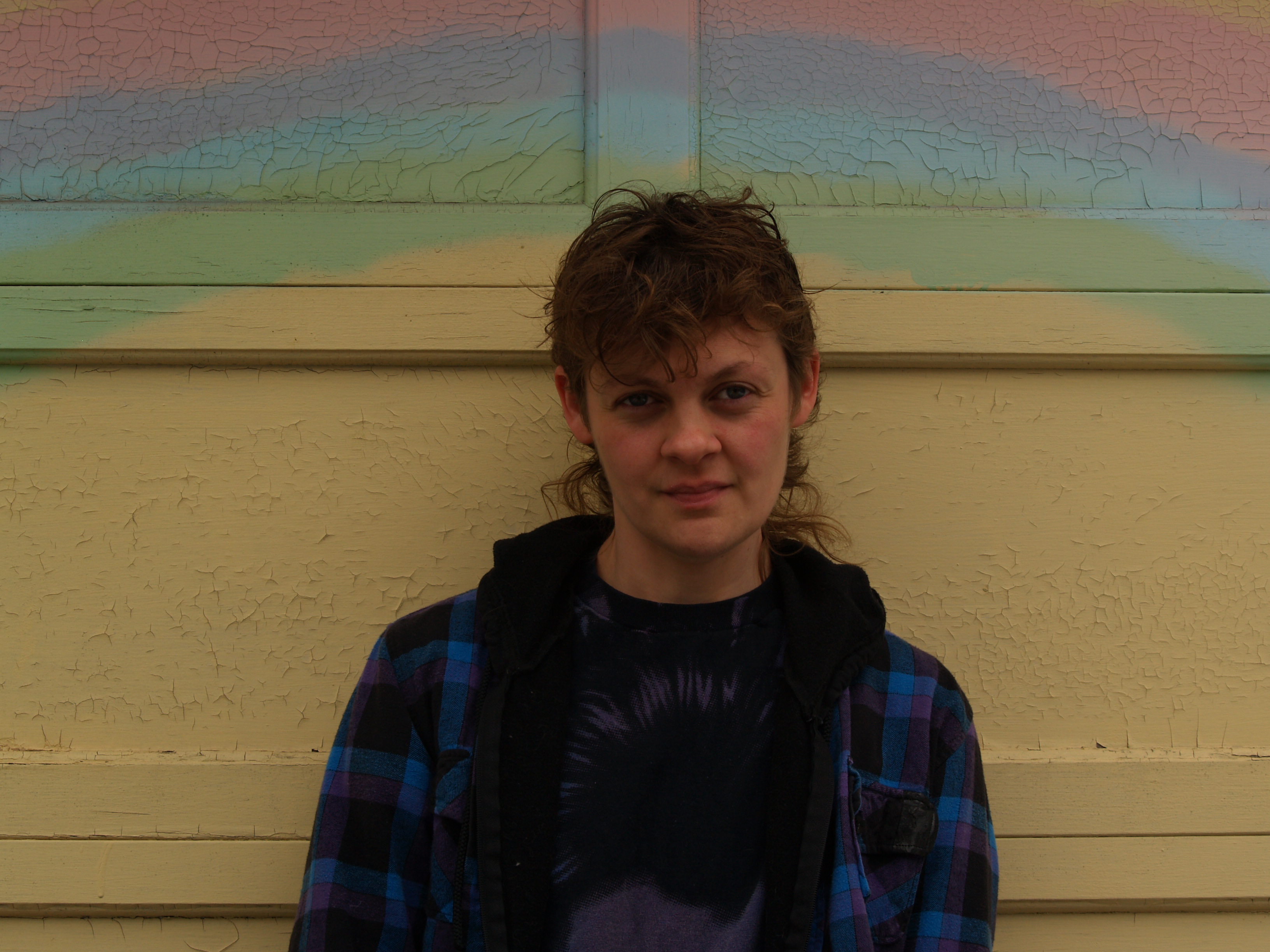
1.75 years on testosterone
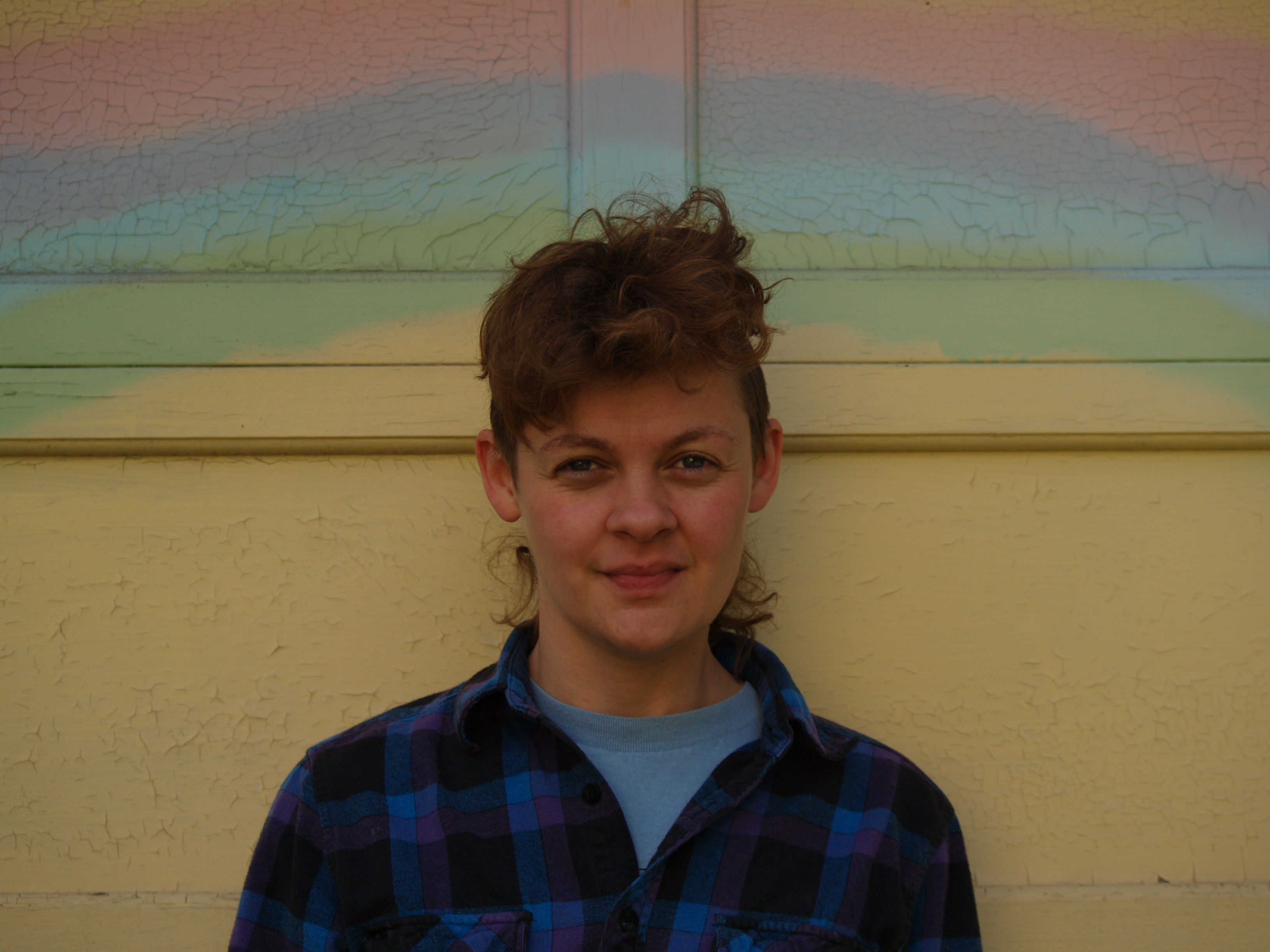
1.5 years on testosterone

one year on testosterone
Depression and taking testosterone
Posted: December 8, 2014 Filed under: Testosterone | Tags: antidepressants, anxiety, depression, gender identity, genderqueer, hormone replacement therapy, lgbtqia, mental health, non-binary, queer, testosterone, therapy, trans, transgender 4 CommentsA reader asked me,
I have been researching going on T and got approved for top surgery this past summer. I too struggle with depression and am on medication for it. I have been trying to find information on it but, were you on antidepressants when you started T and if so, did it affect how the T was processed? I am curious if the T counteracts negatively in any way with depression meds. Thank you for your posts and i look forward to hearing from you!
And since I don’t have any direct experience with this, I thought I’d post here and see if others might have some helpful thoughts / advice.
I was on antidepressants for around 6 years, from 2000-2006. I didn’t start testosterone till 2013, so I’m very far from there having been any overlap. I haven’t heard of someone having an adverse reaction to being on both at the same time, or there being any issue with how the T is being processed by the body. Everything is an adjustment though, and T is a potent hormone to throw into the mix.
For me, T has acted as a pretty effective anti-anxiety substance and antidepressant. I would recommend it to anyone who is depressed or anxious (That’s a joke. Kinda, haha.)
I don’t know whether I would ever take a synthesized antidepressant medication again. I’ve been on quite a few, and they were all either not really doing much of anything, or they were flattening me out into a walking zombie. They definitely do work wonders for some people though. Testosterone has been much more effective, for me, and I don’t just mean in terms of addressing body dysphoria. I mean that it has lifted me into a new level of living, basically. I wanna say that it’s been taking testosterone + being in therapy simultaneously that’s gotten me here (a powerful combination.)
I definitely am prone to low moods still. Just this past week / weekend is a very clear, recent example. I wasn’t sleeping well, my appetite was poor, I was obsessing about things I can’t change, I had little motivation for anything beyond basic functioning level. But something is very different about these dips than where I used to be at: I know they are not going to last. I know I’ll be naturally coming out of it at any point, and once I do, I don’t need to live in constant fear of the next time I start to feel low. Because, that’s all it is – feeling low. It’s no longer body + soul crushing depression, which I’ve been all too familiar with for most of my teenaged years and young adulthood…
Has anyone been on antidepressants when they started testosterone? Did you notice anything about how the two substances might have possibly interacted with each other? What has been your experience with antidepressants?
The Re-imagination Program
Posted: December 2, 2014 Filed under: Testosterone | Tags: Androgel, androgyny, doctors, gender, gender identity, genderqueer, insurance, lgbtqia, medical treatment, non-binary, queer, testosterone, trans, transgender 12 CommentsI’ve been using Androgel, daily, for over a year and a half now. And I’m just now getting a full understanding about how the prescription & insurance industrial complex works as it relates to me continuing to get what I need. Here are a few experiences that, each taken separately, are small, but as a collection of anecdotes, are kinda mind-boggling:
– My first doctor initially tried to sway me toward a different product, Fortesta, telling me I could save big, and handed me a discount card I could activate. I went through all the hoops only to learn I was not eligible because I am not male. When I came back to him with this, he changed my prescription to Androgel without further discussion.
– Although I made clear to him that I was aiming to be on a very low dose, and see what happens from there (like 1-2 pumps), he wrote the script out as 4-6 pumps daily. This led me to be able to get 2 bottles at one time for $25. This amount lasted me for 4 months. At $6.25 per month, I wasn’t about to speak up about the inaccuracy!
– The prescription wording has changed over time (and between two doctors), and I’ve felt confused as to how that equates to how much I’m getting and how much I’m paying. I’ve paid $25 for 2 bottles together, $50 for two bottles together, and even $50 for only one bottle at one point. I guess I assumed it fluctuated in price. I thought I was paying per bottle.
– I’m not paying per bottle. I’m paying per month. My payment, I finally found out, should be $25 per month (not too bad!), but somehow I’ve continued to avoid even having to pay that much. I also have been able to store some bottles in reserves (which helps me feel much more secure since most of my visits to the pharmacy have led to some sort of questioning, calling of my doctor office, etc. Not for anything personally about me, but because of how the script was written out.)
Basically, while talking to my insurance company (using the pharmacy’s phone) last week, I learned that all that matters is how the script is written. Testosterone is a controlled substance. I always have to pick up the prescription at my doctor’s office and show a picture ID. I can never get a refill (although my doctor has tried!) If the doctor writes the dose out as 1-2 pumps per day, the higher amount is factored in. If it’s 4-6 pumps, it’s 6 pumps, even if I’m only actually using one. No one seems concerned about whether the amount correlates to what I’m doing. I can get a 30 day supply, a 60 day supply, or a 90 day supply. I’d prefer the 90 day because it means I don’t have to go as frequently. But if it’s entered as a 30 day supply, it’s 1/3 of the price. And no one actually seems concerned with whether that translates into how frequently I go to the pharmacy. Interestingly, I could pay a whole lot more to get the amount I use, or I could pay a whole lot less to get more than the amount I use. I don’t understand this logic, but I do finally understand this system.
When I was told I’d be paying $50 for one bottle and would have to come back in 2 months with a new prescription, for my 2nd bottle (due to the wording of the script) last week, I argued with that. The pharmacist got me on the phone with my insurance (which led to me finally grasping how this works). I realized the only way around it was to get the script re-written by my doctor.
I asked the pharmacist if I could get a discount card for Androgel. This is called “The Restoration Program.” Due to my experience with the Fortesta discount card, I wasn’t holding my breath. The pharmacist got me started and then handed the phone to me to complete the activation process with an Androgel representative. He was friendly and smooth. I was asked a lot of questions: name, address, email, phone number, etc. I was asked if I’ve read all the terms and conditions. Since I had just been handed the booklet with mass amounts of fine print 2 minutes prior, I just said, “yes.” I was then asked, “Are you MALE?” He said the word, “male,” in such a harsh, abrasive tone; all customer-serviceness left his voice. I paused for a good long while. Repeated the question back to him. Said, “No.” Said, “I’m not legally male; if there is any other criteria under which someone could be male, I’m interested in that.” But his helpfulness was long gone. I felt mildly humiliated; he just kept grinding it in that he could do nothing further for me.
My jaded brain (during a conversation with my partner’s jaded brain, haha) decided that men are rewarded for using Androgel because the company is trying to promote a specific type of patient for their product. Rugged, middle-aged, robust and vigorous. Masculine. Diagnosed with low testosterone, just needing a boost. Just take a look at the pics of men on their website:
Androgel website
I am nothing like the men on the website. However, I am just as worthy of being eligible for a discount program! I would call it “The Re-imagination Program.” Testosterone has certainly aided me in re-imagining who I am and what I can do / who I can become.
I told the pharmacist I wasn’t eligible. He acted surprised, but my jaded brain decided he already knew. The next day, I called my doctor’s office; asked for the prescription to be written the way it had previously been written. Got a call back that it was all set; ready for pick-up. Picked up the prescription, went back to the pharmacy, got my 3 month supply for $50. Anticipating more hassles in the future…
Can hormones change my sexual orientation?
Posted: October 1, 2014 Filed under: Testosterone | Tags: demisexual, gay, gender, gender identity, genderqueer, lesbian, lgbt, lgbtqia, queer, relationships, sexual orientation, testosterone, trans, transgender 13 CommentsThis was a huge reservation for me, before I started testosterone. I had read enough personal accounts and spoken to enough friends that I had this somewhat common narrative in my mind: someone who is FTM was primarily attracted to women before starting hormones. Orientation then opened up / shifted, and this person now is attracted to both / all genders, or is now more attracted to men, or even exclusively attracted to men. One common idea surrounding this is that the person always was attracted to men (if even just on a subconscious level), but could not fathom being intimate with a man, while being seen as a woman. Another related idea is that the person identifies so strongly with being queer, that once he is finally perceived as a man, a new type of queer identity is now possible – one that may have been appealing all along.
OK – I’m done with the generalizing! It’s super uncomfortable for me to paint broad strokes and write about a hypothetical person in such a detached manner. I just wanted to get some initial thoughts down, some type of framework in which to plug my own narrative into. Whether these ideas are all that accurate or common is largely beside the point. The important part is that they were looming large for me. I had some serious fears about it.
While I was coming out (sort of?) as a lesbian (sort of?) in my late-teens, I was mostly just befuddled. I didn’t really understand physical and sexual attraction. I thought I was probably just a late bloomer. Now I understand that I’m probably a demisexual. Although this (somewhat recent) revelation is fascinating, I don’t feel a strong attachment to this label or a strong need to figure out my sexual orientation in all ways, shapes, and forms. It never caused me to feel much of a disconnect from others. I mean, I generally felt a lot of disconnect from others, but I didn’t look to my sexuality as a way to figure out why that was. It’s kinda, meh, for me… Fascination, and not a whole lot more. (Which is interesting because I usually love love love picking things apart! Haha.)
I’m gonna jump over a whole bunch of years and land somewhere in my late 20s. I’d been with my partner (she is a cisgender female, for the most part) for about 4 years at this point, and we were experiencing a long-term lull. We weren’t connecting. Everything felt dulled, foggy, I think for both of us (for different reasons). I was feeling more and more drawn to guys, all around me, and could not sort out whether that was because I needed to be a guy, or if it was a sexual orientation thing (again, the lack of the physical attraction part was confusing. It was more of a cerebral thing.)
I kind of decided that it was both. I fantasized about a totally different life, where I was a guy, and I was with a hypothetical guy. However, I did not want to break up with my partner. I strongly felt that the tough place we were in was circumstantial and situational, and that we could work our way through it. I wanted to work our way through it. I wondered if a big key to working our way through it was: for me to transition. I felt this heavy burden of a circuitous fear: I need to transition in order to get out of this place and improve our relationship; if I start transitioning, my gut is telling me that I will be even more drawn to guys, and I will want to end our relationship in order to pursue that.
I vividly recall, at one point, completely breaking down and telling her, while crying, that I was attracted to masculinity. She didn’t seem surprised, or threatened; she didn’t shut down. She stayed there with me, in that moment, and replied, “one of the many pitfalls of being in a queer relationship.” I appreciated that reply so much, in the moment. It felt like relief. Sometimes, I make things overly-fraught; she brings it back down to earth.
She has since elaborated that she did indeed feel the heaviness of the situation. Although we weren’t talking about all of this directly at the time, she recently told me that she knew. And that she was going to support me in transitioning (whatever that looked like to me) unconditionally, at the risk of losing me along the way. Wow.
While trying to sort that out, some life changes occurred that vastly improved things. My partner got a new job, we shifted our approach to friendships, I went back to therapy. Our relationship improved by leaps and bounds.
It was about two more years before I really found myself at that crossroads of needing to try testosterone (although I no longer planned to transition in that common-narrative way). That fear was still there. Although it felt like we had a solid foundation to work from, I worried, would things shift between my partner and me? Would I start to be drawn exclusively to men? Where would that lead us? I started testosterone anyway.
Testosterone has changed things for me, but not in those ways I feared. I’m attracted to my partner and also I’m attracted to men. Sometimes I’m attracted to women; mostly, I’m attracted to androgyny and effemininity (effeminate men). I don’t know what that all adds up to; I just call it “queer.” The nature of attraction feels a little less cerebral, and a little more physiological than before. I like that. I think I still fall under the category of demisexual, for sure, but it does feel different. My partner and I talk about all of it. None of it is threatening to her. None of it feels worrisome to me. It’s all just puzzle pieces, that, although not straightforward or common, make more sense to me than my sexuality has ever made sense before.
1.5 years on T without noticeable masculinizing changes
Posted: September 18, 2014 Filed under: Testosterone | Tags: androgyny, gender, gender identity, genderqueer, hormone replacement therapy, hormones, lgbt, lgbtqia, non-binary, queer, testosterone, trans, transgender 4 CommentsIt’s been a year and a half! I increased my dosage of Androgel, slightly, about 3 months ago (from 1 pump of 1% daily to 1 pump of 1.62% daily), and still, I’m not seeing physical changes (which is still a big part of my goals). I have still not yet missed a day – applying the gel feels of utmost importance to me, as a part of my daily routine.
Nothing can be new forever, unfortunately. Naturally, I no longer have that same emotional reaction to applying the gel (anticipation, excitement). And I haven’t been thinking about it in the same ways as I did every single day for that first year (how totally fucking awesome it is). Still it feels very much essential. It’s not nearly as constant, but I do still reflect on how different things are for me now.
– I am grateful that I consistently feel like eating at regular intervals now.
– I’m grateful that I no longer feel quite as debilitated by anxiety-induced adrenaline surges
– I’m grateful that physical sensations make more sense. Pain actually feels painful. I don’t recoil from affectionate touches. When I take a deep breath, I feel a sense of calm and a connection to my body. Etc. forever.
– I’m grateful that sex finally makes sense, and that I get to be a part of it (usually. At least it’s much improved.)
– I’m grateful that although I’m still moody and seem to feel emotions relatively strongly, it’s become more manageable, and rarely manifests in self-destructive ways anymore.
– I’m grateful that I don’t feel so cold all the time!
– I’m grateful that things just feel easier, across the board.
I am genderqueer (in case you didn’t already know!) and am continuing to carve out a space in between genders. Or, to mix and match genders as I see fit. I feel like I’ve made a ton of progress in terms of finding that place where I feel like myself, in my own skin. Yet, not nearly enough progress in terms of seeing that identity reflected back to me from the world around me. This just means I have a long ways to go (And society has a much longer way to go. C’mon society, get with it!) until I really feel comfortable with the ways I’m seen by others. Luckily, that part is not nearly as important as the part about how I see myself. 🙂
Initially, I feel like I was being hyper vigilant about not crossing over into any masculinizing territory, especially with my voice dropping. As time has gone on, I’m not quite so concerned with this (although I’m not actually trying for it either.) I do wonder if my attitudes will change more, in this vein, and I’ll start to want to increase my dose even more and cross into that territory. Only time will tell. As of now, I’m feeling comfortable with where I am.
Here’s where I’ve been (there are lots of details about the subtle physical changes in these past posts):
Five months
Eight months
Eleven months
One year
A video at the one year mark
One point two-five years
And finally, a couple of pictures of my face:
1.5 years on testosterone

1.25 years on testosterone
one year on testosterone
Good doctor news
Posted: August 21, 2014 Filed under: Testosterone, Uncategorized | Tags: androgyny, doctors, gender identity, genderqueer, hormone replacement therapy, lgbtq, lgbtqia, medical treatment, non-binary, queer, testosterone, trans, transgender 8 CommentsThree months ago, I finally found a good doctor, but I was unsure if I’d be able to keep her. I liked her style immediately – ability to communicate, upbeat and straightforward manner, etc. And I liked her entire office’s professionalism. However, she had no trans-related experience, and after I told her my reasons for being there, she seemed hesitant to keep me on as a patient. She said she would look into finding a specialist I could go to, or at the very least, that she could consult with before proceeding. In my head, I was thinking, “Good luck with finding people locally! How do you think I ended up here, with you?!!” Haha.
We had a follow-up appointment yesterday. Going into it, I wasn’t sure if she was just going to say, “So I’m going to refer you to so-and-so,” and I’d have to start all over again with someone new. I was nervous; I didn’t want that. I had convinced myself, to an extent, that that was what was going to happen.
If you’re interested in reading through this epic journey to find a new doctor, here’s where I’ve been, in backwards order:
From 3 months ago, Convincing doctors that hormones are not that complicated
From 5 months ago, The last time I saw my doctor / I like your product
From 6 months ago, Continued quest to find a new doctor (a good fit?)
And from 7 months ago, just simply, I need to get a new doctor
At the appointment, we first discussed the fact that I went to the eye doctor, and that my vitamin D is low and I need to get supplements, and then finally discussed the reasons I’m there. She said she did find two area specialists (one is an LGBTQ health center I’d rather not go through, and the other is an endocrinologist who focuses on adult health – good to know there is someone local, and that she uncovered him!) She continued to tell me she does not think it’s necessary for me to go through either of these channels unless I want to, and that she will continue seeing me for low-dose testosterone therapy. I was super happy but didn’t really let on. I did tell her I am glad I can keep coming to see her though. And that I don’t feel like I need to go to these other people unless something comes up.
I wonder what happened within that 3 month time span! I think she did some research. Or, in the process of reaching out to specialists, they conveyed to her that it was within her realm and abilities. And then she did some research. Something!
We discussed the labs I got done in May. My T levels were at 68 ng/dl. This surprised me quite a bit – previously, I was at 102 ng/dl. I had somehow, without changing a thing, dipped back into a normal female range. How does that work?
I know I should go by how I’m feeling, and not by numbers. BUT – is it just a coincidence that I increased my testosterone dosage 2 months ago, just kinda because? Because I felt like it? Hmmm. I’m super curious to know what my levels are now, accounting for the slight increase… I’ll find out in 3 more months… (More labs.)
Until then, I just wanna revel in the fact that I finally have a primary care physician I would feel comfortable going to for any issue that comes up with my body, trans-related or not. This is a first!
1.25 years on T without noticeable masculinizing changes
Posted: June 18, 2014 Filed under: Testosterone, Uncategorized | Tags: androgyny, gender identity, genderqueer, hormone replacement therapy, lgbt, lgbtq, mental health, non-binary, queer, testosterone, trans, transgender, transition 14 CommentsI’ve been previously writing this ongoing series as “__ months/years on T without physical changes,” but I decided to change the wording from “physical changes” to “noticeable masculinizing changes” …a little more accurate. There have been some physical changes. But, ultimately, they have not added up to a more masculine gender presentation, which has been what I’m aiming for.
A quick rundown of the physical changes I have seen:
(All of these occurred within the first 2 months and then plateaued out, except the ones that have an asterisk – they started to become noticeable around the one year mark.)
- muscle growth, mostly in shoulders, chest, and abs
- moderate clitoral growth
- smell stinkier, need to shower more, get sweaty and sticky, get grosser quicker
- more peach fuzz on face, mustache teeniest-tiniest bit darker
- hairier butt crack*
- slightly more hair on thighs, where I apply the gel*
All these changes are so slight. I don’t think I look any different. Also, my voice sounds the same to me. I would say my range has shifted oh-so subtly (like when trying to sing or make high pitched or low pitched noises, which I like to do a lot), but my speaking voice is the same.
Here are a couple of pictures:
1.25 years on testosterone
one year on testosterone

before testosterone
Also, please note my new summer fashion, in the first photo. I cut the sleeves off of a couple of western-style shirts, to wear over t-shirts or tank tops. The placement of the pockets & snaps helps hide what’s going on with the fact that I have a chest. In the winter, I just layer, and it’s awesome. In the summer, it is hot! Right?! If I can get away without wearing a binder, I will. (And I am grateful every single day for that.) This layered look just might do the trick. I do imagine that I will get top surgery one day. I always start thinking about it much more in the summer. What an incredible feeling it would be to just wear a tank top and be done with it!
I have not missed a day yet, applying 1.25 grams of Androgel 1% per day. The internal effects make it more than worthwhile. A quick rundown of those:
- lower levels of anxiety
- higher sex drive
- less instances of dissociating / more present in my body
- increased ability to experience bodily sensations
- more awareness of the world around me
- increased sensitivity to pain
- ability to let things just roll off my shoulders
- a lot of these are rewording similar themes: basically, a greater sense of well being!
If you wanna look back at where I’ve been, here are some past posts about this topic:
- Five months on T without physical changes
- Eight months on T without physical changes
- Eleven months on T without physical changes
- One year on T without physical changes
And also, a video about it, at the one year mark.
On therapy and gaining access to what we need
Posted: June 2, 2014 Filed under: Testosterone | Tags: doctors, ftm, gender identity, genderqueer, hormone replacement therapy, medical treatment, mental health, queer, standards of care, testosterone, therapy, trans, transgender, WPATH 8 CommentsDirectly from the WPATH-SOC (World Professional Association for Transgender Health Standards of Care), 7th edition, p. 19:
When I was 17 years old, I admitted myself voluntarily to a psychiatric hospital. I thought I was going to go there for a day or two, be able to finally catch my breath, and then work with those around me to make a plan for what I needed. This is not what ended up happening. I still wanted to leave after a day or two – that didn’t change – but suddenly, things were getting really confusing really fast, and lots of people had other plans for me. Since I was still a minor, I really had no say in what happened. I was there for 19 days. I was put on 3 different medications. I was told I suffered a psychotic break. I was diagnosed with bipolar disorder (based on how I was behaving – short-term – and things I told them, such as, “I think I am bipolar”). When I left, I spiraled into a major depressive episode that lasted about 4 months (and I felt highly unstable for years to come). This helped confirm for me that I was, in fact, bipolar. Something I believed for about 6 more years.
I am most definitely not bipolar. I did go through a psychotic break, but in retrospect, I believe this could have been prevented had I not been hospitalized. I think, ultimately, I just had an extended panic attack. And having no idea what that was or felt like, I thought going to the hospital was the only thing I could do to help myself in the moment.
For the next 6 or so years, I complied with my mental health care. I took all my medications every day, as they were prescribed (and those meds and dosages changed a lot over the years). I went to all my appointments I was supposed to go to. I talked to therapists, psychiatric nurse practitioners, psychiatrists. I didn’t seem to be improving. In a lot of ways, my mental state was getting worse. I just followed along with the treatment plan because I didn’t know what else I could do. In fact though, I couldn’t really tell you what the treatment plan was. Was there a plan? I don’t recall that being a conversation.
All of these experiences have greatly shaped who I am, and also my attitudes toward health care providers. I’ll say right now, I am definitely biased and wary. Once I decided I wasn’t going to take medications that didn’t seem to help, and I wasn’t going to listen to ideas that didn’t seem to make sense for me, there really was no going back. Pretty much dropped out completely (except for going to a dentist and a chiropractor, haha) for a very long time.
Until I decided I wanted to access testosterone. I thought I was going to need “The Letter” from a therapist, but in the end, the doctor I went to didn’t care about formalities like that. (He’s also a sketchy doctor though.)
I feel very adamant that I should be able to easily access testosterone for the rest of my life. Testosterone is doing for me what antidepressants, mood stabilizers, and antipsychotics never quite did. And more. I don’t want to go through hassles to be able to get it. I’d go as far as to say that being challenged about it by a health care professional is highly triggering for me. Because when I was younger, I was told what would be best for me for so long, and I followed. And it was shitty. So now the dynamic is going to be the other way around. I know that’s extreme and reactionary, but I do feel that strongly at this point in time. I hope that as I age, I will mellow out about it. I’m sure there will be times that I’ll need help and I won’t know what is going on with my body, and I will be grateful for doctors’ and specialists’ expertise. As for now though, I’m not there yet.
Although my experiences with mental health professionals have been shaky at best, I believe strongly in the therapeutic effects of… well, therapy (haha). Without having been in therapy through those toughest years, I would not be where I am today, no question. I learned how to talk and communicate from therapists. I learned how to stop being so hard on myself. I learned to let go of my past. I learned that I cannot save others from their pain. I learned what things really matter in life, and what things I am spending wasted energy on. It was the slowest imaginable process. None of these gems felt like they were working for me at the time, but in returning to therapy over these past 2 years, it all started to suddenly sink in, and I’ve made some real leaps and bounds. I feel grateful for that groundwork I started in my late teens and early twenties, through therapy, even though I could not feel the benefits whatsoever at the time.
Two years ago, I attended a workshop at the Philadelphia Trans-Health Conference called, Who Needs Therapy? Some Thoughts on Mental Health and Gender Variance. It was largely an open discussion format, with a mix of mental health professionals, people with experience being in therapy, mental health survivors, and others. Toward the end I had worked up the courage to ask the group, “What if I really connect with my therapist, but it is clear she is not knowledgeable about trans* issues? Is it worth it to continue working with her if I want to explore this? Is it up to me to attempt to point her to resources if I want to keep working with her?”
Everyone who responded to me was very adamant that it was not up to me, and if she does not do the work on her own, I should find someone who is knowledgeable or who is immediately and clearly willing to do the work. It turned into a very impassioned discussion with a lot of people saying the same things. I left feeling really confused.
It had been very hard for me to find a therapist I click with. I’d gone to a few in my mid/late-twenties, and felt really dispirited. A couple of them were specifically gender therapists. In the end, I returned to the main therapist I saw through some of my toughest years. It was amazing to me she is still around and I could find her. Re-connecting with her again after 8 years was mind-boggling in the best way possible. Despite the feedback I got at that workshop, I wasn’t about to let go of her so easily. Nor did I feel like educating her myself, or even asking directly what she did know and what she did not know. I just continued to tell her how I feel, and I didn’t ever get the impression that she didn’t understand or wasn’t going to work with me on that. However, when I asked her if she’d write me a letter for HRT if need be, she said, “No. I don’t feel like I have that expertise.” And I appreciated that. It is all working incredibly well.
When going to my new doctor, I could have possibly had an easier time if I was forthcoming with the fact that I’m in therapy for gender issues (although I’m not in therapy with a gender therapist). But I didn’t feel like I should have to. So I didn’t mention it. When the doctor asked me who is in my support network, I said my partner and my parents and friends. I left out my therapist. When she told me she would like to collaborate with the gender identity youth clinic in making a plan for me, I could have saved some time and hassles by saying, “My therapist already talked with them, and they won’t see me because of my age. So the plan B is this.” But I didn’t. I just said, that’d be great and let my doctor make the phone calls and come to that same conclusion on her own.
Why? Because I think that therapy is an important part of my well-being. And I think that getting the best medical care possible, for what I need, will also be an important part of my well-being. And I don’t feel like the two necessarily need to have much to do with each other. Specifically, I don’t want to suddenly be taken more seriously and be given what I need, gender-wise, because I am in therapy. I want what I say to be enough. I want to access hormones without it being known I’m in therapy, if I can.
I am deliberately attempting to lay some of the groundwork, saying that this is perfectly acceptable. Not all of us live within access to clinics or doctors who offer the Informed Consent model. But I feel like I am in a position where I can work to change that.
Convincing doctors that hormones are not that complicated
Posted: May 13, 2014 Filed under: Testosterone | Tags: androgyny, coming out, doctors, gender identity, genderqueer, hormone replacement therapy, lgbt, lgbtq, medical treatment, non-binary, queer, testosterone, trans, transgender 14 CommentsI just got back from my first appointment with a new doctor at a women’s health group (unintentional!) This has been an ongoing saga, and although it’s not a perfect fit, it’s good enough, at least for now. Looking for more backstory?
Back in January, I decided I was fed up with my doctor, and that I could do better.
By the end of February, I’d found a promising candidate, only to realize she’s part of a women’s health group.
My last appointment with my doctor, at the end of March, was an absurdist performance piece.
It has been challenging to find appropriate health care where I live, but I’ve plowed ahead anyway because: 1)I know what I am trying to get, and 2)I don’t see any reason why I should not get it. This new doctor has no expertise in trans* identities, and I knew that going in. But I did find her through the local gay alliance’s resource page, so that was a start. When I told her that this is how I came to be here, she replied, “Well… yes, I am LGBT friendly, but I don’t know how I got on that list.” What does that mean???
When I told her the reason I’m here is to get more Androgel, she replied that she does not feel qualified to prescribe hormones. That was the start of the discussion, but by the end, she was giving me a prescription for exactly what I said I’ve been on for over a year already, and she was changing her tune to, “I suppose I could for the time being, but the long-term health risks are too great, and it’s not my area of expertise.”
I told her I’ve been going to the one trans* specific doctor in the area who treats adults (that I know about), and I want to switch because I do not like him. She used her laptop to confirm she knew of no local doctors, aside from the clinic that treats adolescents and young adults. She suggested I could use her as my PCP and still go to my other doctor for the hormones. I told her I was not going to do this. She then suggested she might be able to get me in at the adolescent clinic for a one-time visit, so that she can then be advised by them about my care. I told her that would be amazing. She will be following up with me on this, and I would be happy to go.
I told her how I perceive my gender identity, why I’m taking testosterone, and that it does not involve much health risk for me personally. She said, even so, she did not know enough about it. I asked her, “What if a woman wanted to take testosterone to address issues with a low sex-drive?” (Women do this.) She said that she would not use testosterone as a treatment. It’s not been proven to be effective. She continued on to say that she does have some male patients (husbands, sons, etc. of patients, who want to come here), and some have low testosterone levels, and she’s not the one to prescribe them testosterone. I found this difficult to believe.
I showed her a copy of my latest blood tests, and this is when the tables started to turn. I saw her open up. I illustrated what I knew by telling her what “normal” female and male ranges were, and where I fall within that. I told her that risks such as increased blood pressure, red-blood cell count, cholesterol, etc., are real concerns that can be monitored through blood work, but I believe I counteract those risks anyway with my lifestyle (vegetarian diet, active profession, don’t smoke, drink only moderately.)
I told her, bluntly, “It’s not that complicated.”
And, in the end, she seemed OK with it. She was asking me what diagnosis I would like her to put for insurance purposes. I told her that Gender Identity Disorder is in the DSM – “I don’t like it, but it’s there.” She responded with, “What about ‘hormone treatment for transgender patients?’ Well, you don’t identify as transgender…” I told her that I do, that “transgender” is an umbrella term, and that diagnosis works OK.
I went by this new name I’m trying out, at the doctor’s office. I figured this is a compartmentalized atmosphere, and a good place to see what it feels like. I gotta say, it didn’t feel great. I’m not sure what that’s about yet. If that means this just isn’t the name for me, or if I’d actually feel this way about any new name, because any and all would feel foreign at first. I’m sure my gut will tell me. And time. Time will tell me. I also told her I’d like to go by male pronouns. She said, “We can do our best with this. You’ll probably have to remind us, but we’ll try.” Her body language while she said this conveyed, “I don’t get it. I’m not really going to try, but feel free to try to get us to try.”
And this is where things are.
A video about taking a low dose of testosterone (w/o masculinizing changes)
Posted: March 27, 2014 Filed under: Testosterone | Tags: androgyny, gender identity, genderqueer, hormone replacement therapy, lgbt, lgbtq, non-binary, queer, testosterone, trans, transgender, transmasculine 8 CommentsLast week, I made a video using my computer for the first time. If you’ll bear with me for the first 25 seconds, I do eventually start talking. It gets off to a slow start, as I am momentarily mesmerized by my own interior decorating. 🙂
I posted this video on YouTube on a new collaborative channel called Undefine Me. The channel has a handful of people who identify in a lot of different ways, talking on a weekly basis about sexuality, gender, and similar topics. I don’t think I’ll be contributing much by way of video, but I’ve started writing on their blog. You can too, if you feel so inclined!
The reason I decided to make a video is because I feel like I have something to say. And I’ve been writing an awful lot about it here on my blog. (So if you read this blog, all the info in the video will be redundant!) But I think there are a lot of people who might be more inclined to watch a video than to read a blog post. (I am not one of those people!) So, this video is for them, and I’m putting it out there in the hopes they’ll somehow find it.

 janitorqueer