
Stress symptoms due to testosterone
Posted: February 5, 2015 Filed under: Testosterone | Tags: androgyny, anxiety, emotions, gender identity, genderqueer, hormone replacement therapy, lgbtq, mental health, non-binary, stress, testosterone, trans, transgender, work 12 CommentsI have been under a lot of stress lately. Between taking on an acting supervisory role at work for 3-4 months and being hospitalized, I can’t remember the last time I was so stressed out. Probably throughout college, over 10 years ago. And although it sucks, there are some interesting things I’m learning about myself at the same time. Namely, that stress is interacting with the added testosterone in some typical (but surprising-to-me) ways.
I’ve been on testosterone for close to 2 years now. And in that entire time, I did not experience a lot of the negatives you hear about – oilier skin, heightened agitation / quicker temper. Right now, I’m experiencing that. Plus some added hormonal weirdness: I feel hot and then cold and then hot and then cold. I am stress-sweating a lot. I STINK! My skin feels prickly, then I feel light as a feather, then I feel like I’m weighted down, back and forth. I’m getting more hairs on my chin and around my nipples. I am pacing and dancing and taking magnesium and doing a lot of other things to try to counteract these stress symptoms and just calm down. I feel calm right now, as I’m writing this.
Not too long ago, I was planning on increasing my testosterone because I’d like to appear even more androgynous. Now I’m thinking that won’t be anytime soon. There will be a time – it’s just not right now. I’m even considering stopping Androgel for a while, but that’s not something I’d do lightly. For right now, I’m hanging in there, because in my own mind, I’d like to be on it… We’ll see. I’ll probably talk to my therapist about it, first and foremost. She has witnessed a lot of my agitation lately.
Normally when I’m stressed out, I might tend to clench my teeth. I will have trouble sleeping. I will have obsessive ruminations in an extreme sense. Those thoughts can get pretty dark and even turn to uncontrollable visions of violence. I would probably get a cold, due to my immune system being compromised.
Right now? I haven’t been sick all fall/winter. I previously was having a lot of trouble sleeping, but due to my new medication, now I am not. I am clenching my teeth a lot. And my obsessive gauge is going at full throttle for large chunks of time. I’m taking super good care of myself – eating well, showering daily, applying deodorant often and chewing gum, to mask bad bodily smells.
I am really off my game, but I’m hanging in there…
These symptoms due to testosterone (educated guess) are really throwing me for a loop.
A story about what it feels like to be bigender
Posted: February 2, 2015 Filed under: Uncategorized | Tags: androgynous, androgyny, bigender, estrogen, gender identity, genderfluid, genderqueer, hormone replacement therapy, language, lgbtq, non-binary, testosterone, trans, transgender 3 CommentsThe other day, my partner alerted me of a really cool podcast story, and we listened to it together (for her, she listened a 2nd time). It’s about a subset of trans-people, and a subset of non-binary people even: people who identify as bigender. I’ve heard this term before but didn’t have a clear grasp on the experience of bigender people, largely just equating and blending it in with people who identify as “genderfluid,” in my mind. The two terms definitely overlap, and the podcast didn’t mention “genderfluid” as an identity, but it told a very gripping and personal story of someone who is bigender.
I’m just going to summarize this person’s story, but if you have a half hour, listening to this podcast would be a half hour well spent! Here is the link:
Invisibilia Story About Paige (Go ahead and skip the first 2 minutes – it’s just podcast producers doing introductions and general banter.)
Paige is in her 30s and lives in San Diego. Her story is not a common one, even within the trans-community. She grew up MAAB (male assigned at birth) and was largely fine with that, didn’t think twice about it. She had fleeting feelings maybe she was supposed to be a girl, but they were very rare, and she didn’t dwell on them. She joined the Navy and enjoyed it. She got married; got a job, a car, a house – everything most people hope to do. When she was 30, still living full time as a man, her body mysteriously stopped producing testosterone. She got put on testosterone replacement therapy, and that’s when things started getting strange. Those fleeting feelings of being female returned full force and with more frequency. She began to feel a really strong split between “guy mode” and “girl mode,” and she had no control over when or where it might happen. When in “girl mode,” she began to feel repulsed by her body, even to the point of vomiting from disgust.
She talked to her wife, and decided to stop taking testosterone and start taking estrogen instead. The disgust started to wane as her body changed, but at this point, she was aiming for androgyny so that she could feel comfortable in both guy and girl mode, something she kept flipping between, often multiple times within a day. There were certain things that changed for her depending on which mode she was in, perception-wise and personality-wise.
It’s been confirmed through psychological tests on a small sample of people who are bigender that there are in fact some differences going on. This research is really in its infancy, and nothing has been conclusive on a large scale thus far. But, well… makes sense! (I am far from saying men are from Mars and women from Venus or anything like that, haha.)
Parts of her story are really sad. Her marriage didn’t make it. She spent a long time feeling like an alien, hiding her true nature, etc. A lot of things a lot of people can relate to…
The interesting thing comes in the conclusion though. It seems that the longer she was on estrogen, the more she “settled into” being female, on a psychic level. She has stopped “flipping” uncontrollably, for the most part. It does still happen, and it’s super jarring, but she is living close to 100% in “girl mode” these days.
This is super fascinating to me – although I am really in neither “guy mode” nor “girl mode” ever, my gender identity is static. I can’t imagine what it would feel like to go back and forth, uncontrollably, at inopportune times.
More than just a few people experience this though. Something like 8% of MAAB trans-people, and 3% of FAAB trans-people.
From whimsical musings to invasive ruminations on transitioning, Pt. 2
Posted: January 29, 2015 Filed under: Testosterone | Tags: coming out, gender identity, genderqueer, hormone replacement therapy, lgbtq, non-binary, queer, testosterone, therapy, trans, transgender, transition, writing 7 CommentsSince I have a lot of extra time on my hands right now, I thought I’d read through some of my old blog entries. I came across a couple of pretty good ones that didn’t get read by many people, because I was just starting out. It takes time and energy to build a readership. I thought it’d be fun (and self-indulgent, which I could use right now) to “re-blog” one of my first posts (and edit it lightly). See if it still holds up; maybe make a commentary at the end. This one in particular was my 10th blog post, and it’s from a year and a half ago. I had been on T for 6 months at that point. It got 4 views. I think it’s of interest to more people than that!
____________________________________
For over a decade, I had been going back and forth thousands of times in my head about whether transitioning, or partial transition, was right for me or not. At some point not that long ago, I seemed to come to the conclusion that no, I wasn’t going to move forward because if I were, I would have done something about it by now. And I haven’t, so I’m not. I must be lacking some internal drive, so it must not be something that I need to do. I settled on identifying as genderqueer and trans* but not planning on medically transitioning in any way. But I was not quite satisfied, not at all actually. Because it was still on my mind. Sometimes just as whimsical musings in the back of my brain. Other times as pervasive/invasive body-dysphoric consistent ruminations.
I thought it had to be all or nothing. I thought I had to have a case ready about how I need to transition, in order to access testosterone. But I don’t need to transition, and I really don’t like to lie. I thought I would need a letter from a therapist, and to jump through all these hoops, to access testosterone, at least in my town, locally. And I wasn’t even sure I wanted it! Eventually I reached a point where I just knew that I needed to try it, just so that I could know. So that at the very least, I could think about it differently or think about it less often, as it relates to a decision about something I should or should not do.
I have this awesome therapist. She doesn’t know much about trans* identities. I’m fairly certain she had not previously had a trans* client before, although I could be wrong. I’d been talking to her about this stuff, and she’d been following along, more or less, in stride. When I would say I need to try this out, she would say, “then why not!” I asked her if she’d write me a letter if need be, and she said she wouldn’t be comfortable doing that; she doesn’t have enough knowledge about it. Still operating under the assumption that I would need a letter, I started also seeing another therapist, basically for the purpose of getting a letter.
This second therapist gave me the name of a doctor during our first session. Turns out that, apparently, I didn’t need a letter! Turns out I didn’t need to convince anyone at any point that I wanted to transition medically. I never once had to lie to get my hands on testosterone. And once I did get my hands on it, I was given the freedom to experiment with the dosing, basically use as much or as little as I wanted. Turns out I want to use as little as possible. Turns out I might be able to stay on it for the rest of my life without looking any more masculine than I currently do (this has yet to be proven, but it’s been 6 months now, and so far, so good). And the internal effects, with this super low dose, are significant and pretty much better than I could have even hoped for.
Basically, for all those years of wondering and second-guessing and processing and feeling anxious and obsessing and daydreaming and doubting myself and ultimately sort of concluding by default that I wouldn’t take any steps forward, actually doing something about it has been one of the best decisions I’ve ever made.
And in retrospect, it isn’t like there’s no turning back, to some extent. Testosterone is a slow-moving substance in terms of long-term changes… I’m really enjoying the internal forward momentum though.
__________________________________
Now that it’s been close to two years on testosterone, I am at a new normal. I have used the gel every single day, and the benefits have been astronomical. BUT, I forget now; I forget what I used to feel like. I can feel myself approaching a new stage, a stage where I look like someone in between, more so than I already am. This new stage might involve shaving (or plucking chin hairs at a faster pace than I currently do.) It might involve a lot more explaining and coming out. It might involve top surgery and a name change. This is my transition, in process.
“Just Call Me Kade”
Posted: January 13, 2015 Filed under: coming out | Tags: coming out, film, ftm, gender identity, genderqueer, hormone replacement therapy, lgbtqia, queer, short film, testosterone, trans, transgender 6 CommentsA couple of weeks ago, I came across a long-lost video about an FTM teenager, made between 1999 and 2002. It was one of those things where someone’s blog had a link to a YouTube video, and then the sidebar had other videos I might enjoy, and I was immediately taken back in time.
I saw this short film in 2002, with my mom, as part of a program at the local LGBT film festival. It immediately stood out for me, and has withstood the test of time. While re-watching it, I could just feel those memories resurface. Sitting there, as a 21 year old, thinking that this person’s story also applies to me. And can my mom tell? Am I magically sending her vibes to let her know, as we sit and watch this film together, in a theater full of people? I was also thinking, why did I not go that route of getting to be a 16 year old on hormones? I could be in a totally different place right now (“right now” meaning me in 2002) if I’d done that!!!
I don’t feel that anymore. I’m glad to be where I’m at. If I had transitioned at 16, I think I’d have been happier than I actually was at that age, but I’d have some real regrets later in life. (Meaning my life right now. Lots of time travel in this post!)
This film is seriously outdated in some ways, and also relevant and timeless in other ways. My favorite line is, when the father says, “I thought that we were just going to have a lesbian on our hands.” I laughed
It portrays different reactions from family members pretty well – the dad uses his correct name and pronouns and speaks lovingly of his son. The mom misgenders him consistently, yet you can tell the love is there. The grandma cannot get past the emotional hurt of how this feels to her. It’s kinda heartbreaking to watch, but also I just want to shake her. The sister is detached mostly, away at college, but has no problem with her brother’s life path.
Give it a watch if you’ve got the time!
1.75 years on T without noticeable masculinizing changes
Posted: December 22, 2014 Filed under: Testosterone | Tags: androgyny, doctors, gender, gender identity, genderqueer, hormone replacement therapy, lgbt, lgbtqia, non-binary, queer, testosterone, trans, transgender 10 CommentsA couple of days ago, I hit my big 1.75 year milestone! (Haha.) I’ve been doing quarterly updates about changes on testosterone, and I’ll probably just continue at that pace.
Changes: There are none to report. Nothing new at least. I had increased my dose from 1 pump of 1% (Androgel) to 2 pumps of 1%, from roughly August through November. I did this because my blood work had come back with low levels. Er, by “low levels,” I mean back into a normal female range (I believe I was at 64 ng/dl). So after increasing and having more bloodwork done, I saw my doctor in November, and she told me my levels were at 210 ng/dl. I was surprised by this – not because it’s bad; just because it did not feel like I was up in that range at all. (A female range is roughly 14-75; a male range is between 300 and 800). I had been aiming for roughly 100 ng/dl; to find out I’d more than tripled my level felt hard to believe.
I hadn’t been experiencing a drop in my voice. Or more hair on my body. Or an increase in sex drive or appetite. To clarify, I have experienced some changes over time – just nothing new in a long time. Here are some past posts about it, if you’re interested:
One and a half years
One and a quarter years
One whole year
Eight months on T
My doctor wanted me to decrease the dosage a little bit. I strongly feel that I am going to do what I want to do and not what my doctor wants, in this regard. BUT, I’m super curious to see what the lab work will come back as, with a slight decrease. Because so far, the amount I’m taking has not appeared to correspond directly with the amount in my blood stream. Not in a sensical way, at least. So, for now, I’m using 1 pump of 1.62%, daily.
Like I said, there’s nothing new to report. So I’m going to just riff off of one thing I’ve really been enjoying. Feeling warm!!! It’s not so great in the summer, but right now I’m reveling in it big time. I’m typing right now wearing jeans and a t-shirt. This would not have been possible in winter months before taking testosterone! (Because we keep our house pretty chilly, to try to save $$$.) I can step out of the shower and not feel like I am shaking and shriveling until the point I have all my long johns and sweatshirts on. I can just kind of step out of the shower and take my time getting dressed. I can walk around with damp hair, and it’s not intolerable. My partner reports that sometimes it is too hot when we’re sleeping and I’m spooning her, in the dead of winter, even up in our uninsulated attic (which is where we sleep). Never heard that complaint before taking testosterone.
I love feeling warm when it is cold!!!
And finally, a couple of pictures of my face, to illustrate that it is possible to take testosterone for this long and still look pretty much the same (if that’s what you’re trying to going for – I am…)
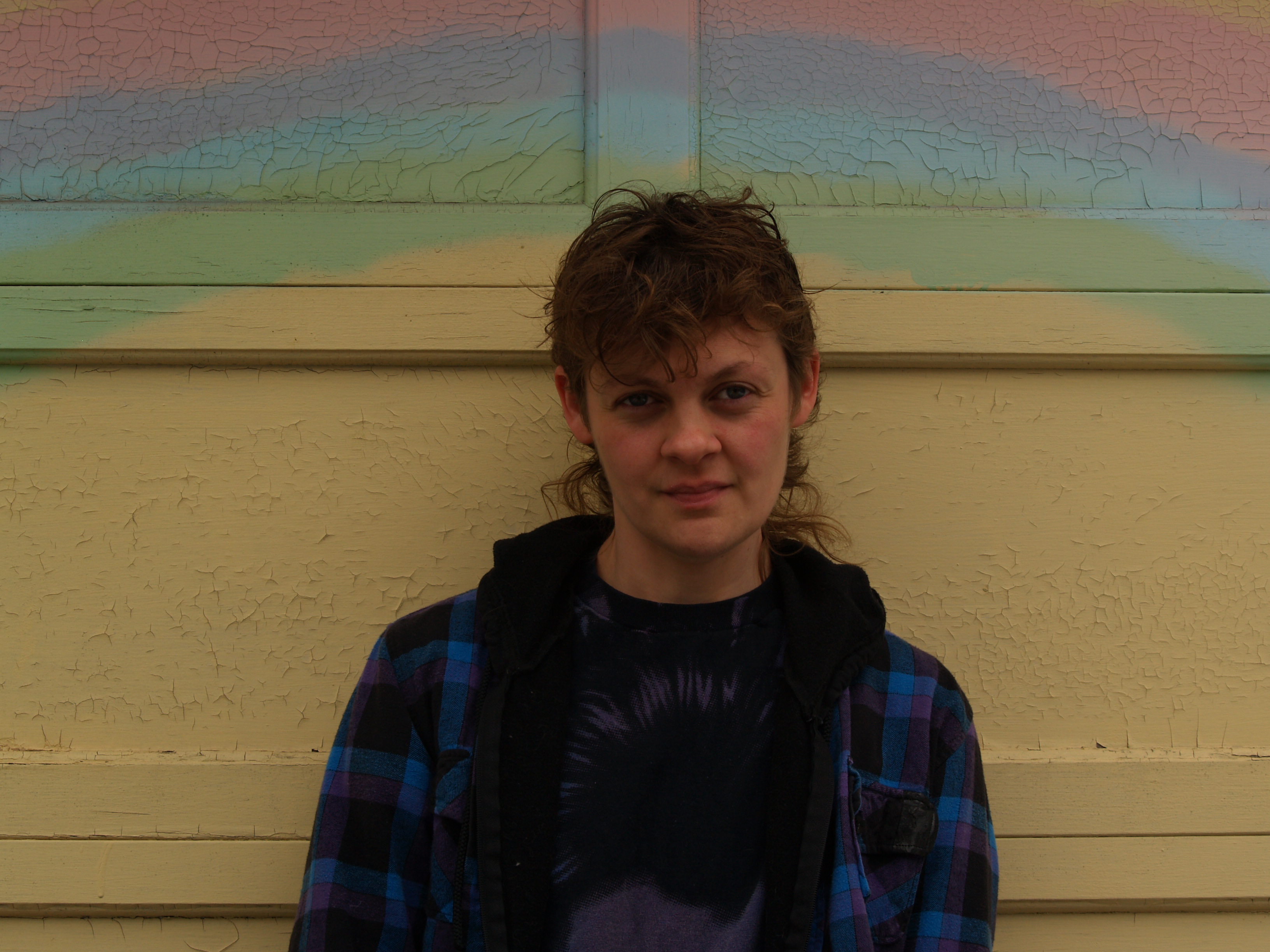
1.75 years on testosterone
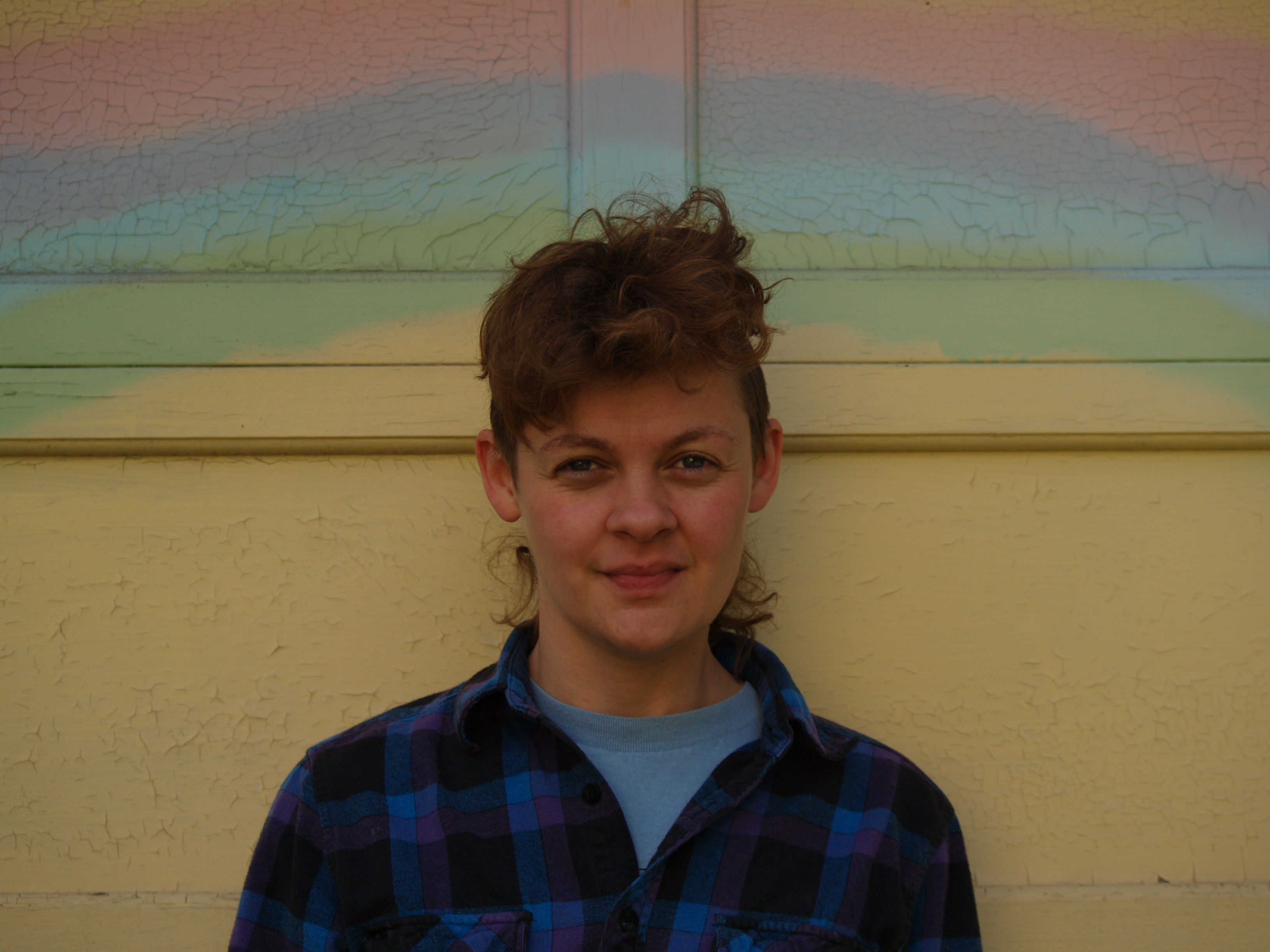
1.5 years on testosterone

one year on testosterone
Depression and taking testosterone
Posted: December 8, 2014 Filed under: Testosterone | Tags: antidepressants, anxiety, depression, gender identity, genderqueer, hormone replacement therapy, lgbtqia, mental health, non-binary, queer, testosterone, therapy, trans, transgender 4 CommentsA reader asked me,
I have been researching going on T and got approved for top surgery this past summer. I too struggle with depression and am on medication for it. I have been trying to find information on it but, were you on antidepressants when you started T and if so, did it affect how the T was processed? I am curious if the T counteracts negatively in any way with depression meds. Thank you for your posts and i look forward to hearing from you!
And since I don’t have any direct experience with this, I thought I’d post here and see if others might have some helpful thoughts / advice.
I was on antidepressants for around 6 years, from 2000-2006. I didn’t start testosterone till 2013, so I’m very far from there having been any overlap. I haven’t heard of someone having an adverse reaction to being on both at the same time, or there being any issue with how the T is being processed by the body. Everything is an adjustment though, and T is a potent hormone to throw into the mix.
For me, T has acted as a pretty effective anti-anxiety substance and antidepressant. I would recommend it to anyone who is depressed or anxious (That’s a joke. Kinda, haha.)
I don’t know whether I would ever take a synthesized antidepressant medication again. I’ve been on quite a few, and they were all either not really doing much of anything, or they were flattening me out into a walking zombie. They definitely do work wonders for some people though. Testosterone has been much more effective, for me, and I don’t just mean in terms of addressing body dysphoria. I mean that it has lifted me into a new level of living, basically. I wanna say that it’s been taking testosterone + being in therapy simultaneously that’s gotten me here (a powerful combination.)
I definitely am prone to low moods still. Just this past week / weekend is a very clear, recent example. I wasn’t sleeping well, my appetite was poor, I was obsessing about things I can’t change, I had little motivation for anything beyond basic functioning level. But something is very different about these dips than where I used to be at: I know they are not going to last. I know I’ll be naturally coming out of it at any point, and once I do, I don’t need to live in constant fear of the next time I start to feel low. Because, that’s all it is – feeling low. It’s no longer body + soul crushing depression, which I’ve been all too familiar with for most of my teenaged years and young adulthood…
Has anyone been on antidepressants when they started testosterone? Did you notice anything about how the two substances might have possibly interacted with each other? What has been your experience with antidepressants?
1.5 years on T without noticeable masculinizing changes
Posted: September 18, 2014 Filed under: Testosterone | Tags: androgyny, gender, gender identity, genderqueer, hormone replacement therapy, hormones, lgbt, lgbtqia, non-binary, queer, testosterone, trans, transgender 4 CommentsIt’s been a year and a half! I increased my dosage of Androgel, slightly, about 3 months ago (from 1 pump of 1% daily to 1 pump of 1.62% daily), and still, I’m not seeing physical changes (which is still a big part of my goals). I have still not yet missed a day – applying the gel feels of utmost importance to me, as a part of my daily routine.
Nothing can be new forever, unfortunately. Naturally, I no longer have that same emotional reaction to applying the gel (anticipation, excitement). And I haven’t been thinking about it in the same ways as I did every single day for that first year (how totally fucking awesome it is). Still it feels very much essential. It’s not nearly as constant, but I do still reflect on how different things are for me now.
– I am grateful that I consistently feel like eating at regular intervals now.
– I’m grateful that I no longer feel quite as debilitated by anxiety-induced adrenaline surges
– I’m grateful that physical sensations make more sense. Pain actually feels painful. I don’t recoil from affectionate touches. When I take a deep breath, I feel a sense of calm and a connection to my body. Etc. forever.
– I’m grateful that sex finally makes sense, and that I get to be a part of it (usually. At least it’s much improved.)
– I’m grateful that although I’m still moody and seem to feel emotions relatively strongly, it’s become more manageable, and rarely manifests in self-destructive ways anymore.
– I’m grateful that I don’t feel so cold all the time!
– I’m grateful that things just feel easier, across the board.
I am genderqueer (in case you didn’t already know!) and am continuing to carve out a space in between genders. Or, to mix and match genders as I see fit. I feel like I’ve made a ton of progress in terms of finding that place where I feel like myself, in my own skin. Yet, not nearly enough progress in terms of seeing that identity reflected back to me from the world around me. This just means I have a long ways to go (And society has a much longer way to go. C’mon society, get with it!) until I really feel comfortable with the ways I’m seen by others. Luckily, that part is not nearly as important as the part about how I see myself. 🙂
Initially, I feel like I was being hyper vigilant about not crossing over into any masculinizing territory, especially with my voice dropping. As time has gone on, I’m not quite so concerned with this (although I’m not actually trying for it either.) I do wonder if my attitudes will change more, in this vein, and I’ll start to want to increase my dose even more and cross into that territory. Only time will tell. As of now, I’m feeling comfortable with where I am.
Here’s where I’ve been (there are lots of details about the subtle physical changes in these past posts):
Five months
Eight months
Eleven months
One year
A video at the one year mark
One point two-five years
And finally, a couple of pictures of my face:
1.5 years on testosterone

1.25 years on testosterone
one year on testosterone
Good doctor news
Posted: August 21, 2014 Filed under: Testosterone, Uncategorized | Tags: androgyny, doctors, gender identity, genderqueer, hormone replacement therapy, lgbtq, lgbtqia, medical treatment, non-binary, queer, testosterone, trans, transgender 8 CommentsThree months ago, I finally found a good doctor, but I was unsure if I’d be able to keep her. I liked her style immediately – ability to communicate, upbeat and straightforward manner, etc. And I liked her entire office’s professionalism. However, she had no trans-related experience, and after I told her my reasons for being there, she seemed hesitant to keep me on as a patient. She said she would look into finding a specialist I could go to, or at the very least, that she could consult with before proceeding. In my head, I was thinking, “Good luck with finding people locally! How do you think I ended up here, with you?!!” Haha.
We had a follow-up appointment yesterday. Going into it, I wasn’t sure if she was just going to say, “So I’m going to refer you to so-and-so,” and I’d have to start all over again with someone new. I was nervous; I didn’t want that. I had convinced myself, to an extent, that that was what was going to happen.
If you’re interested in reading through this epic journey to find a new doctor, here’s where I’ve been, in backwards order:
From 3 months ago, Convincing doctors that hormones are not that complicated
From 5 months ago, The last time I saw my doctor / I like your product
From 6 months ago, Continued quest to find a new doctor (a good fit?)
And from 7 months ago, just simply, I need to get a new doctor
At the appointment, we first discussed the fact that I went to the eye doctor, and that my vitamin D is low and I need to get supplements, and then finally discussed the reasons I’m there. She said she did find two area specialists (one is an LGBTQ health center I’d rather not go through, and the other is an endocrinologist who focuses on adult health – good to know there is someone local, and that she uncovered him!) She continued to tell me she does not think it’s necessary for me to go through either of these channels unless I want to, and that she will continue seeing me for low-dose testosterone therapy. I was super happy but didn’t really let on. I did tell her I am glad I can keep coming to see her though. And that I don’t feel like I need to go to these other people unless something comes up.
I wonder what happened within that 3 month time span! I think she did some research. Or, in the process of reaching out to specialists, they conveyed to her that it was within her realm and abilities. And then she did some research. Something!
We discussed the labs I got done in May. My T levels were at 68 ng/dl. This surprised me quite a bit – previously, I was at 102 ng/dl. I had somehow, without changing a thing, dipped back into a normal female range. How does that work?
I know I should go by how I’m feeling, and not by numbers. BUT – is it just a coincidence that I increased my testosterone dosage 2 months ago, just kinda because? Because I felt like it? Hmmm. I’m super curious to know what my levels are now, accounting for the slight increase… I’ll find out in 3 more months… (More labs.)
Until then, I just wanna revel in the fact that I finally have a primary care physician I would feel comfortable going to for any issue that comes up with my body, trans-related or not. This is a first!
1.25 years on T without noticeable masculinizing changes
Posted: June 18, 2014 Filed under: Testosterone, Uncategorized | Tags: androgyny, gender identity, genderqueer, hormone replacement therapy, lgbt, lgbtq, mental health, non-binary, queer, testosterone, trans, transgender, transition 14 CommentsI’ve been previously writing this ongoing series as “__ months/years on T without physical changes,” but I decided to change the wording from “physical changes” to “noticeable masculinizing changes” …a little more accurate. There have been some physical changes. But, ultimately, they have not added up to a more masculine gender presentation, which has been what I’m aiming for.
A quick rundown of the physical changes I have seen:
(All of these occurred within the first 2 months and then plateaued out, except the ones that have an asterisk – they started to become noticeable around the one year mark.)
- muscle growth, mostly in shoulders, chest, and abs
- moderate clitoral growth
- smell stinkier, need to shower more, get sweaty and sticky, get grosser quicker
- more peach fuzz on face, mustache teeniest-tiniest bit darker
- hairier butt crack*
- slightly more hair on thighs, where I apply the gel*
All these changes are so slight. I don’t think I look any different. Also, my voice sounds the same to me. I would say my range has shifted oh-so subtly (like when trying to sing or make high pitched or low pitched noises, which I like to do a lot), but my speaking voice is the same.
Here are a couple of pictures:
1.25 years on testosterone
one year on testosterone

before testosterone
Also, please note my new summer fashion, in the first photo. I cut the sleeves off of a couple of western-style shirts, to wear over t-shirts or tank tops. The placement of the pockets & snaps helps hide what’s going on with the fact that I have a chest. In the winter, I just layer, and it’s awesome. In the summer, it is hot! Right?! If I can get away without wearing a binder, I will. (And I am grateful every single day for that.) This layered look just might do the trick. I do imagine that I will get top surgery one day. I always start thinking about it much more in the summer. What an incredible feeling it would be to just wear a tank top and be done with it!
I have not missed a day yet, applying 1.25 grams of Androgel 1% per day. The internal effects make it more than worthwhile. A quick rundown of those:
- lower levels of anxiety
- higher sex drive
- less instances of dissociating / more present in my body
- increased ability to experience bodily sensations
- more awareness of the world around me
- increased sensitivity to pain
- ability to let things just roll off my shoulders
- a lot of these are rewording similar themes: basically, a greater sense of well being!
If you wanna look back at where I’ve been, here are some past posts about this topic:
- Five months on T without physical changes
- Eight months on T without physical changes
- Eleven months on T without physical changes
- One year on T without physical changes
And also, a video about it, at the one year mark.
On therapy and gaining access to what we need
Posted: June 2, 2014 Filed under: Testosterone | Tags: doctors, ftm, gender identity, genderqueer, hormone replacement therapy, medical treatment, mental health, queer, standards of care, testosterone, therapy, trans, transgender, WPATH 8 CommentsDirectly from the WPATH-SOC (World Professional Association for Transgender Health Standards of Care), 7th edition, p. 19:
When I was 17 years old, I admitted myself voluntarily to a psychiatric hospital. I thought I was going to go there for a day or two, be able to finally catch my breath, and then work with those around me to make a plan for what I needed. This is not what ended up happening. I still wanted to leave after a day or two – that didn’t change – but suddenly, things were getting really confusing really fast, and lots of people had other plans for me. Since I was still a minor, I really had no say in what happened. I was there for 19 days. I was put on 3 different medications. I was told I suffered a psychotic break. I was diagnosed with bipolar disorder (based on how I was behaving – short-term – and things I told them, such as, “I think I am bipolar”). When I left, I spiraled into a major depressive episode that lasted about 4 months (and I felt highly unstable for years to come). This helped confirm for me that I was, in fact, bipolar. Something I believed for about 6 more years.
I am most definitely not bipolar. I did go through a psychotic break, but in retrospect, I believe this could have been prevented had I not been hospitalized. I think, ultimately, I just had an extended panic attack. And having no idea what that was or felt like, I thought going to the hospital was the only thing I could do to help myself in the moment.
For the next 6 or so years, I complied with my mental health care. I took all my medications every day, as they were prescribed (and those meds and dosages changed a lot over the years). I went to all my appointments I was supposed to go to. I talked to therapists, psychiatric nurse practitioners, psychiatrists. I didn’t seem to be improving. In a lot of ways, my mental state was getting worse. I just followed along with the treatment plan because I didn’t know what else I could do. In fact though, I couldn’t really tell you what the treatment plan was. Was there a plan? I don’t recall that being a conversation.
All of these experiences have greatly shaped who I am, and also my attitudes toward health care providers. I’ll say right now, I am definitely biased and wary. Once I decided I wasn’t going to take medications that didn’t seem to help, and I wasn’t going to listen to ideas that didn’t seem to make sense for me, there really was no going back. Pretty much dropped out completely (except for going to a dentist and a chiropractor, haha) for a very long time.
Until I decided I wanted to access testosterone. I thought I was going to need “The Letter” from a therapist, but in the end, the doctor I went to didn’t care about formalities like that. (He’s also a sketchy doctor though.)
I feel very adamant that I should be able to easily access testosterone for the rest of my life. Testosterone is doing for me what antidepressants, mood stabilizers, and antipsychotics never quite did. And more. I don’t want to go through hassles to be able to get it. I’d go as far as to say that being challenged about it by a health care professional is highly triggering for me. Because when I was younger, I was told what would be best for me for so long, and I followed. And it was shitty. So now the dynamic is going to be the other way around. I know that’s extreme and reactionary, but I do feel that strongly at this point in time. I hope that as I age, I will mellow out about it. I’m sure there will be times that I’ll need help and I won’t know what is going on with my body, and I will be grateful for doctors’ and specialists’ expertise. As for now though, I’m not there yet.
Although my experiences with mental health professionals have been shaky at best, I believe strongly in the therapeutic effects of… well, therapy (haha). Without having been in therapy through those toughest years, I would not be where I am today, no question. I learned how to talk and communicate from therapists. I learned how to stop being so hard on myself. I learned to let go of my past. I learned that I cannot save others from their pain. I learned what things really matter in life, and what things I am spending wasted energy on. It was the slowest imaginable process. None of these gems felt like they were working for me at the time, but in returning to therapy over these past 2 years, it all started to suddenly sink in, and I’ve made some real leaps and bounds. I feel grateful for that groundwork I started in my late teens and early twenties, through therapy, even though I could not feel the benefits whatsoever at the time.
Two years ago, I attended a workshop at the Philadelphia Trans-Health Conference called, Who Needs Therapy? Some Thoughts on Mental Health and Gender Variance. It was largely an open discussion format, with a mix of mental health professionals, people with experience being in therapy, mental health survivors, and others. Toward the end I had worked up the courage to ask the group, “What if I really connect with my therapist, but it is clear she is not knowledgeable about trans* issues? Is it worth it to continue working with her if I want to explore this? Is it up to me to attempt to point her to resources if I want to keep working with her?”
Everyone who responded to me was very adamant that it was not up to me, and if she does not do the work on her own, I should find someone who is knowledgeable or who is immediately and clearly willing to do the work. It turned into a very impassioned discussion with a lot of people saying the same things. I left feeling really confused.
It had been very hard for me to find a therapist I click with. I’d gone to a few in my mid/late-twenties, and felt really dispirited. A couple of them were specifically gender therapists. In the end, I returned to the main therapist I saw through some of my toughest years. It was amazing to me she is still around and I could find her. Re-connecting with her again after 8 years was mind-boggling in the best way possible. Despite the feedback I got at that workshop, I wasn’t about to let go of her so easily. Nor did I feel like educating her myself, or even asking directly what she did know and what she did not know. I just continued to tell her how I feel, and I didn’t ever get the impression that she didn’t understand or wasn’t going to work with me on that. However, when I asked her if she’d write me a letter for HRT if need be, she said, “No. I don’t feel like I have that expertise.” And I appreciated that. It is all working incredibly well.
When going to my new doctor, I could have possibly had an easier time if I was forthcoming with the fact that I’m in therapy for gender issues (although I’m not in therapy with a gender therapist). But I didn’t feel like I should have to. So I didn’t mention it. When the doctor asked me who is in my support network, I said my partner and my parents and friends. I left out my therapist. When she told me she would like to collaborate with the gender identity youth clinic in making a plan for me, I could have saved some time and hassles by saying, “My therapist already talked with them, and they won’t see me because of my age. So the plan B is this.” But I didn’t. I just said, that’d be great and let my doctor make the phone calls and come to that same conclusion on her own.
Why? Because I think that therapy is an important part of my well-being. And I think that getting the best medical care possible, for what I need, will also be an important part of my well-being. And I don’t feel like the two necessarily need to have much to do with each other. Specifically, I don’t want to suddenly be taken more seriously and be given what I need, gender-wise, because I am in therapy. I want what I say to be enough. I want to access hormones without it being known I’m in therapy, if I can.
I am deliberately attempting to lay some of the groundwork, saying that this is perfectly acceptable. Not all of us live within access to clinics or doctors who offer the Informed Consent model. But I feel like I am in a position where I can work to change that.

 janitorqueer