
I keep thinking I’m bigger and more masculine than I actually am
Posted: October 21, 2014 Filed under: Janitorial work | Tags: androgyny, gender, gender identity, genderqueer, janitors, lgbtq, non-binary, queer, school, testosterone, trans, transgender, work 10 CommentsI’m not complaining; it’s not a bad thing! My surroundings sort of facilitate this, which is fine by me. As a janitor at an elementary school, I spend most of my time, during the work-week, with women and children (if I’m with anyone at all). Every teacher I interact with regularly is relatively feminine in her attire, mannerisms, and speech. (There are a handful of men who teach / work at this school; I just don’t happen to see them on a regular basis.) Every child running around me getting ready to head home for the day, is tiny. I wear a work uniform which is super masculine by default. (Like, we don’t have “women’s uniforms” and “men’s uniforms.” We just have uniforms.) In addition to the uniform, I wear men’s pants and men’s hiking boots. I imagine my movements are relatively masculine. I’m working, I’m using big, sweeping motions. I saunter around slowly, sometimes with my hiking boots untied.
I am surrounded all day long by tiny furniture. The classrooms I clean are for kindergarteners through 2nd graders. (My co-worker cleans the bigger kids’ rooms.) Some of these table tops are seriously 2 feet off the ground. I have to essentially bend in half in order to spray and wipe them all down, daily. (My poor back!)

Not an actual room I clean, but a good representation.
I’m only 5’4″ (or maybe a little shorter than that. I like to think I’m 5’4″ – I’m at least that with my hiking boots on!) but I feel like a giant! Sometimes I sit down in the teeny tiny chair at the teeny tiny table and just catch my breath / think / relax. It’s sorta like I’m in a fun house, where my self-perception is distorted because of my surroundings.

It’s tough to get your knees to fit under the table. Again, not actual school/teacher/kids, but a good representation.
I like this feeling a lot. It helps me feel more like the way I see myself. The only tough thing about it is when I get a glimpse of myself in the mirror (this happens at home too, it’s not just a work thing) and I realize how tiny and feminine I actually am! I seem to especially hone in on my neck, for whatever reason – it’s so dainty and slender and like it could snap right in half so easily. My wrists too; it feels like my hands could snap off at any time. These feelings don’t really translate into me feeling like I should be taking more testosterone and becoming more masculine. They’re just sorta… fleeting, at least for the time being.
Another thing that’s going on at work that’s somewhat related is: age. The kids stay the same; the parents stay the same. (Not really of course. Kids grow up. I just mean I’m perpetually surrounded by kids and parents around the same ages, they cycle through, while I get older and older.) I used to be the youngest person who worked at the school, for years. Now, there’s a teacher who is younger than me. When did that happen?! (It happened last year.) Also, parents keep looking younger and younger. Many of them are, in fact, younger than me now, which is a shift. In fact, just yesterday, a parent recognized me from high school. She was in a grade below me. It was super weird!
It’s just not the same as it used to be: kids and parents these days!
Can hormones change my sexual orientation?
Posted: October 1, 2014 Filed under: Testosterone | Tags: demisexual, gay, gender, gender identity, genderqueer, lesbian, lgbt, lgbtqia, queer, relationships, sexual orientation, testosterone, trans, transgender 13 CommentsThis was a huge reservation for me, before I started testosterone. I had read enough personal accounts and spoken to enough friends that I had this somewhat common narrative in my mind: someone who is FTM was primarily attracted to women before starting hormones. Orientation then opened up / shifted, and this person now is attracted to both / all genders, or is now more attracted to men, or even exclusively attracted to men. One common idea surrounding this is that the person always was attracted to men (if even just on a subconscious level), but could not fathom being intimate with a man, while being seen as a woman. Another related idea is that the person identifies so strongly with being queer, that once he is finally perceived as a man, a new type of queer identity is now possible – one that may have been appealing all along.
OK – I’m done with the generalizing! It’s super uncomfortable for me to paint broad strokes and write about a hypothetical person in such a detached manner. I just wanted to get some initial thoughts down, some type of framework in which to plug my own narrative into. Whether these ideas are all that accurate or common is largely beside the point. The important part is that they were looming large for me. I had some serious fears about it.
While I was coming out (sort of?) as a lesbian (sort of?) in my late-teens, I was mostly just befuddled. I didn’t really understand physical and sexual attraction. I thought I was probably just a late bloomer. Now I understand that I’m probably a demisexual. Although this (somewhat recent) revelation is fascinating, I don’t feel a strong attachment to this label or a strong need to figure out my sexual orientation in all ways, shapes, and forms. It never caused me to feel much of a disconnect from others. I mean, I generally felt a lot of disconnect from others, but I didn’t look to my sexuality as a way to figure out why that was. It’s kinda, meh, for me… Fascination, and not a whole lot more. (Which is interesting because I usually love love love picking things apart! Haha.)
I’m gonna jump over a whole bunch of years and land somewhere in my late 20s. I’d been with my partner (she is a cisgender female, for the most part) for about 4 years at this point, and we were experiencing a long-term lull. We weren’t connecting. Everything felt dulled, foggy, I think for both of us (for different reasons). I was feeling more and more drawn to guys, all around me, and could not sort out whether that was because I needed to be a guy, or if it was a sexual orientation thing (again, the lack of the physical attraction part was confusing. It was more of a cerebral thing.)
I kind of decided that it was both. I fantasized about a totally different life, where I was a guy, and I was with a hypothetical guy. However, I did not want to break up with my partner. I strongly felt that the tough place we were in was circumstantial and situational, and that we could work our way through it. I wanted to work our way through it. I wondered if a big key to working our way through it was: for me to transition. I felt this heavy burden of a circuitous fear: I need to transition in order to get out of this place and improve our relationship; if I start transitioning, my gut is telling me that I will be even more drawn to guys, and I will want to end our relationship in order to pursue that.
I vividly recall, at one point, completely breaking down and telling her, while crying, that I was attracted to masculinity. She didn’t seem surprised, or threatened; she didn’t shut down. She stayed there with me, in that moment, and replied, “one of the many pitfalls of being in a queer relationship.” I appreciated that reply so much, in the moment. It felt like relief. Sometimes, I make things overly-fraught; she brings it back down to earth.
She has since elaborated that she did indeed feel the heaviness of the situation. Although we weren’t talking about all of this directly at the time, she recently told me that she knew. And that she was going to support me in transitioning (whatever that looked like to me) unconditionally, at the risk of losing me along the way. Wow.
While trying to sort that out, some life changes occurred that vastly improved things. My partner got a new job, we shifted our approach to friendships, I went back to therapy. Our relationship improved by leaps and bounds.
It was about two more years before I really found myself at that crossroads of needing to try testosterone (although I no longer planned to transition in that common-narrative way). That fear was still there. Although it felt like we had a solid foundation to work from, I worried, would things shift between my partner and me? Would I start to be drawn exclusively to men? Where would that lead us? I started testosterone anyway.
Testosterone has changed things for me, but not in those ways I feared. I’m attracted to my partner and also I’m attracted to men. Sometimes I’m attracted to women; mostly, I’m attracted to androgyny and effemininity (effeminate men). I don’t know what that all adds up to; I just call it “queer.” The nature of attraction feels a little less cerebral, and a little more physiological than before. I like that. I think I still fall under the category of demisexual, for sure, but it does feel different. My partner and I talk about all of it. None of it is threatening to her. None of it feels worrisome to me. It’s all just puzzle pieces, that, although not straightforward or common, make more sense to me than my sexuality has ever made sense before.
When No Gender Fits: Washington Post Article
Posted: September 24, 2014 Filed under: coming out | Tags: androgyny, article, coming out, gender, gender identity, genderqueer, lgbt, lgbtqia, media, non-binary, queer, trans, transgender 17 CommentsAbout five months ago, I did a phone interview with Monica Hesse of the Washington Post, as a potential candidate for an upcoming article about non-binary genders. She was planning on spending a few days with the person / people she selected; it wasn’t just a matter of chatting with her over coffee. It sounded really intensive and potentially uncomfortable at times. I thought the interview went well, and I talked to my partner about the possibility of her hanging around with us for a while. My partner was game. I was game.
I got back to her with a few reservations: When might this be, exactly? (I really love being able to plan ahead.) And, would you be coming to my work?!! (I am not out at work as non-binary, and I could not fathom her being there with me, at all.) She assured me that it was not a necessary part of her article, and it’d totally depend on who she ended up going with and what everyone was comfortable with. She seemed well versed in trans issues and understood the need for partial anonymity or a potentially incomplete story.
She had a lot more phone interviews to get through, and as we messaged back and forth, it became clear her interest in me was waning. I was pretty bummed. It sounded like something I was ready to challenge myself with! Of course, the disappointment faded with time. I’ve been looking forward to catching the finished article. Here it is!!!
When No Gender Fits: A Quest to Be Seen as Just a Person
I think this article is really well done. It covers important ground: pronouns, the internal isolation such an identity can bring (when society has no starting point for understanding), family and friend relationships, coming out issues. There is nothing sensational or hyped up about it – the reporter seems well informed and sensitive.
A major thing struck me. This article is about a very young person. Kelsey is 18 years old. They are at a completely different life stage than I am at. The article follows them over the entire summer. It appears that the reporter spent many many days with Kelsey, over a matter of 4 months or so. We get a glimpse into what’s going on, as they have concerns about clothing. As they have difficult conversations with their mom. As they go to a therapy appointment to discuss the possibilities of going on a low dose of testosterone. As they talk about teenaged things with their teenaged friends. As they meet someone they found through OKCupid, for the first time in person. As they pack up and plan for life at college.
“They will go to college. They will study engineering. They will get a job. They will find a partner and make a home. They will begin with finding a T-shirt.” This quote sums up the tone of the article.
Had I been the subject, it would have been nothing like this at all. I’ve been to college (glad that’s over with!!!). I have a job. I have a partner. We have made a home. I have a T-shirt. In fact, I have many T-shirts. Haha.
This story is no doubt important. However (and I’m definitely biased here, bordering on ageist maybe) I think it’s really really necessary that there are representations of older, established non-binary people. It’s not just a young people’s thing. (Not to imply that young people will be growing out if it – they won’t be!) I just mean that it’s not just something someone is focusing on at the time when they are naturally growing into their identities, just at the beginning of starting new chapters of their lives. There is, relatively speaking, a lot of representations (if even just online only) of young people, starting to question and figure these things out.
Gender identity issues are multi-generational. They are lifelong, and they come with different sets of challenges at different stages in life. I hope more media outlets will start jumping on the bandwagon (in respectful ways!) and more articles will pop up, with more frequency, soon. And that those articles will focus on other identities within non-binary genders, and different age brackets, different ethnic backgrounds, different socioeconomic backgrounds, etc.
And if I’m not seeing it, I’ve toyed with the idea of writing my own article, here. Like, pretending I am a reporter, looking in. Look for that in the near future, maybe!
1.5 years on T without noticeable masculinizing changes
Posted: September 18, 2014 Filed under: Testosterone | Tags: androgyny, gender, gender identity, genderqueer, hormone replacement therapy, hormones, lgbt, lgbtqia, non-binary, queer, testosterone, trans, transgender 4 CommentsIt’s been a year and a half! I increased my dosage of Androgel, slightly, about 3 months ago (from 1 pump of 1% daily to 1 pump of 1.62% daily), and still, I’m not seeing physical changes (which is still a big part of my goals). I have still not yet missed a day – applying the gel feels of utmost importance to me, as a part of my daily routine.
Nothing can be new forever, unfortunately. Naturally, I no longer have that same emotional reaction to applying the gel (anticipation, excitement). And I haven’t been thinking about it in the same ways as I did every single day for that first year (how totally fucking awesome it is). Still it feels very much essential. It’s not nearly as constant, but I do still reflect on how different things are for me now.
– I am grateful that I consistently feel like eating at regular intervals now.
– I’m grateful that I no longer feel quite as debilitated by anxiety-induced adrenaline surges
– I’m grateful that physical sensations make more sense. Pain actually feels painful. I don’t recoil from affectionate touches. When I take a deep breath, I feel a sense of calm and a connection to my body. Etc. forever.
– I’m grateful that sex finally makes sense, and that I get to be a part of it (usually. At least it’s much improved.)
– I’m grateful that although I’m still moody and seem to feel emotions relatively strongly, it’s become more manageable, and rarely manifests in self-destructive ways anymore.
– I’m grateful that I don’t feel so cold all the time!
– I’m grateful that things just feel easier, across the board.
I am genderqueer (in case you didn’t already know!) and am continuing to carve out a space in between genders. Or, to mix and match genders as I see fit. I feel like I’ve made a ton of progress in terms of finding that place where I feel like myself, in my own skin. Yet, not nearly enough progress in terms of seeing that identity reflected back to me from the world around me. This just means I have a long ways to go (And society has a much longer way to go. C’mon society, get with it!) until I really feel comfortable with the ways I’m seen by others. Luckily, that part is not nearly as important as the part about how I see myself. 🙂
Initially, I feel like I was being hyper vigilant about not crossing over into any masculinizing territory, especially with my voice dropping. As time has gone on, I’m not quite so concerned with this (although I’m not actually trying for it either.) I do wonder if my attitudes will change more, in this vein, and I’ll start to want to increase my dose even more and cross into that territory. Only time will tell. As of now, I’m feeling comfortable with where I am.
Here’s where I’ve been (there are lots of details about the subtle physical changes in these past posts):
Five months
Eight months
Eleven months
One year
A video at the one year mark
One point two-five years
And finally, a couple of pictures of my face:
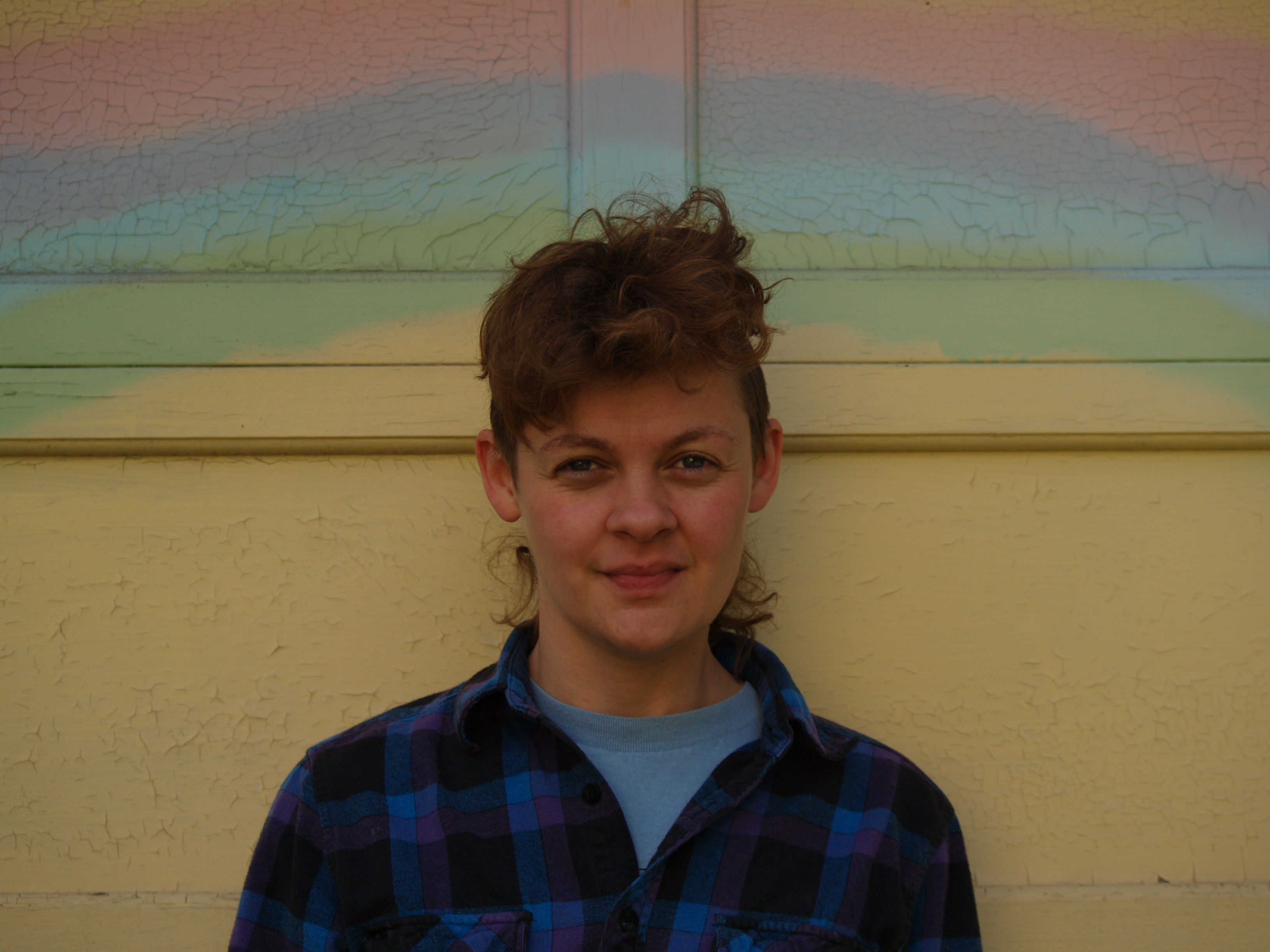
1.5 years on testosterone

1.25 years on testosterone

one year on testosterone
Party, vacation, and TERFs
Posted: September 1, 2014 Filed under: Uncategorized | Tags: butch, emotions, feminism, gender, genderqueer, getting gay married, lgbtqia, marriage, queer, radical feminists, relationships, TERFs, trans, transgender, wedding 7 CommentsMy partner and I made it through this party I’d been half-dreading, a party to celebrate our prior unification ritual. It was a lot of things, but largely, it felt validating and joyous, in a chaotic sort of way. It was fun; we would not do it again! It was a different kind of experience for me; I was on a natural high for so long, it was starting to get tedious. I mean, I’ve had a lot of extreme highs and lows in moods, over much longer periods of time, but this was somehow different. Somehow much less scary. I felt confident that even though I felt this way, I could depend on myself to do whatever it was I needed to do. It was a high that was not really all that fun, in its duration. Maybe I am growing up.
High extended roughly, from Thursday (kicking the planning for Saturday into high-gear,) till Tuesday (by then, we were in Northampton, MA for the start of our vacation, and the long drive to get there felt like it happened in a snap.) I wasn’t hungry; I wasn’t sleeping well. I was able to just keep going and going and going regardless. I didn’t particularly feel euphoric or excited (I mean, I did at times, but not sustained.) I basically started feeling like all I wanted was to get a full night’s sleep, an entire meal in my stomach, and to come down from wherever up-in-the-clouds I was.
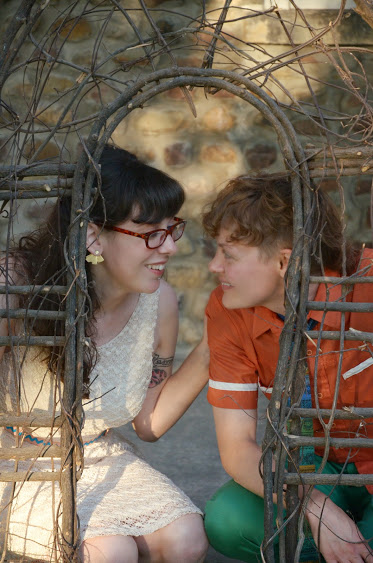 On our vacation, we stopped through Northampton and Spencer, MA before heading up to a tiny town (talking about a town with a church and a convenience store. No gas station.) in central Maine. We stayed with two friends who have an awesome cabin they’ve basically created themselves, over the past 10 years. It sits on 50 acres of land, and they live there part time. We went blueberry picking (organic! $1.50/lb!!!), swimming in a very cold lake (when the air temp + rain hitting lake was even colder), trouncing through the woods a bit. We kicked back, did some reading, connected with our friends, and heard stories about / met some of their neighbors.
At a rest stop on the way up there, I did an awkward dance with an older woman over the fact that I was in the women’s bathroom. She spun around to walk back out and check if she was in the right one, sort of touching my shoulder to prevent a collision between us, saying she’s checking that this is the right bathroom. I smiled and said, “Yep, it is.” This, surprisingly, does not happen to me often at all. I can’t even remember the last time. I enjoyed the experience (since it wasn’t threatening or uncomfortable, was in a way validating.)
On our way back home, we stopped to stay in a tree-house!  And on our way from Maine to this tree-house, my partner read aloud an article from the August 4, 2014 edition of the New Yorker (p.24 – “What is a Woman? The Dispute Between Radical Feminism and Transgenderism”). I’ve never picked up a New Yorker before. (I think maybe my partner hasn’t either, because she commented, “There are a lot of comics in here!” Haha.) It had been given to us by our friend in Maine, because she knew we’d be interested in this one article.
Imagine driving on winding roads through rural VT, rain coming down, having previously been bored out of my gourd, tired of our musical selections. And suddenly being fully engaged in this topic that seemingly came out of nowhere (I mean, I know it came from the New Yorker; I just mean I wasn’t prepared for it, but it surely was a much needed distraction right then.) At various points, I interrupted my partner to argue passionately both with the article itself and with the radical feminists the article was about.
Some of the gists:
– Not all, but some radical feminists still feel that transwomen are not women and will never be women (and that they benefit from male privilege…?). These rad-fems continue to want to exclude transwomen from women-only spaces, and to invalidate their experiences in numerous other ways. They reject the notion that someone could feel intrinsically female or male, and that all the ways that women and men are different are due to sociological forces and learned experiences only.
– The common term for these rad-fems is TERF (trans-exclusionary radical feminists).
– Some TERFs are detransitioners, and TERFs often cite detransition as proof of the fallibility of transgenderism. (Expert reports state that the percent of people who detransition is somewhere between 1% and 5%. This is higher than I would guess, but hardly significant enough to attempt to build a case.)
– Some TERFs face threats, both in their personal and professional lives. Situations have become so escalated at times, that they must be escorted by security to events and go underground in their academics.
There was so much more to this article (such as why FTMs are OK, but MTFs are a threat -??? Maybe I’ll return to the article for a more in depth future post); I highly recommend seeking it out if you can. It was eye-opening for me because even though I’ve heard of this term (TERFs) and understand the basics of the arguments, this really painted a picture. On the one hand, TERFs’ arguments are terribly weak and seem fueled by fear and a lack of understanding, with no efforts to begin understanding.
On the other hand, I find myself empathizing (just a little.) “TERF” is not a self-describing term. It is essentially yet one more slur, coming from others in sexual/gender minorities – people all too familiar with slurs themselves, usually. These women have fought passionately (sometimes for decades and decades, creating groundbreaking groundwork) for changes in the view of what it means to be a woman, and now they’re kinda in over their heads here. One final passage from the article that really sums up how this sub-group of rad-fems must feel,
“[These] radical feminists find themselves in a position that few would have imagined when the conflict began: shunned as reactionaries on the wrong side of a sexual-rights issue. It is, to them, a baffling political inversion.”
Bathroom anxieties: a genderqueer janitor’s perspective
Posted: January 24, 2014 Filed under: Janitorial work, Passing | Tags: bathroom anxieties, bathrooms, gender, gender anxiety, gender identity, genderqueer, janitors, non-binary, passing, public restrooms, restrooms, trans 24 CommentsI spend a lot of time in both men’s and women’s public restrooms. Or more accurately, girls’ and boys’ restrooms – I clean toilets, and I work at an elementary school. There are also a few gender neutral bathrooms, for staff, which is pretty great. For a tally, there are 3 girls’ gang bathrooms and 3 boys’ gang (That’s really how they are referred to, which totally conjures images of ruffians scribbling graffiti all over the walls and pulling all the toilet paper off the rolls. Oh, and smoking and fighting and stuff.), 3 gender neutral bathrooms for staff, one women’s room, one men’s room, and 7 bathrooms within classrooms (also gender neutral).
For my first half-hour of work, kids are still in school. I like to get a head start on some areas I can access before they leave for the day, and gang bathrooms are one of the places I can start. But only if I’m sure no kids are in there, and they’re not likely to come in. Especially for the boys’, because technically I am female. This is very serious.
Before I labor over that point, here’s a little back story about my take on which bathroom I personally should be in: Over the holidays, I got to hang out with two out-of-town friends who are both trans*. They were both describing dreams they’ve had where they went into an unaccommodating bathroom, like stalls were missing or it was more of an open locker-room vibe. And they asked my partner and me if we’ve had public restroom anxieties, and we both replied, “No.” And in that sense, it’s true. I strongly feel myself to be non-binary and genderqueer (and my sense of self is closer to male than female), yet I really have no questions or reservations about which public restroom to use. If a gender-neutral or family one is available, I will use that. Otherwise, I will use the women’s room. And if people are doing a double take or wondering if I should be there, that’s kinda their problem. Because it’s the bathroom I feel more comfortable in. I didn’t always feel this way. I used to always feel very anxious about the whole endeavor of going into the women’s room. Honestly, I’m not sure what changed, other than the fact that I’d rather be in there than in the men’s room, and I’d rather feel calm than anxious?
What if, though, I were just a few degrees closer to feeling male and presenting masculine? And/or I felt more comfortable going to the men’s room, but looked the way I look now? What would that mean for me at work? The whole system of safety according to separation of genders would be breaking down. Like, what if I were out at work, and asked for male pronouns and used the men’s / boy’s room? Would there be a lot of upheaval and confusion? Or would everyone be accepting and cool with it? I really can’t make that call in advance, but it’s interesting to think about, even on this basic level of which bathroom is it “safe” for me to be in at the same time with children?
Daily, I have to be in and out of both bathrooms. And as of now, f I get a call that there’s a problem in a boys’ room, I gotta get out wet floor signs and yell into the doorway, “Anyone in here?” (I do this for the girls’ room too, even though I don’t technically have to.) If I’m already in there and a boy walks in, I have to make a huge deal out of the fact that we are both in there. And I have to walk out immediately. This happened just yesterday in fact. I knew I was taking a chance, starting to clean the bathroom before school was out. A first-grader came in, and I had to be all, “Wait one second. Let me leave and then you can go in.” He was really flustered and turned right around and was really hesitant about going in at all after I walked out. I had to repeat a couple of times, “You can go ahead now.”
Why all the paranoia????? I follow this protocol because people can loose their jobs over shit like this. And a part of me understands it, from a safety standpoint. But at the same time, we are instilling and reinforcing really irrational fears and gender rigidity into kids! The situation is anxiety provoking, all around!
During the majority of my shift though, I walk in and out of bathrooms without any hesitation because my co-worker and I are the only ones in the school. (There are evening activities most days, but everyone needs to go to designated bathrooms at those times. They can’t just wander around the school.)
This may sound kinda weird, but bathrooms are a good place to kill some extra time. I like to practice peeing standing up, without an STP device. (Basically because I don’t have one; I’m thinking about getting one.) Interestingly, I do this still in the girls’ room. I never actually use the boys’ bathrooms (it’s been ingrained in me too). Also, bathrooms have mirrors, which used to come in handy when I was just starting to get into doing drag. I’ve spent countless work hours listening to my mp3 player and practicing lip synching and dancing, in front of mirrors in the public restrooms. I like to use the mop handle as a microphone stand. It’s pretty fun.
Bathrooms end up being a microcosm for people’s anxieties surrounding gender. And I don’t totally get it. But I can attest to the fact that it is indeed taught and reinforced at a very young age. I can also attest to some differences between genders, based on the different states I find the bathrooms in or just trends and differences between the two, but that’s sort of a different topic all together. And some of it is just plain gross.

 janitorqueer