
GID: exclusion for top surgery coverage
Posted: February 23, 2016 Filed under: top surgery | Tags: androgyny, doctors, gender identity, genderqueer, health insurance, hormone replacement therapy, lgbtq, medical treatment, non-binary, queer, top surgery, trans, transgender 15 CommentsWhen I started moving forward with the process of getting top surgery, I did so with the assumption that I would be paying in full out of pocket. My therapist had looked into coverage a while back, for me, and told me it was not covered. Still, though, times are changing, and I had a sliver of hope that my insurance plan might have been updated. In my state, government funded health care now fully covers transgender related treatment and surgeries. Maybe mine would, by now, too?
Yesterday, I was on the phone with a customer service person for over an hour. At first it seemed promising. I gave her the category number – F64.1 (gender identity disorder in adolescents and adults) and the code for the surgery type – 19304. She said, “Double mastectomy?” and I said, “Yes.” She then proceeded to try to find out whether the surgeon was in network or out of network. She told me that if she’s in network, I would be paying a total of $70. If she was out of network, I would be paying a $750 deductible, and 80% would be covered beyond that. I started to get my hopes up – either of those would be awesome! – but also remain skeptical. The customer service rep made calls to my surgeons office, to the surgical center, and to some other places. She determined in the end that it would be out of network.
At that point, I said, “OK, I just want to make sure you’re doing this through the category of gender identity disorder? It is a gender-related surgery.” She responded, with a blankness in her voice, “That’s an exclusion under your policy.” I replied, as my heart sank a little, “OK so nothing will be covered. So it doesn’t matter whether she’s in network or out of network?” “Correct.”
I was mad that she overlooked the category I gave her, as a first piece of information, and moved forward as if there would be coverage, only to let me down. And that once I made it clear, she didn’t have anything more to say to me that might be helpful.
I asked her about the appeals process. She said I would pay for and get the surgery, the office would submit the claim, the claim would be denied, and then I could work toward getting some reimbursement.
I brought her attention to a 7 page document that is called Medical Policy, Subject: Gender Reassignment Surgery. It lists criteria that need to be met in order for a surgery to be deemed “medically appropriate.” I asked her what this was, and what would happen if I gathered enough information to move ahead with this. I told her it was difficult to understand exactly what I was reading. She said she was reading along with me, and that yes, these policies are confusing. She then put me on hold again, and when she came back, she completely derailed that conversation – she steered me back toward the exclusions. She added that not only was the procedure excluded on the basis of gender identity disorder, it was doubly excluded because it falls under “cosmetic surgery.” The conversation was basically over at that point. I stayed on the line to complete a survey about the call, and I gave her good ratings because she was way more helpful (making multiple phone calls on my behalf) than I was expecting.
I keep going back to this medical policy document. I don’t know for sure, but I have this feeling that it’s the loophole for filing a grievance. That if I can prove it’s medically necessary, I have a shot at getting at least partial coverage.
However, the criteria are so extremely binary in nature. Some examples
I was on a panel
Posted: February 4, 2016 Filed under: coming out, Writing | Tags: blogs, doctors, gender identity, genderqueer, lgbtq, medical treatment, non-binary, Planned Parenthood, public speaking, top surgery, trans, transgender, writing 10 CommentsI’m much more of a writer than a conversationalist – and definitely not a public speaker. Tons of people have a fear of public speaking. I don’t mind being in front of audiences, so at least I have that first hurdle out of the way. I just have a fear that I won’t be able to talk naturally and coherently. Despite this, I’ve had aspirations for a long time to verbally share my experiences, be on panels, join the speakers’ bureau, etc. I’ve talked a few times in front of audiences, mostly as part of drag performances. I’ve gotten around the talking thing by preparing statements ahead of time, reading out loud what I’ve written.
I’ve never seen someone on a panel read before, but I figured, I could do it! Why not? I had seen a message posted to a facebook group, from an acquaintance who works for Planned Parenthood. She was organizing a half-day of training about trans-healthcare for the PP health center staff: clinicians, nurses, health center managers and front desk staff. It was going to include a 45 minute panel, and she was looking for trans-people to talk about their experiences with health services – both positive and negative.
I thought my recent consultations with surgeons for top surgery would illustrate a stark contrast, so I emailed her about it and included links to these two posts:
She wrote back saying it’d be great to have me, and I could certainly read out loud. Over the weekend, I edited these so they’d work better spoken out loud, and I tried to cut them down shorter. Because, dang, they seemed short when I wrote them, but it takes more time than you’d think to read things out loud!
I arrived at the venue Monday morning, and I wasn’t even that nervous! I recognized one of the other people on the panel, which was cool. The third person came in shortly after, and we introduced ourselves – her name is Leah.
I went first to get it out of the way; I introduced myself and then just launched into it. I think, in retrospect, that I was talking too loudly (definitely not quite my natural speaking voice) but, that’s OK – better too loud than too quiet I guess. The other two people went, and they both did an awesome job speaking off the cuff. We answered a bunch of questions, and I was grateful that the person on the other side of me naturally answered first, giving me time to formulate something to say. It all went really well – people had great questions! (As an interesting aside, there were about 75 people in the audience, and it appeared to be made up of 1 man / 74 women.)
The organizer then presented us with gift bags and gift cards, which was awesome! I feel like the norm is that panel participants are just volunteering, so that was awesome that we were compensated. We lingered while the group wrapped up their training, ate some bagels and had some coffee, and then stuck around in case anyone had any further questions. No one did, but we got lots of compliments and thanks, as people were leaving.
This was totally worthwhile and something I’d like to do more of. I’m not sure how I will transition from reading things into actually becoming a speaker, but, well, it’s something to work on.
The next day, one of the bloggers that I’ve been following for a while, The Overflowing Closet, wrote this post (as part of the 30 day trans-challenge she’s doing: Day 8 – “How do you deal with being misgendered in the beginning of transitioning by people?” She started by saying, “Yesterday I gave a talk in front of 75 medical staff and personnel about my experiences being transgender and seeking medical help. The crowd was filled with people who wanted to provide better services for trans people, and one of their biggest concerns was misgendering people.”
I suddenly realized that the Leah I had met the day before is the same Leah whose blog I’ve been reading! Has this ever happened to you? Where you’re reading a blog and then you meet someone and then you connect the dots in between? Such a cool experience! I contacted her to see if I could share this, and she said of course.
So hey, here’s to making something out of all this writing and online connecting with people!
Medications orbiting my head
Posted: July 9, 2015 Filed under: Uncategorized | Tags: antidepressants, antipsychotics, anxiety, bipolar disorder, depression, doctors, emotions, identity, medical treatment, medications, mental health, moods 10 Comments
I drew this picture to illustrate the jumble I feel is going on. Just to recap, 6 months ago, had a manic episode and was hospitalized. I previously was not on any medications, but suddenly I was thrown back into all of that – psychiatric visits, side effects, adjusting dosages, trying different drugs. I’d definitely say the hardest part of the past 6 months was being depressed for a good chunk of that time. But almost equally hard, just in a different way, is the long term.
Early on, I was cavalier. I was sure that I’d get off of all these medications within 6 months – just go back to the way things had been. I was even reluctant to add an antidepressant – things had to get really bad for me to go there. Now that it’s been 6 months, I can easily say that time frame was way too short. And I’m also not so sure anymore: Which drugs are helping? Which side effects can I tolerate? How long will I be seeing this psychiatrist? Do I potentially want to stay on any of these long term? (That last question scares me – it’s almost as if being med-free has been a part of my identity…)
Some of this journey has felt crazy. I was having hot flashes and cold sweats, my mouth tasted metallic, I threw up a few times (and I have a stomach of steel). At one point, I went on a drug called Cogentin. Its purpose was not to help with symptoms, but rather to help with side effects. One of the other drugs, Geodon, typically causes hand tremors and a stiffening of facial muscles. When a nurse practitioner asked if I was experiencing these things, I said, “I guess so.” So she prescribed yet another thing to add to the mix. After 3 days of taking it, my nearsighted vision became blurry. Overnight. One day was fine, the next day, I couldn’t read the computer screen. I wasn’t reading books at the time, so that wasn’t an issue, but I remember eating food and not being able to see it and just feeling enormous sadness on top of depression. I didn’t put the pieces together, but luckily I had an appointment with my psychiatrist 2 days later, and when I mentioned the blurry vision, he said, “Oh, that’s common with Cogentin.” What?
I also cycled through 4 different antidepressants within a short amount of time. Celexa, Zoloft, and Lexapro were making me feel famished all the time, which was just making me feel anxious. I got on Wellbutrin, and luckily that’s been side effect – free as far as I can tell.
Ideally, I don’t want to be medicated. And it was so easy when it felt like that wasn’t on my radar. But now I am faced with all these decisions and timelines. And although there is strong input from other people (mostly my psychiatrist, who thinks I need to be on at least something for forever), it’s all ultimately up to me.
For now, I just advocated for myself to lower the amount of Geodon (mood stabilizer / antipsychotic) that I’m taking. I feel really happy about that. I have plans to tackle Klonopin (anti-anxiety medication that I’m using as a sleep aid) next. As for Wellbutrin (antidepressant), I’m not quite decided. I’m just going to take these things one step at a time.
Feeling trapped in by medications
Posted: March 6, 2015 Filed under: Uncategorized | Tags: antipsychotics, anxiety, depression, doctors, medical treatment, medications, mental health, side effects, sleeplessness, therapy 7 CommentsI’m on a 2 week leave from work again right now. I was basically planning to just push through depression and just go through with obligations and routines. That’s what I tend to do. But I was switching medications, and I really hit a wall. I had been on Geodon, and was switching to Latuda (both atypical antipsychotics). The Geodon was causing some strange hormonal side effects, so for 2 weeks, I was on a half dose of that and a half dose of this new one. That was working out OK. Switching to a full dose of the Latuda really set things off though. I couldn’t sleep and was starting to feel agitated. Depression plummeted and anxiety skyrocketed. Last night, I threw up an hour after taking the pills.
I had a therapy appointment yesterday, and going out of work again was her idea. As soon as she said it, it sounded like a good idea. Why didn’t I think of that? Haha. I have plenty of sick time; might as well use it when I actually need it.
I really do not know what I’ll do for two weeks. (OK, I do have some ideas – I can get my car recalls taken care of, I can start thank you cards from our party last summer, I can give my friend a hair cut, I can try doing some writing, I can just take it easy.) I feel relief.
I just feel trapped in by medications right now (side effects are weird! I’m a small person and I feel the dosing has just been way too high!), and by my psychiatrist because it’s all his call. I thought the Geodon could be OK if I were on less of it. He decided we’re not going to lower it, we’re going to switch drugs instead. Now I have to call him and tell him that’s not working out. I really just want to be on Geodon, just less of it. I really hope he listens.
1.75 years on T without noticeable masculinizing changes
Posted: December 22, 2014 Filed under: Testosterone | Tags: androgyny, doctors, gender, gender identity, genderqueer, hormone replacement therapy, lgbt, lgbtqia, non-binary, queer, testosterone, trans, transgender 10 CommentsA couple of days ago, I hit my big 1.75 year milestone! (Haha.) I’ve been doing quarterly updates about changes on testosterone, and I’ll probably just continue at that pace.
Changes: There are none to report. Nothing new at least. I had increased my dose from 1 pump of 1% (Androgel) to 2 pumps of 1%, from roughly August through November. I did this because my blood work had come back with low levels. Er, by “low levels,” I mean back into a normal female range (I believe I was at 64 ng/dl). So after increasing and having more bloodwork done, I saw my doctor in November, and she told me my levels were at 210 ng/dl. I was surprised by this – not because it’s bad; just because it did not feel like I was up in that range at all. (A female range is roughly 14-75; a male range is between 300 and 800). I had been aiming for roughly 100 ng/dl; to find out I’d more than tripled my level felt hard to believe.
I hadn’t been experiencing a drop in my voice. Or more hair on my body. Or an increase in sex drive or appetite. To clarify, I have experienced some changes over time – just nothing new in a long time. Here are some past posts about it, if you’re interested:
One and a half years
One and a quarter years
One whole year
Eight months on T
My doctor wanted me to decrease the dosage a little bit. I strongly feel that I am going to do what I want to do and not what my doctor wants, in this regard. BUT, I’m super curious to see what the lab work will come back as, with a slight decrease. Because so far, the amount I’m taking has not appeared to correspond directly with the amount in my blood stream. Not in a sensical way, at least. So, for now, I’m using 1 pump of 1.62%, daily.
Like I said, there’s nothing new to report. So I’m going to just riff off of one thing I’ve really been enjoying. Feeling warm!!! It’s not so great in the summer, but right now I’m reveling in it big time. I’m typing right now wearing jeans and a t-shirt. This would not have been possible in winter months before taking testosterone! (Because we keep our house pretty chilly, to try to save $$$.) I can step out of the shower and not feel like I am shaking and shriveling until the point I have all my long johns and sweatshirts on. I can just kind of step out of the shower and take my time getting dressed. I can walk around with damp hair, and it’s not intolerable. My partner reports that sometimes it is too hot when we’re sleeping and I’m spooning her, in the dead of winter, even up in our uninsulated attic (which is where we sleep). Never heard that complaint before taking testosterone.
I love feeling warm when it is cold!!!
And finally, a couple of pictures of my face, to illustrate that it is possible to take testosterone for this long and still look pretty much the same (if that’s what you’re trying to going for – I am…)
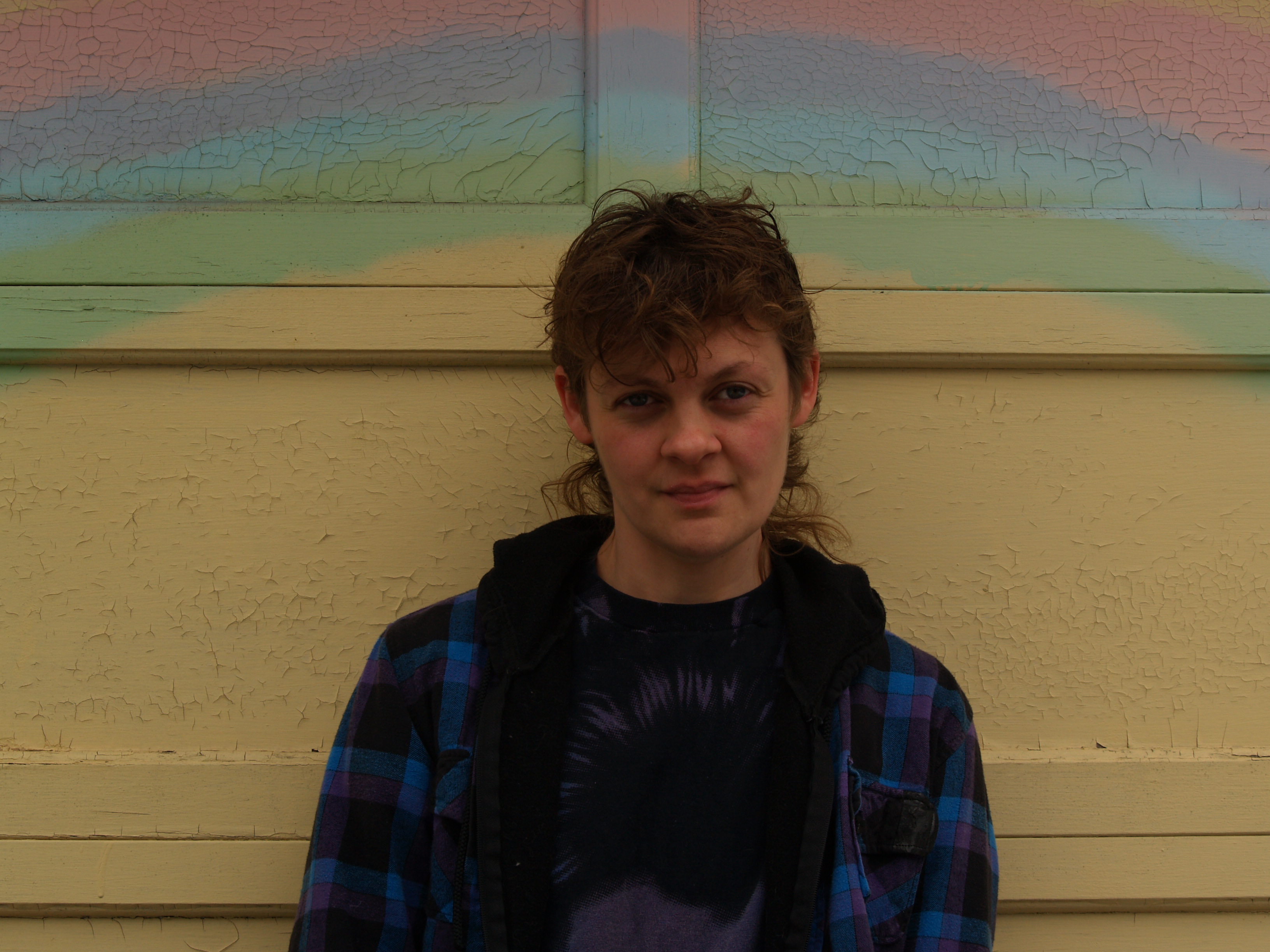
1.75 years on testosterone
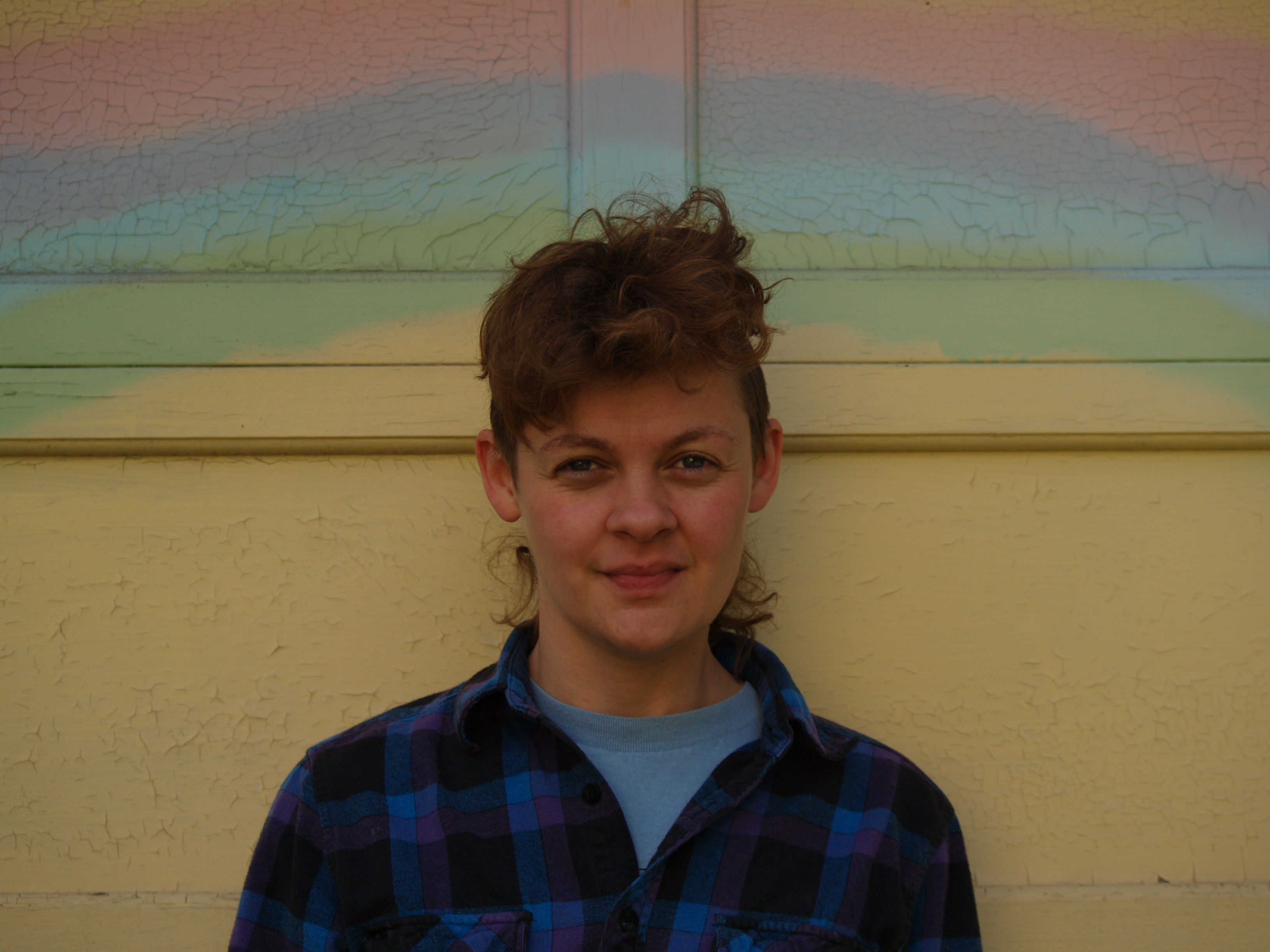
1.5 years on testosterone

one year on testosterone
The Re-imagination Program
Posted: December 2, 2014 Filed under: Testosterone | Tags: Androgel, androgyny, doctors, gender, gender identity, genderqueer, insurance, lgbtqia, medical treatment, non-binary, queer, testosterone, trans, transgender 12 CommentsI’ve been using Androgel, daily, for over a year and a half now. And I’m just now getting a full understanding about how the prescription & insurance industrial complex works as it relates to me continuing to get what I need. Here are a few experiences that, each taken separately, are small, but as a collection of anecdotes, are kinda mind-boggling:
– My first doctor initially tried to sway me toward a different product, Fortesta, telling me I could save big, and handed me a discount card I could activate. I went through all the hoops only to learn I was not eligible because I am not male. When I came back to him with this, he changed my prescription to Androgel without further discussion.
– Although I made clear to him that I was aiming to be on a very low dose, and see what happens from there (like 1-2 pumps), he wrote the script out as 4-6 pumps daily. This led me to be able to get 2 bottles at one time for $25. This amount lasted me for 4 months. At $6.25 per month, I wasn’t about to speak up about the inaccuracy!
– The prescription wording has changed over time (and between two doctors), and I’ve felt confused as to how that equates to how much I’m getting and how much I’m paying. I’ve paid $25 for 2 bottles together, $50 for two bottles together, and even $50 for only one bottle at one point. I guess I assumed it fluctuated in price. I thought I was paying per bottle.
– I’m not paying per bottle. I’m paying per month. My payment, I finally found out, should be $25 per month (not too bad!), but somehow I’ve continued to avoid even having to pay that much. I also have been able to store some bottles in reserves (which helps me feel much more secure since most of my visits to the pharmacy have led to some sort of questioning, calling of my doctor office, etc. Not for anything personally about me, but because of how the script was written out.)
Basically, while talking to my insurance company (using the pharmacy’s phone) last week, I learned that all that matters is how the script is written. Testosterone is a controlled substance. I always have to pick up the prescription at my doctor’s office and show a picture ID. I can never get a refill (although my doctor has tried!) If the doctor writes the dose out as 1-2 pumps per day, the higher amount is factored in. If it’s 4-6 pumps, it’s 6 pumps, even if I’m only actually using one. No one seems concerned about whether the amount correlates to what I’m doing. I can get a 30 day supply, a 60 day supply, or a 90 day supply. I’d prefer the 90 day because it means I don’t have to go as frequently. But if it’s entered as a 30 day supply, it’s 1/3 of the price. And no one actually seems concerned with whether that translates into how frequently I go to the pharmacy. Interestingly, I could pay a whole lot more to get the amount I use, or I could pay a whole lot less to get more than the amount I use. I don’t understand this logic, but I do finally understand this system.
When I was told I’d be paying $50 for one bottle and would have to come back in 2 months with a new prescription, for my 2nd bottle (due to the wording of the script) last week, I argued with that. The pharmacist got me on the phone with my insurance (which led to me finally grasping how this works). I realized the only way around it was to get the script re-written by my doctor.
I asked the pharmacist if I could get a discount card for Androgel. This is called “The Restoration Program.” Due to my experience with the Fortesta discount card, I wasn’t holding my breath. The pharmacist got me started and then handed the phone to me to complete the activation process with an Androgel representative. He was friendly and smooth. I was asked a lot of questions: name, address, email, phone number, etc. I was asked if I’ve read all the terms and conditions. Since I had just been handed the booklet with mass amounts of fine print 2 minutes prior, I just said, “yes.” I was then asked, “Are you MALE?” He said the word, “male,” in such a harsh, abrasive tone; all customer-serviceness left his voice. I paused for a good long while. Repeated the question back to him. Said, “No.” Said, “I’m not legally male; if there is any other criteria under which someone could be male, I’m interested in that.” But his helpfulness was long gone. I felt mildly humiliated; he just kept grinding it in that he could do nothing further for me.
My jaded brain (during a conversation with my partner’s jaded brain, haha) decided that men are rewarded for using Androgel because the company is trying to promote a specific type of patient for their product. Rugged, middle-aged, robust and vigorous. Masculine. Diagnosed with low testosterone, just needing a boost. Just take a look at the pics of men on their website:
Androgel website
I am nothing like the men on the website. However, I am just as worthy of being eligible for a discount program! I would call it “The Re-imagination Program.” Testosterone has certainly aided me in re-imagining who I am and what I can do / who I can become.
I told the pharmacist I wasn’t eligible. He acted surprised, but my jaded brain decided he already knew. The next day, I called my doctor’s office; asked for the prescription to be written the way it had previously been written. Got a call back that it was all set; ready for pick-up. Picked up the prescription, went back to the pharmacy, got my 3 month supply for $50. Anticipating more hassles in the future…
Good doctor news
Posted: August 21, 2014 Filed under: Testosterone, Uncategorized | Tags: androgyny, doctors, gender identity, genderqueer, hormone replacement therapy, lgbtq, lgbtqia, medical treatment, non-binary, queer, testosterone, trans, transgender 8 CommentsThree months ago, I finally found a good doctor, but I was unsure if I’d be able to keep her. I liked her style immediately – ability to communicate, upbeat and straightforward manner, etc. And I liked her entire office’s professionalism. However, she had no trans-related experience, and after I told her my reasons for being there, she seemed hesitant to keep me on as a patient. She said she would look into finding a specialist I could go to, or at the very least, that she could consult with before proceeding. In my head, I was thinking, “Good luck with finding people locally! How do you think I ended up here, with you?!!” Haha.
We had a follow-up appointment yesterday. Going into it, I wasn’t sure if she was just going to say, “So I’m going to refer you to so-and-so,” and I’d have to start all over again with someone new. I was nervous; I didn’t want that. I had convinced myself, to an extent, that that was what was going to happen.
If you’re interested in reading through this epic journey to find a new doctor, here’s where I’ve been, in backwards order:
From 3 months ago, Convincing doctors that hormones are not that complicated
From 5 months ago, The last time I saw my doctor / I like your product
From 6 months ago, Continued quest to find a new doctor (a good fit?)
And from 7 months ago, just simply, I need to get a new doctor
At the appointment, we first discussed the fact that I went to the eye doctor, and that my vitamin D is low and I need to get supplements, and then finally discussed the reasons I’m there. She said she did find two area specialists (one is an LGBTQ health center I’d rather not go through, and the other is an endocrinologist who focuses on adult health – good to know there is someone local, and that she uncovered him!) She continued to tell me she does not think it’s necessary for me to go through either of these channels unless I want to, and that she will continue seeing me for low-dose testosterone therapy. I was super happy but didn’t really let on. I did tell her I am glad I can keep coming to see her though. And that I don’t feel like I need to go to these other people unless something comes up.
I wonder what happened within that 3 month time span! I think she did some research. Or, in the process of reaching out to specialists, they conveyed to her that it was within her realm and abilities. And then she did some research. Something!
We discussed the labs I got done in May. My T levels were at 68 ng/dl. This surprised me quite a bit – previously, I was at 102 ng/dl. I had somehow, without changing a thing, dipped back into a normal female range. How does that work?
I know I should go by how I’m feeling, and not by numbers. BUT – is it just a coincidence that I increased my testosterone dosage 2 months ago, just kinda because? Because I felt like it? Hmmm. I’m super curious to know what my levels are now, accounting for the slight increase… I’ll find out in 3 more months… (More labs.)
Until then, I just wanna revel in the fact that I finally have a primary care physician I would feel comfortable going to for any issue that comes up with my body, trans-related or not. This is a first!
On therapy and gaining access to what we need
Posted: June 2, 2014 Filed under: Testosterone | Tags: doctors, ftm, gender identity, genderqueer, hormone replacement therapy, medical treatment, mental health, queer, standards of care, testosterone, therapy, trans, transgender, WPATH 8 CommentsDirectly from the WPATH-SOC (World Professional Association for Transgender Health Standards of Care), 7th edition, p. 19:
When I was 17 years old, I admitted myself voluntarily to a psychiatric hospital. I thought I was going to go there for a day or two, be able to finally catch my breath, and then work with those around me to make a plan for what I needed. This is not what ended up happening. I still wanted to leave after a day or two – that didn’t change – but suddenly, things were getting really confusing really fast, and lots of people had other plans for me. Since I was still a minor, I really had no say in what happened. I was there for 19 days. I was put on 3 different medications. I was told I suffered a psychotic break. I was diagnosed with bipolar disorder (based on how I was behaving – short-term – and things I told them, such as, “I think I am bipolar”). When I left, I spiraled into a major depressive episode that lasted about 4 months (and I felt highly unstable for years to come). This helped confirm for me that I was, in fact, bipolar. Something I believed for about 6 more years.
I am most definitely not bipolar. I did go through a psychotic break, but in retrospect, I believe this could have been prevented had I not been hospitalized. I think, ultimately, I just had an extended panic attack. And having no idea what that was or felt like, I thought going to the hospital was the only thing I could do to help myself in the moment.
For the next 6 or so years, I complied with my mental health care. I took all my medications every day, as they were prescribed (and those meds and dosages changed a lot over the years). I went to all my appointments I was supposed to go to. I talked to therapists, psychiatric nurse practitioners, psychiatrists. I didn’t seem to be improving. In a lot of ways, my mental state was getting worse. I just followed along with the treatment plan because I didn’t know what else I could do. In fact though, I couldn’t really tell you what the treatment plan was. Was there a plan? I don’t recall that being a conversation.
All of these experiences have greatly shaped who I am, and also my attitudes toward health care providers. I’ll say right now, I am definitely biased and wary. Once I decided I wasn’t going to take medications that didn’t seem to help, and I wasn’t going to listen to ideas that didn’t seem to make sense for me, there really was no going back. Pretty much dropped out completely (except for going to a dentist and a chiropractor, haha) for a very long time.
Until I decided I wanted to access testosterone. I thought I was going to need “The Letter” from a therapist, but in the end, the doctor I went to didn’t care about formalities like that. (He’s also a sketchy doctor though.)
I feel very adamant that I should be able to easily access testosterone for the rest of my life. Testosterone is doing for me what antidepressants, mood stabilizers, and antipsychotics never quite did. And more. I don’t want to go through hassles to be able to get it. I’d go as far as to say that being challenged about it by a health care professional is highly triggering for me. Because when I was younger, I was told what would be best for me for so long, and I followed. And it was shitty. So now the dynamic is going to be the other way around. I know that’s extreme and reactionary, but I do feel that strongly at this point in time. I hope that as I age, I will mellow out about it. I’m sure there will be times that I’ll need help and I won’t know what is going on with my body, and I will be grateful for doctors’ and specialists’ expertise. As for now though, I’m not there yet.
Although my experiences with mental health professionals have been shaky at best, I believe strongly in the therapeutic effects of… well, therapy (haha). Without having been in therapy through those toughest years, I would not be where I am today, no question. I learned how to talk and communicate from therapists. I learned how to stop being so hard on myself. I learned to let go of my past. I learned that I cannot save others from their pain. I learned what things really matter in life, and what things I am spending wasted energy on. It was the slowest imaginable process. None of these gems felt like they were working for me at the time, but in returning to therapy over these past 2 years, it all started to suddenly sink in, and I’ve made some real leaps and bounds. I feel grateful for that groundwork I started in my late teens and early twenties, through therapy, even though I could not feel the benefits whatsoever at the time.
Two years ago, I attended a workshop at the Philadelphia Trans-Health Conference called, Who Needs Therapy? Some Thoughts on Mental Health and Gender Variance. It was largely an open discussion format, with a mix of mental health professionals, people with experience being in therapy, mental health survivors, and others. Toward the end I had worked up the courage to ask the group, “What if I really connect with my therapist, but it is clear she is not knowledgeable about trans* issues? Is it worth it to continue working with her if I want to explore this? Is it up to me to attempt to point her to resources if I want to keep working with her?”
Everyone who responded to me was very adamant that it was not up to me, and if she does not do the work on her own, I should find someone who is knowledgeable or who is immediately and clearly willing to do the work. It turned into a very impassioned discussion with a lot of people saying the same things. I left feeling really confused.
It had been very hard for me to find a therapist I click with. I’d gone to a few in my mid/late-twenties, and felt really dispirited. A couple of them were specifically gender therapists. In the end, I returned to the main therapist I saw through some of my toughest years. It was amazing to me she is still around and I could find her. Re-connecting with her again after 8 years was mind-boggling in the best way possible. Despite the feedback I got at that workshop, I wasn’t about to let go of her so easily. Nor did I feel like educating her myself, or even asking directly what she did know and what she did not know. I just continued to tell her how I feel, and I didn’t ever get the impression that she didn’t understand or wasn’t going to work with me on that. However, when I asked her if she’d write me a letter for HRT if need be, she said, “No. I don’t feel like I have that expertise.” And I appreciated that. It is all working incredibly well.
When going to my new doctor, I could have possibly had an easier time if I was forthcoming with the fact that I’m in therapy for gender issues (although I’m not in therapy with a gender therapist). But I didn’t feel like I should have to. So I didn’t mention it. When the doctor asked me who is in my support network, I said my partner and my parents and friends. I left out my therapist. When she told me she would like to collaborate with the gender identity youth clinic in making a plan for me, I could have saved some time and hassles by saying, “My therapist already talked with them, and they won’t see me because of my age. So the plan B is this.” But I didn’t. I just said, that’d be great and let my doctor make the phone calls and come to that same conclusion on her own.
Why? Because I think that therapy is an important part of my well-being. And I think that getting the best medical care possible, for what I need, will also be an important part of my well-being. And I don’t feel like the two necessarily need to have much to do with each other. Specifically, I don’t want to suddenly be taken more seriously and be given what I need, gender-wise, because I am in therapy. I want what I say to be enough. I want to access hormones without it being known I’m in therapy, if I can.
I am deliberately attempting to lay some of the groundwork, saying that this is perfectly acceptable. Not all of us live within access to clinics or doctors who offer the Informed Consent model. But I feel like I am in a position where I can work to change that.
Convincing doctors that hormones are not that complicated
Posted: May 13, 2014 Filed under: Testosterone | Tags: androgyny, coming out, doctors, gender identity, genderqueer, hormone replacement therapy, lgbt, lgbtq, medical treatment, non-binary, queer, testosterone, trans, transgender 14 CommentsI just got back from my first appointment with a new doctor at a women’s health group (unintentional!) This has been an ongoing saga, and although it’s not a perfect fit, it’s good enough, at least for now. Looking for more backstory?
Back in January, I decided I was fed up with my doctor, and that I could do better.
By the end of February, I’d found a promising candidate, only to realize she’s part of a women’s health group.
My last appointment with my doctor, at the end of March, was an absurdist performance piece.
It has been challenging to find appropriate health care where I live, but I’ve plowed ahead anyway because: 1)I know what I am trying to get, and 2)I don’t see any reason why I should not get it. This new doctor has no expertise in trans* identities, and I knew that going in. But I did find her through the local gay alliance’s resource page, so that was a start. When I told her that this is how I came to be here, she replied, “Well… yes, I am LGBT friendly, but I don’t know how I got on that list.” What does that mean???
When I told her the reason I’m here is to get more Androgel, she replied that she does not feel qualified to prescribe hormones. That was the start of the discussion, but by the end, she was giving me a prescription for exactly what I said I’ve been on for over a year already, and she was changing her tune to, “I suppose I could for the time being, but the long-term health risks are too great, and it’s not my area of expertise.”
I told her I’ve been going to the one trans* specific doctor in the area who treats adults (that I know about), and I want to switch because I do not like him. She used her laptop to confirm she knew of no local doctors, aside from the clinic that treats adolescents and young adults. She suggested I could use her as my PCP and still go to my other doctor for the hormones. I told her I was not going to do this. She then suggested she might be able to get me in at the adolescent clinic for a one-time visit, so that she can then be advised by them about my care. I told her that would be amazing. She will be following up with me on this, and I would be happy to go.
I told her how I perceive my gender identity, why I’m taking testosterone, and that it does not involve much health risk for me personally. She said, even so, she did not know enough about it. I asked her, “What if a woman wanted to take testosterone to address issues with a low sex-drive?” (Women do this.) She said that she would not use testosterone as a treatment. It’s not been proven to be effective. She continued on to say that she does have some male patients (husbands, sons, etc. of patients, who want to come here), and some have low testosterone levels, and she’s not the one to prescribe them testosterone. I found this difficult to believe.
I showed her a copy of my latest blood tests, and this is when the tables started to turn. I saw her open up. I illustrated what I knew by telling her what “normal” female and male ranges were, and where I fall within that. I told her that risks such as increased blood pressure, red-blood cell count, cholesterol, etc., are real concerns that can be monitored through blood work, but I believe I counteract those risks anyway with my lifestyle (vegetarian diet, active profession, don’t smoke, drink only moderately.)
I told her, bluntly, “It’s not that complicated.”
And, in the end, she seemed OK with it. She was asking me what diagnosis I would like her to put for insurance purposes. I told her that Gender Identity Disorder is in the DSM – “I don’t like it, but it’s there.” She responded with, “What about ‘hormone treatment for transgender patients?’ Well, you don’t identify as transgender…” I told her that I do, that “transgender” is an umbrella term, and that diagnosis works OK.
I went by this new name I’m trying out, at the doctor’s office. I figured this is a compartmentalized atmosphere, and a good place to see what it feels like. I gotta say, it didn’t feel great. I’m not sure what that’s about yet. If that means this just isn’t the name for me, or if I’d actually feel this way about any new name, because any and all would feel foreign at first. I’m sure my gut will tell me. And time. Time will tell me. I also told her I’d like to go by male pronouns. She said, “We can do our best with this. You’ll probably have to remind us, but we’ll try.” Her body language while she said this conveyed, “I don’t get it. I’m not really going to try, but feel free to try to get us to try.”
And this is where things are.
Ask your doctor if Shift Work Disorder is right for you
Posted: April 1, 2014 Filed under: Janitorial work | Tags: circadian rhythms, doctors, excessive sleepiness, insomnia, lifestyles, oversleeping, physicians, schedules, shift work, shift work disorder, sleep, sleep patterns, work 9 CommentsLast week, we were watching TV, and a commercial about “shift work disorder” came on. A rugged older gentleman in a flannel shirt was explaining about how he hadn’t realized how his job might be affecting his sleep patterns and quality of life, until his doctor asked him what hours he works. I laughed out loud. Then the commercial (which was for Nuvigil – used to improve wakefulness) went on to tell you to talk to your doctor, and then it went through the lengthy list of side effects, you know – the usual drill.
I think it is awesome to have dialogues about what’s going on in people’s lives and what might be improved, whether it’s with a prescription or other changes in lifestyle. And if having an official diagnosis helps more people figure out what’s going on and what they can do about it, more power to them. Just… personally, I find it absurd that this wouldn’t be a natural line of thinking. I think about this kind of stuff all the time.
I don’t work overnights (and am so glad for that), but I do have an “off” shift. Otherwise known as the “B-shift.” (My co-worker pronounces “shift” as “trick,” so I might interchange the two words from here on out – just a heads up.) I work 3pm-11:30pm. It is currently 12:50AM as I write this; I’ll probably go to bed by 2AM. This is what I do, Monday through Friday. It means that I never see my partner during the work week. We have to catch up via telephone, notes, and emails, which is sometimes extremely frustrating. It means that I don’t see much of anyone during the work week. Like, some friends are going out to dinner for someone’s birthday? Sorry, can’t make it. You’re going to the movies? Sounds like fun. I stopped being jealous over the stuff I was missing out on a long time ago. Better to just accept it. And, on special occasions, I can always just call in sick or work a half day or something.
I’ve found that there is often a natural camaraderie amongst people who work strange hours. For example, I’ll sometimes go to the grocery store, still in uniform, around midnight, and the cashier always wants to tell me what time she gets off work. And if I haven’t been in a while, she’ll ask, “Where you been?” Maybe the summer has passed by (I work like normal people during the summer), so I’ll say, “Oh, I was on a different trick.” And she’ll say, “That’s always the reason! Whenever I haven’t seen someone in a while, it’s because their trick changed.”
So, essentially, shift work disorder is a medical condition that can be diagnosed and treated by a doctor. (Phew!) It occurs when your job calls you to duty and you end up fighting against your natural circadian rhythms. It’ll cause insomnia when you’re trying to sleep, and ES (excessive sleepiness – so relieved that there’s a medically coded shortened version for this term!) while you need to work. Shift work disorder was invented in 2011 to help people figure out why they feel tired.
Whoa. Ok, lemme try to go back to the point where I do think this is all positive if it helps people improve their lives. I just worry people will see an ad on TV, or their physician will bring it up with them first, and they’ll just mindlessly pile on more pills to the over-medicated masses.
Like I mentioned, I don’t work overnights, so my experience is not nearly as extreme as many people’s. But I do want to point out that I feel like my work / sleep schedule has actually created MORE room for circadian rhythms to do their thing, according to the seasons. It seems only natural that people would feel the need to sleep more during the winter months, if they could. But I’d imagine most people’s schedules don’t allow for extra sleep. They have to get up with their alarm and get to work. Me? I can sleep as much as I want, apparently. I don’t generally have much going on in the mornings or early afternoons before work, so, often I’d let myself sleep 9-10 hours a night when it really seemed like I naturally tended toward this, roughly November-February. (A luxury, I know.) I was actually starting to feel concerned about all the oversleeping (I was wasting so much time!), but it abruptly righted itself; in February, I could no longer sleep in. As if, my body knew that spring was on the way and I better start getting ready!
Brand new diagnoses coming soon:
– sitting-on-the-couch disorder
– texting-while-driving disorder
– junk-food-for-lunch disorder
– gender identity disorder
Oh, wait…

 janitorqueer