
Janitors in pop culture #3 / awesome film about a transwoman
Posted: November 4, 2014 Filed under: Janitorial work | Tags: film festival, gender, gender identity, getting published, janitors, lgbtqia, movie review, mtf, queer, stereotypes, therapy, trans, transgender, writing 4 CommentsI recently was at an LGBT film festival and specifically planned ahead to catch a film from Finland called Open Up To Me (Kerron Sinulle Kaiken). If you want to see it, this blog post is going to contain details you might not want to read about in advance, just a heads up!
Super highly recommend this film. It follows the life of Maarit, a transwoman, for a few months, starting at the point of her last appointment with her gender therapist – the tone of that first scene, the therapist’s farewell message, is: now spread your wings and fly. Maarit had been forced through a lot of sacrifices in the process of becoming who she is. She is separated from her wife and estranged from her teenaged daughter (we get the sense the daughter is open and figuring this out for herself; it is the mother who is standing in the way.) She has moved away from where she once lived and worked as a school social worker. She now leads a lonely existence and works as a janitor within a huge office building.
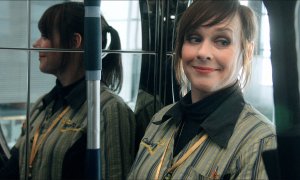
There are only two or three scenes where she is depicted at her work (and it’s just her coming and going. Loading a van, pushing a cart full of supplies). The story is not about that work, other than utilizing it as a plot device for somewhere she has landed and is unhappy about. She (understandably) yearns to get back into her chosen profession of helping people as soon as possible. She wants this so badly that she ends up posing as a therapist (through a series of misunderstandings) while on the job.
Which brings me to a reason I loved this film… It falls back on some unpleasant tropes common to trans characters in the media, but it ends up twisting them and rising above those ideas, to portray Maarit as a very human, very real, complex, well… person.
Transperson as deceitful: Although Maarit deceives someone about her profession (and she quickly comes clean), she never once is attempting to deceive anyone about her transgender status. She is proud, self-assured, and upfront with those around her (on an as-needed basis), even in the face of speculation and slander, discrimination, and violence.
Transperson as hypersexual: Maarit is not portrayed as a hypersexual person. It is clear that she is looking for intimacy, emotional connections, and a long-term partner. Instead, some of the characters around her are hypersexualizing her, and that seems more about them and their own issues, rather than who she actually is as a person. The film makes this very clear.
Transperson as dangerous and/or tragic: Maarit is in a very difficult place (there are other aspects of her life that have fallen apart. I won’t give away every detail!) and there are certainly scenes where she is in over her head, where she is compromised, where she seems desperate. It feels realistic – it very much seems that some choices she makes are due to (and only due to) being pushed so far into a corner, and she’s just trying to find her way back to where she can live her life. Those choices are not about who she is, inherently. It’s circumstantial. Some of these scenes, although hard to watch, feel triumphant at the same time. For example, at one point, she is attacked by an ex-lover. She ends up punching him in the face and ending the attack. Awesome.
I’m so glad LGBT film festivals exist – opportunities to get out there and see films I wouldn’t have heard about otherwise. This year, I saw this one, and another trans-specific one (52 Tuesdays – sadly, I didn’t enjoy this one all that much. It felt overly melodramatic, the characters didn’t feel believable.) My partner and I have gone to other films over the years, and it’s interesting that it always seems like there’s films for men and films for women. We’ve been to films before where we’re the only ones in the theater who are not cis-men (that’s an assumption, of course, but over and over again, it has been very much divided, and it is so bizarre to me.) At these two films (which were both well attended), there was a very diverse cross-section. I liked that.
Also, the film festival puts out an annual literary anthology, and this year’s theme was personal pronouns. I submitted, and my piece was accepted! I’m now officially published, in an actual book with an ISBN # and everything!!!
The piece was a re-working of these two blog posts:
While I was “out,” part 2 – partly out of the closet, fully out of the loop
While I was “out,” part 3 – coming back
Hey Halloween! (how costumes fit into our lives)
Posted: October 29, 2014 Filed under: Writing | Tags: anxiety, college, gender identity, genderqueer, Halloween, lgbtqia, non-binary, queer, relationships, trans, transgender, women's studies, writing 5 CommentsHappy almost Halloween! I thought I’d celebrate by digging deep into my writing archives to see if I could find something festive. It may not be all that festive, but it does seem apt – I found something I wrote 12 years ago, on Halloween day, that touches on gender identity, costumes, and anxiety.
A little back story for what is to follow: I was a Junior in college, and I was taking an awesome class called Imagining Herself, a cross-class between Women’s Studies and English Literature. The book list was from some Gender Studies Dream Team (for 2002, at least):
Leslie Feinberg – Stone Butch Blues
Riki Anne Wilchins – Read My Lips
Zora Neale Hurston – Dust Tracks on a Road
Kate Bornstein – Gender Outlaw
Audre Lorde – Zami: A New Spelling of My Name
And others that I can’t remember anymore. Unfortunately, I didn’t read these books (well, I’d already read Stone Butch Blues on my own). I couldn’t. I was having some major depressive issues, which really put a damper on what I was capable of doing. I hadn’t told any professors I needed help yet, but I would be doing so in the very near future. The professor’s name was Katrina (not her real name). I sort of had a girlfriend at the time, whom I’ll refer to as “girlfriend?” Question mark, because I was never clear on whether we were actually together. Girlfriend? had been in this class the semester before me, so the professor had a clear memory of her.
Here’s what I wrote on Halloween, 12 years ago:
_________________________________
More than ever, I became terribly anxious in Imagining Herself today. I think because we were discussing Stone Butch Blues, and I felt like I was supposed to be adding to the discussion, yet I couldn’t say anything. I’m one of five people in class who are potentially VERY focused on issues raised in that book. These other classmates all contributed a lot. I contributed nothing. I just couldn’t. Katrina even brought attention to me because of the zines I’ve been handing in for my project. She wanted me to talk about some of the stuff.
“[Janitorqueer’s] been doing these amazing zines,” she told the class. I felt like I was in elementary school again, simultaneously hoping for and fearing any kind of attention. “Can you share with us your thoughts about what you’ve been writing about, after reading through Stone Butch Blues again?” I hadn’t read through Stone Butch Blues again. I hadn’t yet read ANY of the books for class. I feel guilty and like a fraud. I stared straight ahead. Said, ” … um … ” in almost a whisper. My mind was totally blank. Why does this happen? She acknowledged my discomfort by asking me if we should just move on. I said, “yeah.”
I thought I might cry. How awful would that have been. I tuned out completely to avoid that scene, and that worked really well. I came back to reality within a few minutes. But for the rest of class, all I wanted to do was grab all of my stuff and run out of the room … go and hide. I have this urge often in class, but it’s never been THIS intense. Sometimes I want to slip through the edge of the floor, but not today. I just wanted to explode out, to escape.
Girlfriend? was brought up during the discussion! We were talking about clothing and performance, and Katrina asked me, “You know [your girlfriend?], right?” I nodded. Because I referred to girlfriend? a few times in my zines, she must have made the connection. Then she addressed the class. “Girlfriend? uses clothes as a performance all the time. She is always playing … she’ll wear goth, hello kitty, Ragedy Ann (girlfriend? prefers to call this one “Bag Lady”) … and when she came into class the day people were instructed to wear particularly masculine or feminine clothing, something different than normal, she said that this isn’t any different for her than any other day because she’s always playing. She feels comfortable dressing extremely masculine and/or feminine.”
A classmate asked, “Did she have pink hair for a while last year?” and I nodded, yes. “Oh, ok, I had a class with her. She is really interesting.” Katrina: “Yeah, she’s very bright.” Classmate: “Political Science major?” I nodded again.
I don’t think I’ve ever thought of girlfriend?’s incredible attention to clothing as “playing.” I thought of it as this valley girl thing she does. This thing which is sometimes tedious and sometimes fun and goofy. (She is really excited about creating me as a goth girl for Halloween.) To look at it as a carefully planned out form of play makes me respect it much more. I feel proud that I “know” her. I feel especially tender toward her, or something, ah, I don’t know! Anyway …”

________________________________________
I remember that Halloween. She dressed me up in her clothing and did my hair and make-up. I liked it. She was dressed as a school-girl gone wrong, or something to that effect. It was a really warm night, and we kind of just walked around a lot, stopping in at this party and that party, maybe acquaintances of hers. (I had no idea. As per usual, I was out of it, dissociating.)
It makes me think about all the things we can be expressing with our clothing choices, gender-wise and otherwise. And although Halloween costumes are extremes, all sorts of outfits can be seen as “costumes.” Getting dressed up in formal wear? Costume. Even business casual? Still, costume. Work out clothes? Total costume. If it’s not a t-shirt, hoodie, button-up shirt (mostly flannel), jeans, corduroys (or gym shorts, sweat pants for lounging around), hiking boots, or skater shoes, to me, it feels like a costume. Which isn’t a bad thing at all! Costumes have their times and places – I love costumes! But I will not compromise and wear clothing that does not allow me to feel like myself, when that’s all I wanna be.
Another blog writer covers some similar concepts, here – Becoming Hope: Masks
Oh, and completely coincidentally, this year I’m going as a goth boy for Halloween.
What’s your take on costumes?
Can hormones change my sexual orientation?
Posted: October 1, 2014 Filed under: Testosterone | Tags: demisexual, gay, gender, gender identity, genderqueer, lesbian, lgbt, lgbtqia, queer, relationships, sexual orientation, testosterone, trans, transgender 13 CommentsThis was a huge reservation for me, before I started testosterone. I had read enough personal accounts and spoken to enough friends that I had this somewhat common narrative in my mind: someone who is FTM was primarily attracted to women before starting hormones. Orientation then opened up / shifted, and this person now is attracted to both / all genders, or is now more attracted to men, or even exclusively attracted to men. One common idea surrounding this is that the person always was attracted to men (if even just on a subconscious level), but could not fathom being intimate with a man, while being seen as a woman. Another related idea is that the person identifies so strongly with being queer, that once he is finally perceived as a man, a new type of queer identity is now possible – one that may have been appealing all along.
OK – I’m done with the generalizing! It’s super uncomfortable for me to paint broad strokes and write about a hypothetical person in such a detached manner. I just wanted to get some initial thoughts down, some type of framework in which to plug my own narrative into. Whether these ideas are all that accurate or common is largely beside the point. The important part is that they were looming large for me. I had some serious fears about it.
While I was coming out (sort of?) as a lesbian (sort of?) in my late-teens, I was mostly just befuddled. I didn’t really understand physical and sexual attraction. I thought I was probably just a late bloomer. Now I understand that I’m probably a demisexual. Although this (somewhat recent) revelation is fascinating, I don’t feel a strong attachment to this label or a strong need to figure out my sexual orientation in all ways, shapes, and forms. It never caused me to feel much of a disconnect from others. I mean, I generally felt a lot of disconnect from others, but I didn’t look to my sexuality as a way to figure out why that was. It’s kinda, meh, for me… Fascination, and not a whole lot more. (Which is interesting because I usually love love love picking things apart! Haha.)
I’m gonna jump over a whole bunch of years and land somewhere in my late 20s. I’d been with my partner (she is a cisgender female, for the most part) for about 4 years at this point, and we were experiencing a long-term lull. We weren’t connecting. Everything felt dulled, foggy, I think for both of us (for different reasons). I was feeling more and more drawn to guys, all around me, and could not sort out whether that was because I needed to be a guy, or if it was a sexual orientation thing (again, the lack of the physical attraction part was confusing. It was more of a cerebral thing.)
I kind of decided that it was both. I fantasized about a totally different life, where I was a guy, and I was with a hypothetical guy. However, I did not want to break up with my partner. I strongly felt that the tough place we were in was circumstantial and situational, and that we could work our way through it. I wanted to work our way through it. I wondered if a big key to working our way through it was: for me to transition. I felt this heavy burden of a circuitous fear: I need to transition in order to get out of this place and improve our relationship; if I start transitioning, my gut is telling me that I will be even more drawn to guys, and I will want to end our relationship in order to pursue that.
I vividly recall, at one point, completely breaking down and telling her, while crying, that I was attracted to masculinity. She didn’t seem surprised, or threatened; she didn’t shut down. She stayed there with me, in that moment, and replied, “one of the many pitfalls of being in a queer relationship.” I appreciated that reply so much, in the moment. It felt like relief. Sometimes, I make things overly-fraught; she brings it back down to earth.
She has since elaborated that she did indeed feel the heaviness of the situation. Although we weren’t talking about all of this directly at the time, she recently told me that she knew. And that she was going to support me in transitioning (whatever that looked like to me) unconditionally, at the risk of losing me along the way. Wow.
While trying to sort that out, some life changes occurred that vastly improved things. My partner got a new job, we shifted our approach to friendships, I went back to therapy. Our relationship improved by leaps and bounds.
It was about two more years before I really found myself at that crossroads of needing to try testosterone (although I no longer planned to transition in that common-narrative way). That fear was still there. Although it felt like we had a solid foundation to work from, I worried, would things shift between my partner and me? Would I start to be drawn exclusively to men? Where would that lead us? I started testosterone anyway.
Testosterone has changed things for me, but not in those ways I feared. I’m attracted to my partner and also I’m attracted to men. Sometimes I’m attracted to women; mostly, I’m attracted to androgyny and effemininity (effeminate men). I don’t know what that all adds up to; I just call it “queer.” The nature of attraction feels a little less cerebral, and a little more physiological than before. I like that. I think I still fall under the category of demisexual, for sure, but it does feel different. My partner and I talk about all of it. None of it is threatening to her. None of it feels worrisome to me. It’s all just puzzle pieces, that, although not straightforward or common, make more sense to me than my sexuality has ever made sense before.
When No Gender Fits: Washington Post Article
Posted: September 24, 2014 Filed under: coming out | Tags: androgyny, article, coming out, gender, gender identity, genderqueer, lgbt, lgbtqia, media, non-binary, queer, trans, transgender 17 CommentsAbout five months ago, I did a phone interview with Monica Hesse of the Washington Post, as a potential candidate for an upcoming article about non-binary genders. She was planning on spending a few days with the person / people she selected; it wasn’t just a matter of chatting with her over coffee. It sounded really intensive and potentially uncomfortable at times. I thought the interview went well, and I talked to my partner about the possibility of her hanging around with us for a while. My partner was game. I was game.
I got back to her with a few reservations: When might this be, exactly? (I really love being able to plan ahead.) And, would you be coming to my work?!! (I am not out at work as non-binary, and I could not fathom her being there with me, at all.) She assured me that it was not a necessary part of her article, and it’d totally depend on who she ended up going with and what everyone was comfortable with. She seemed well versed in trans issues and understood the need for partial anonymity or a potentially incomplete story.
She had a lot more phone interviews to get through, and as we messaged back and forth, it became clear her interest in me was waning. I was pretty bummed. It sounded like something I was ready to challenge myself with! Of course, the disappointment faded with time. I’ve been looking forward to catching the finished article. Here it is!!!
When No Gender Fits: A Quest to Be Seen as Just a Person
I think this article is really well done. It covers important ground: pronouns, the internal isolation such an identity can bring (when society has no starting point for understanding), family and friend relationships, coming out issues. There is nothing sensational or hyped up about it – the reporter seems well informed and sensitive.
A major thing struck me. This article is about a very young person. Kelsey is 18 years old. They are at a completely different life stage than I am at. The article follows them over the entire summer. It appears that the reporter spent many many days with Kelsey, over a matter of 4 months or so. We get a glimpse into what’s going on, as they have concerns about clothing. As they have difficult conversations with their mom. As they go to a therapy appointment to discuss the possibilities of going on a low dose of testosterone. As they talk about teenaged things with their teenaged friends. As they meet someone they found through OKCupid, for the first time in person. As they pack up and plan for life at college.
“They will go to college. They will study engineering. They will get a job. They will find a partner and make a home. They will begin with finding a T-shirt.” This quote sums up the tone of the article.
Had I been the subject, it would have been nothing like this at all. I’ve been to college (glad that’s over with!!!). I have a job. I have a partner. We have made a home. I have a T-shirt. In fact, I have many T-shirts. Haha.
This story is no doubt important. However (and I’m definitely biased here, bordering on ageist maybe) I think it’s really really necessary that there are representations of older, established non-binary people. It’s not just a young people’s thing. (Not to imply that young people will be growing out if it – they won’t be!) I just mean that it’s not just something someone is focusing on at the time when they are naturally growing into their identities, just at the beginning of starting new chapters of their lives. There is, relatively speaking, a lot of representations (if even just online only) of young people, starting to question and figure these things out.
Gender identity issues are multi-generational. They are lifelong, and they come with different sets of challenges at different stages in life. I hope more media outlets will start jumping on the bandwagon (in respectful ways!) and more articles will pop up, with more frequency, soon. And that those articles will focus on other identities within non-binary genders, and different age brackets, different ethnic backgrounds, different socioeconomic backgrounds, etc.
And if I’m not seeing it, I’ve toyed with the idea of writing my own article, here. Like, pretending I am a reporter, looking in. Look for that in the near future, maybe!
1.5 years on T without noticeable masculinizing changes
Posted: September 18, 2014 Filed under: Testosterone | Tags: androgyny, gender, gender identity, genderqueer, hormone replacement therapy, hormones, lgbt, lgbtqia, non-binary, queer, testosterone, trans, transgender 4 CommentsIt’s been a year and a half! I increased my dosage of Androgel, slightly, about 3 months ago (from 1 pump of 1% daily to 1 pump of 1.62% daily), and still, I’m not seeing physical changes (which is still a big part of my goals). I have still not yet missed a day – applying the gel feels of utmost importance to me, as a part of my daily routine.
Nothing can be new forever, unfortunately. Naturally, I no longer have that same emotional reaction to applying the gel (anticipation, excitement). And I haven’t been thinking about it in the same ways as I did every single day for that first year (how totally fucking awesome it is). Still it feels very much essential. It’s not nearly as constant, but I do still reflect on how different things are for me now.
– I am grateful that I consistently feel like eating at regular intervals now.
– I’m grateful that I no longer feel quite as debilitated by anxiety-induced adrenaline surges
– I’m grateful that physical sensations make more sense. Pain actually feels painful. I don’t recoil from affectionate touches. When I take a deep breath, I feel a sense of calm and a connection to my body. Etc. forever.
– I’m grateful that sex finally makes sense, and that I get to be a part of it (usually. At least it’s much improved.)
– I’m grateful that although I’m still moody and seem to feel emotions relatively strongly, it’s become more manageable, and rarely manifests in self-destructive ways anymore.
– I’m grateful that I don’t feel so cold all the time!
– I’m grateful that things just feel easier, across the board.
I am genderqueer (in case you didn’t already know!) and am continuing to carve out a space in between genders. Or, to mix and match genders as I see fit. I feel like I’ve made a ton of progress in terms of finding that place where I feel like myself, in my own skin. Yet, not nearly enough progress in terms of seeing that identity reflected back to me from the world around me. This just means I have a long ways to go (And society has a much longer way to go. C’mon society, get with it!) until I really feel comfortable with the ways I’m seen by others. Luckily, that part is not nearly as important as the part about how I see myself. 🙂
Initially, I feel like I was being hyper vigilant about not crossing over into any masculinizing territory, especially with my voice dropping. As time has gone on, I’m not quite so concerned with this (although I’m not actually trying for it either.) I do wonder if my attitudes will change more, in this vein, and I’ll start to want to increase my dose even more and cross into that territory. Only time will tell. As of now, I’m feeling comfortable with where I am.
Here’s where I’ve been (there are lots of details about the subtle physical changes in these past posts):
Five months
Eight months
Eleven months
One year
A video at the one year mark
One point two-five years
And finally, a couple of pictures of my face:
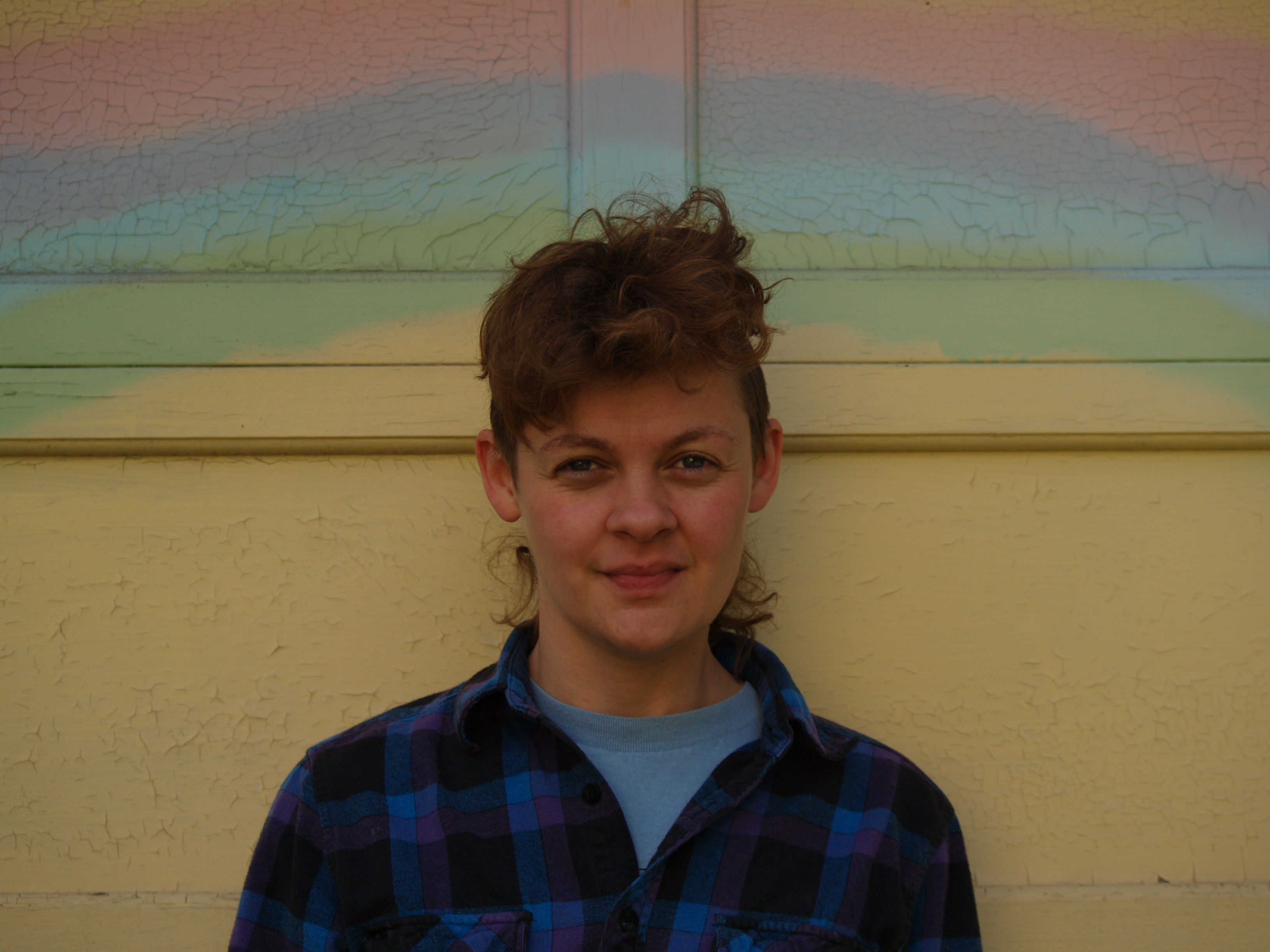
1.5 years on testosterone

1.25 years on testosterone

one year on testosterone
Party, vacation, and TERFs
Posted: September 1, 2014 Filed under: Uncategorized | Tags: butch, emotions, feminism, gender, genderqueer, getting gay married, lgbtqia, marriage, queer, radical feminists, relationships, TERFs, trans, transgender, wedding 7 CommentsMy partner and I made it through this party I’d been half-dreading, a party to celebrate our prior unification ritual. It was a lot of things, but largely, it felt validating and joyous, in a chaotic sort of way. It was fun; we would not do it again! It was a different kind of experience for me; I was on a natural high for so long, it was starting to get tedious. I mean, I’ve had a lot of extreme highs and lows in moods, over much longer periods of time, but this was somehow different. Somehow much less scary. I felt confident that even though I felt this way, I could depend on myself to do whatever it was I needed to do. It was a high that was not really all that fun, in its duration. Maybe I am growing up.
High extended roughly, from Thursday (kicking the planning for Saturday into high-gear,) till Tuesday (by then, we were in Northampton, MA for the start of our vacation, and the long drive to get there felt like it happened in a snap.) I wasn’t hungry; I wasn’t sleeping well. I was able to just keep going and going and going regardless. I didn’t particularly feel euphoric or excited (I mean, I did at times, but not sustained.) I basically started feeling like all I wanted was to get a full night’s sleep, an entire meal in my stomach, and to come down from wherever up-in-the-clouds I was.
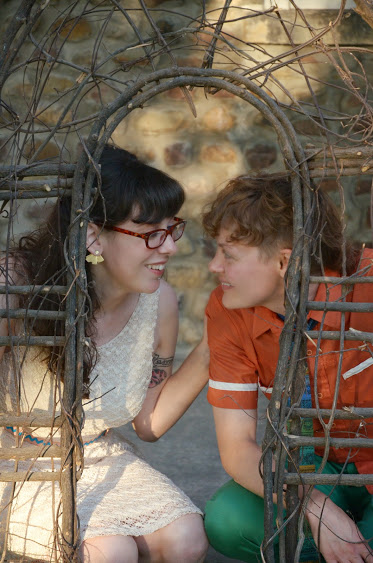 On our vacation, we stopped through Northampton and Spencer, MA before heading up to a tiny town (talking about a town with a church and a convenience store. No gas station.) in central Maine. We stayed with two friends who have an awesome cabin they’ve basically created themselves, over the past 10 years. It sits on 50 acres of land, and they live there part time. We went blueberry picking (organic! $1.50/lb!!!), swimming in a very cold lake (when the air temp + rain hitting lake was even colder), trouncing through the woods a bit. We kicked back, did some reading, connected with our friends, and heard stories about / met some of their neighbors.
At a rest stop on the way up there, I did an awkward dance with an older woman over the fact that I was in the women’s bathroom. She spun around to walk back out and check if she was in the right one, sort of touching my shoulder to prevent a collision between us, saying she’s checking that this is the right bathroom. I smiled and said, “Yep, it is.” This, surprisingly, does not happen to me often at all. I can’t even remember the last time. I enjoyed the experience (since it wasn’t threatening or uncomfortable, was in a way validating.)
On our way back home, we stopped to stay in a tree-house!  And on our way from Maine to this tree-house, my partner read aloud an article from the August 4, 2014 edition of the New Yorker (p.24 – “What is a Woman? The Dispute Between Radical Feminism and Transgenderism”). I’ve never picked up a New Yorker before. (I think maybe my partner hasn’t either, because she commented, “There are a lot of comics in here!” Haha.) It had been given to us by our friend in Maine, because she knew we’d be interested in this one article.
Imagine driving on winding roads through rural VT, rain coming down, having previously been bored out of my gourd, tired of our musical selections. And suddenly being fully engaged in this topic that seemingly came out of nowhere (I mean, I know it came from the New Yorker; I just mean I wasn’t prepared for it, but it surely was a much needed distraction right then.) At various points, I interrupted my partner to argue passionately both with the article itself and with the radical feminists the article was about.
Some of the gists:
– Not all, but some radical feminists still feel that transwomen are not women and will never be women (and that they benefit from male privilege…?). These rad-fems continue to want to exclude transwomen from women-only spaces, and to invalidate their experiences in numerous other ways. They reject the notion that someone could feel intrinsically female or male, and that all the ways that women and men are different are due to sociological forces and learned experiences only.
– The common term for these rad-fems is TERF (trans-exclusionary radical feminists).
– Some TERFs are detransitioners, and TERFs often cite detransition as proof of the fallibility of transgenderism. (Expert reports state that the percent of people who detransition is somewhere between 1% and 5%. This is higher than I would guess, but hardly significant enough to attempt to build a case.)
– Some TERFs face threats, both in their personal and professional lives. Situations have become so escalated at times, that they must be escorted by security to events and go underground in their academics.
There was so much more to this article (such as why FTMs are OK, but MTFs are a threat -??? Maybe I’ll return to the article for a more in depth future post); I highly recommend seeking it out if you can. It was eye-opening for me because even though I’ve heard of this term (TERFs) and understand the basics of the arguments, this really painted a picture. On the one hand, TERFs’ arguments are terribly weak and seem fueled by fear and a lack of understanding, with no efforts to begin understanding.
On the other hand, I find myself empathizing (just a little.) “TERF” is not a self-describing term. It is essentially yet one more slur, coming from others in sexual/gender minorities – people all too familiar with slurs themselves, usually. These women have fought passionately (sometimes for decades and decades, creating groundbreaking groundwork) for changes in the view of what it means to be a woman, and now they’re kinda in over their heads here. One final passage from the article that really sums up how this sub-group of rad-fems must feel,
“[These] radical feminists find themselves in a position that few would have imagined when the conflict began: shunned as reactionaries on the wrong side of a sexual-rights issue. It is, to them, a baffling political inversion.”
Good doctor news
Posted: August 21, 2014 Filed under: Testosterone, Uncategorized | Tags: androgyny, doctors, gender identity, genderqueer, hormone replacement therapy, lgbtq, lgbtqia, medical treatment, non-binary, queer, testosterone, trans, transgender 8 CommentsThree months ago, I finally found a good doctor, but I was unsure if I’d be able to keep her. I liked her style immediately – ability to communicate, upbeat and straightforward manner, etc. And I liked her entire office’s professionalism. However, she had no trans-related experience, and after I told her my reasons for being there, she seemed hesitant to keep me on as a patient. She said she would look into finding a specialist I could go to, or at the very least, that she could consult with before proceeding. In my head, I was thinking, “Good luck with finding people locally! How do you think I ended up here, with you?!!” Haha.
We had a follow-up appointment yesterday. Going into it, I wasn’t sure if she was just going to say, “So I’m going to refer you to so-and-so,” and I’d have to start all over again with someone new. I was nervous; I didn’t want that. I had convinced myself, to an extent, that that was what was going to happen.
If you’re interested in reading through this epic journey to find a new doctor, here’s where I’ve been, in backwards order:
From 3 months ago, Convincing doctors that hormones are not that complicated
From 5 months ago, The last time I saw my doctor / I like your product
From 6 months ago, Continued quest to find a new doctor (a good fit?)
And from 7 months ago, just simply, I need to get a new doctor
At the appointment, we first discussed the fact that I went to the eye doctor, and that my vitamin D is low and I need to get supplements, and then finally discussed the reasons I’m there. She said she did find two area specialists (one is an LGBTQ health center I’d rather not go through, and the other is an endocrinologist who focuses on adult health – good to know there is someone local, and that she uncovered him!) She continued to tell me she does not think it’s necessary for me to go through either of these channels unless I want to, and that she will continue seeing me for low-dose testosterone therapy. I was super happy but didn’t really let on. I did tell her I am glad I can keep coming to see her though. And that I don’t feel like I need to go to these other people unless something comes up.
I wonder what happened within that 3 month time span! I think she did some research. Or, in the process of reaching out to specialists, they conveyed to her that it was within her realm and abilities. And then she did some research. Something!
We discussed the labs I got done in May. My T levels were at 68 ng/dl. This surprised me quite a bit – previously, I was at 102 ng/dl. I had somehow, without changing a thing, dipped back into a normal female range. How does that work?
I know I should go by how I’m feeling, and not by numbers. BUT – is it just a coincidence that I increased my testosterone dosage 2 months ago, just kinda because? Because I felt like it? Hmmm. I’m super curious to know what my levels are now, accounting for the slight increase… I’ll find out in 3 more months… (More labs.)
Until then, I just wanna revel in the fact that I finally have a primary care physician I would feel comfortable going to for any issue that comes up with my body, trans-related or not. This is a first!
Words we use to describe ourselves
Posted: August 12, 2014 Filed under: coming out | Tags: androgyny, coming out, creativity, gender identity, genderqueer, identity, language, lgbtq, lgbtqia, non-binary, queer, trans, transgender 3 CommentsI recently mentioned an article called “A Gender Not Listed Here: Genderqueers, Gender Rebels, and OtherWise,” which is based on findings from a survey conducted in 2008. One of the most intriguing points to come from that (in my opinion) was all of the unique words and phrases respondents came up with to describe their gender. Some of those were: “jest-me,” “twidget,” “best of both,” “gender blur,” “cyborg,” and “genderqueer wombat fantastica.”
I also mentioned I had a list somewhere, where I had jotted down other terms. I found that list! So, to expand upon what respondents said:
- a variation of nature
- hybrid
- pangender
- ftx
- tranarchist
- and my favorite so far, “freemale.”
Also recently, Micah posted an ongoing poll which is generating a lot of great responses, as well. A few faves from that, so far:
- maverique
- limp-wristed butch
- boything
- gender-meh
- Alien Space Prince
- fae
- Royalty
- kinda like an old, beaten-in sneaker
- boydyke
- feyboi
- plastic
- epicene
This language is so important. Even if this is only how you see yourself internally, and you’d never actually use these words when you talk about yourself to others, the personal meaning behind it is rich with feelings of who we are, at our core.
As we try to sort out our identities, it is an amazing gift to have these options, all these creative bursts of self-expression, on hand for inspiration. Looking back roughly 12 years ago, when I was first considering the nuances of gender identitiy, I started to learn of the terms “butch,” “transgender,” “genderqueer,” and not a whole lot more. I remember someone referring to me as a “baby dyke” (because I’m so not butch), and that seemed maybe about right, but actually, no not really at all. At the time, I thought I felt like neither gender, like there was a void where there should be gender. I’ve come across dozens of ways to describe this experience lately, but at the time, I struggled with describing what that was, even if just to myself.
These days, I do not feel devoid of gender. The way I replied to Micah’s survey was, “A kaleidoscope of all genders.” That feels exactly right. It feels like a rich mixture, flowing through my being, and constantly shifting internally, but held together by a relatively stagnant vessel (my body). I mean, my body is in motion, but it’s not changing as much as many people who are trans. Nor does my gender expression shift much. It’s an internal feeling.
I wanna recommend this blog post, from a mother’s perspective. She showed her son Micah’s question about how you describe your gender and they talked about some of people’s responses. And it really seemed to open something up for him. This is the kind of stuff we need!
Got descriptive words to add? Join the conversation!
Gender identity related “to-do list”
Posted: August 7, 2014 Filed under: coming out | Tags: coming out, gender identity, genderqueer, lgbtq, lgbtqia, marriage, non-binary, queer, relationships, same-sex marriage, testosterone, trans, transgender 5 CommentsAbout a month ago, I switched my Androgel dosage slightly. From one pump of 1% daily to one pump of 1.62% daily. I didn’t do this because I’m looking for more masculinizing changes. (I’m not looking for this, still.) I did it for these reasons:
- I started on 1.62% initially, so I still had extra bottles of it. I hate wasting things.
- I have been told by pharmacists, twice, that 1% is going to be discontinued, and I should get my doctor to switch my prescription to 1.62%. I’ve even been given coupon incentives to switch to 1.62%. I think that the pharmacists are lying to me, and I will continue to ask for 1% until I absolutely cannot get it any longer. It really freaked me out though, so I want to “test out” whether I’d be alright on 1.62% in case I abruptly need to switch in the future.
- I’ve been feeling low, emotionally, and somewhat anxious. I was hoping a slight increase might help jump-start me out of this funk. (This has not happened, unfortunately. I fully expect to be back to my normal self once summer is over though.)
- My biggest reservation in increasing to this dosage, was my voice dropping. That seemed like the one change that was on the precipice to shift, and I was really resistant to that for a very long time. (Over a year.) I continually brought it up in therapy. (Her responses: “Why? Because you depend on your voice for x, y, and z?” “Why? Because you need your vocal range to stay exactly the same?” “Why? Because your singing range is of utmost importance?” Etc. Haha.) For whatever reason, I’ve been letting go of that. It’s no longer a worry. And I’m fairly sure my “voice” is largely the same still, while my vocal range has indeed shifted, if that makes sense.
Another big change to highlight in my gender identity journey:
I finally came out to all of my extended family, on both my mom and dad’s side of the family. I did this through emails. (I’ve talked with my nuclear family in person.) I largely did this because in some cases, I hadn’t shared anything personal about myself in a very long time, if ever (the fact that I’m in a relationship, the fact that we got married, etc.) So it seemed like in sharing long-overdue news, I might as well throw in this other important-to-me stuff. In other cases, I was inviting relatives to our having-gotten-married party (happening in 2 days!), and I needed them to know these things about me in advance.
Almost everyone at the party will be referring to me using male pronouns (my friends have been consistently doing this for years now which feels awesome), and I wanted those who didn’t know, to at least know. I shared that I don’t feel either male nor female. I shared that I’ve been on a low-dose of testosterone, and what that’s doing for me specifically. I shared that my partner and I don’t use the terms “lesbians,” “wife,” etc. to refer to ourselves. I shared that I prefer male pronouns, and I may legally change my name in the near future. I welcomed any questions.
The most common response I got was: no response. Which is OK. A few people replied in affirming ways, acknowledged what I’d told them, and that felt so awesome. No one had any questions. No one disparaged me or said anything inflammatory or negative. None of the responses (or non-responses) surprised me. None of this process changed the way I relate to my family. In some ways, I’d like to change the way I relate to my family. I would like to be closer with them. But I’m not going to put all the pressure on the coming out process as a way to get me there… If I did, everything would fall flat.
Next up on my gender-identity related to-do list: come out at work. YIKES!
Also, just a note: I’ll be on a “true vacation” next week – one devoid of using the computer!!! I’m psyched about this (and kinda really need it), but I will surely miss keeping up on blogs (it’s become a major part of my daily routine.) I have a post scheduled, but other than that, I won’t be around for a while…
A note to my partner
Posted: August 2, 2014 Filed under: Uncategorized | Tags: celebration, emotions, genderqueer, getting gay married, lgbtq, lgbtqia, love, marriage, queer, relationship, relationships, same-sex marriage, wedding 14 CommentsThis is probably going to come off as the most unromantic love note ever. That’s OK. That’s us! …We have been together for close to 8 years now. We lived together before we “got together.” We met as housemates, which was kinda an interesting way to get to know someone (if you’re considering asking them out) in terms of feeling out potential compatibility. A more detailed version of how we got together is here, if you’re interested: Happy Randomtimes, today.
Last fall, we got legally married, which I had a lot of mixed feelings about. It boils down to: We got married for health insurance purposes (and other legal reasons that seem unclear at this time, but may be super important at later times). We did not get married out of love. Every day we are together, it is out of love. Marriage has absolutely nothing to do with whether we are together or not. It does not mean we are any more or less likely to stay together now. It doesn’t mean that anything about how we operate our relationship has changed. Marriage is meaningless. So I guess I’m attempting to bring some meaning into it, because next Saturday, we are celebrating the fact that we got married.
I haven’t been in the best place, emotionally, the past few weeks, and that’s been making it feel like a struggle, to plan for this celebration. Which is OK. This party will happen. It’s normal to feel overwhelmed and nervous when planning something so big. Everything does not need to fall into place exactly how we want it to for it to be a good day. It’s going to be a good day because we are connecting with people and with each other. And not because the sound system worked without a hitch and no plates or glasses got broken.
But there’s kinda more to it than that. We are celebrating marriage, and I’m struggling to understand what marriage is. (Marriage is what you make it.) Almost anything that is traditionally romantic, anything that is a traditional ritual for a wedding day, the roles we play… I don’t get it. It’s not because I’m a contrarian or I’m “too cool for school.” It just does not resonate. I don’t wanna play those games. In general, we won’t be. We’re having a “ceremony,” (er, 2 actually, an opening and a closing ceremony) but it will be fairly aberrant, bent, queer, variant, deviant. We have no gift registry. Our photo album is full of pictures of our friends and families. Scrap the scrap book, and the guest book while you’re at it. I could go on…
We’re discussing the idea of slow dancing to “Everyday is Halloween,” (Not because we wanna stir shit up, but just because that has been our wake-up alarm song every morning for about 5 years now.) I love all of these ideas, but I’m still not comfortable playing the role of the person who is getting married (or already got married, and is now on display.) In a way, it feels like the party was just an idea a while back, and now has a life of its own. I think collecting some of these thoughts is really going to help me out.
So a note, to my partner:
Hey, you! I like you a lot. I trust you as much as one person can trust another person. As time goes on, I just keep finding that we are super highly compatible. You give me huge amounts of space and leeway to be myself, to figure out what I want/need, to experiment. I couldn’t be in a relationship any other way. I know that I often hold myself back, so I cannot be having someone else also doing that.
It feels like we’re generally in-tune, in-synch, we communicate about what is going on, regularly. And if we aren’t, we will be again soon – I don’t feel left in the dark for long. And if I do, it is not worrisome. We’ll catch up with each other soon enough. I know I’m a difficult person, sometimes. I can be moody, and I generally need a shit-ton of alone time, in order to feel like a person. I make things complicated when they are simple. That’s not easy to live with. You just roll with it.
I think that you are so super cool. You are a strong person with values I really admire. You stand up for yourself and for what you think is right. You’re not afraid of confrontation. You mold your life into what you want. We’re molding our lives together, continuously.
Love, me.
PS- At my most recent therapy appointment, I just kept crying and crying (that I couldn’t do this marriage party thing, basically). She suggested I write on my blog, where I’m comfortable, about it, before I’m in this less-than-comfortable situation. That perked me up. I said, “That’s a pretty good idea.” She replied, “That might be it for me – I might not have any more of those; I’ll take it.” I reiterated it was a really good idea. Also, at the end of the appointment, she told me it was a freebie – a therapist’s version of a wedding gift. Haha.

 janitorqueer