
Trans on the Internet Part 1
Posted: May 26, 2015 Filed under: Writing | Tags: gender, gender identity, genderqueer, identity, internet, lgbtq, non-binary, queer, technology, trans, transgender, writing 7 CommentsLast July, I submitted a proposal for an essay to a new and exciting anthology all about the ways transgender identities inform the internet and vice versa. My proposal was accepted, and I submitted my piece for editing in December. I was stoked! Unfortunately though, I just heard word that the editors are not moving forward with the project (due to workloads and paid work vs. passion filled but unpaid work). So I figured I’ll publish it on my blog. Not nearly as exciting, but still something! (I’m breaking it into two parts because it’s pretty long).
I am right on the cusp of Generation X (slackers) and Generation Y (millennials). I’m on the borderlands of a trans identity. I’m on the verge of grasping/rejecting technological innovations. I’m comfortable right where I am, hanging out at the edge of all these precipices. Due to my age , gender identity, and complex feelings about technology, I find myself neither here nor there in terms of what feels best. I continue to mix and match as I go, remaining critical along the way.
I was born in 1981, which means I most definitely did not grow up with cell phones or internet access. Even though they were available in the 80s, we didn’t have cable television, a microwave oven, or a portable telephone either (picture a tan rotary telephone mounted to the wall, with a long, coiled cord). I have always been wary of new technologies as they slowly embed themselves into our collective landscape and my individual lifestyle. The transitions never feel seamless. They always impact me greatly, imprinting upon my memories…
The first time I used a microwave: I was a kid. I was at the grocery store with my dad, and there was a station where you could microwave your own bag of popcorn. Like many people do all of the time, even after 20+ years of practice, we burnt the popcorn, popped open the microwave door, and let the stench waft out, affecting shoppers within a 100ft radius. I felt mortified and ashamed. My dad seemed unfazed, but we didn’t try again.
The first time I used a cell phone: It was 2003, and I was a senior in college. My parents had given me a cell phone during our visit with no further discussion really, other than it was covered under their family plan. I buried it somewhere within my apartment and continued to use my landline (however infrequent that was). My mom later commented to me, “We can never get ahold of you! Why don’t you answer your cell phone?” Honestly, I can’t say. It just felt anxiety inducing. At some point, I must have gotten the hang of it – of being forever accessible – because I now am the proud owner of a Samsung flip-phone and I carry it everywhere. I see the benefits of this, but I’m only partially on board. I rarely text, I keep my phone on vibrate, oftentimes I let a call just go to voice mail, and I call back when I am ready.
The first time I used the Internet: We had a super slow dial-up server called Prodigy. It was 1998. Again, I can’t recall any discussion amongst my family about what the Internet is and what can we do with it – suddenly it just was. I recall going on a message board to talk about music. I talked about REM with a stranger for a while before he abruptly asked me what size bra I wear. I felt a mixture of complex emotions before simply replying, “an A cup, I think. I don’t really know.” He replied, “Oh, that’s alright sweetheart, that’s enough for me to work with.” How did he know my gender? How did this space for nerds and fans devolve so quickly into a space for pervs to jack-off? I didn’t engage; just signed off. I don’t remember going back on the internet much after that until I got to college; my usage was very limited, and remains, in many ways, fairly limited, even today.
The ways I use the internet has definitely progressed and shifted, but I am far from the seamless IRL/virtual world many people appear to inhabit. I do not have a smart phone nor do I plan on ever getting a smart phone. I have “online time” and “offline time,” and I need those two to be separate. You’ll never see me walking down the street, seemingly talking to myself or staring at a screen.
My trans identity has shifted along with the ways I view the Internet, over time. It has blossomed and bloomed, halted and shriveled, sputtered and shuddered and begun to bloom again. In terms of deep soul searching, the Internet has never been my go-to place to glean information. The library was that place. I spent countless hours (hours enough to rival Internet time) in the “HQ” stacks of my college library. Specifically HQ 71-79: “sexual deviations, bisexuality, homosexuality, lesbianism, transvestism, transsexualism, sadism, masochism, fetishism.” For all that time spent searching, I didn’t do a whole lot of actual reading – many of these books were so dense and research-centric. I would often just go there to try to clear my head. Just sit. One particular book does stand out above the rest though: Loren Cameron’s Body Alchemy. Filled with stunning photographs and personal stories, I could find glimpses of myself amongst these pages.
Stay tuned for Part 2, where I flesh out these ideas, fill in some gaps, and really get into my trans-identity a lot more.
What to ask, and what NOT to ask, a trans-person
Posted: May 18, 2015 Filed under: coming out | Tags: blogs, college, coming out, dialogue, gender, gender identity, genderqueer, lgbtq, queer, relationship, relationships, trans, transgender, transition 10 CommentsA reader asked,
What are the do’s and don’t’s when asking a trans*person about their experience?
What are 2-3 questions (or as many as you like) that one should NOT be asking a transgender person?
What are 2-3 questions (or as many as you like) that one SHOULD be asking a transgender person?
This reader happens to be the marketing coordinator of Simmons College, the third US women’s college to accept students who identify as transgender. She was wondering if I’d like to add to the conversation in the form of a blog post. Sure! So, officially:
I am participating in Trans*forming the Dialogue, Simmons College’s online MSW program‘s campaign to promote an educational conversation about the transgender community. By participating in this campaign, I will be offering my perspective on what TO ask and what to NOT ask trans*people.
The first thing to think about: it totally depends on how well you know the person! So, let’s break it down:
If this is someone who is a stranger, and they just introduced themselves to you, saying their name back to them is a great way to start out affirming who they are. Also asking, “What are your preferred pronouns,” is important so that you can address them to other people in the way they want/need. This is a little tricky because we’re specifically talking about visibly trans-people here. You could be meeting many trans-people throughout your life and not even know it!
Then, personally, I would steer the conversation away from trans-related topics, unless they bring it up. Oftentimes, trans-people don’t want to talk about more personal aspects upon meeting someone new. So any other great questions fall into the general getting-to-know-you category. “What brings you here?” Or, “How do you know so-and-so?” Or, “How’s your day been so far?”
If you are talking to an acquaintance and want to get to know them better, instead of asking direct questions about their experience, you could share some of your own – what was your childhood like, what was puberty like? Chances are your new acquaintance has a lot to say about growing up and will feel more comfortable sharing if you share first. Do NOT ask, “do you feel like you are trapped in the wrong body?” This is a trope perpetuated by the media that not all trans-people relate to. It’s kind of a sensationalized way of putting it. It is a sound bite. Asking about their experience is a great way to get a better understanding about how broad and different “trans-narratives” really are.
If you are a friend / ally of a trans-person, there is a lot you can do and ask! You can specifically ask, “What can I do to support you?” It might mean correcting pronouns in the moment in social situations for your trans-friend. (I know I have a hard time with this, and if someone does it for me, it feels affirming.) It might mean exploring gender expressions together – maybe going out and trying on different clothes or trying out makeup together. If you are a trusted friend, more personal questions to help you understand would probably be appropriate. “What does gender dysphoria feel like?” “How would you define your gender?” “Where are you in your coming-out process?” These questions can spark great conversations that let your trans-friend know you are engaged and interested and want to help if possible.
If you are in an intimate relationship with a trans-person, asking a lot of questions is essential! Transition related decisions will affect both of you, emotionally, financially, and energy-wise. It’s important not to press for a timeline or throw in your two cents about what your partner should be doing. You will need to adjust to the natural pace (it is a long process) and understand that there is going to be a lot of uncertainty. “What can I do to support you?” works well, but your partner might not really know in the moment. There will probably be times when gender dysphoria and frustrations are acute – during those times, just being physically present and not asking any questions might be best. In the bedroom, asking what is OK is a must. The way trans-people feel about their bodies and about sex can be wildly in flux and change from day to day. Asking, “Is this OK?” or “what if I did this?” or “What feels good right now?” is going to be better than phrasing things in the negative, such as, “What is off limits right now?” or “Where can I touch you?” These kinds of questions might lead to shut-down mode.
Questions that are never appropriate are, “Have you had any surgeries yet?” “What are you going to do about your beard?” “Do you think you will be able to pass?” Or anything else related to their bodies and their appearance. This is personal and could be triggering. Not all trans-people have the same goals or timeline. Also, some people are non-binary, and their transition goals might look very different.
If you don’t know the trans-person very well yet, and you are not sure what is OK and what is not OK to ask, just use this rule of thumb: Is this something you would ask a cisgender person? Other than the preferred pronouns question (important question you might not ask a cisgender person) this will get you far in a social situation.
Being transgender while in a partial hospitalization program
Posted: May 13, 2015 Filed under: coming out, name change | Tags: coming out, depression, gender, gender identity, genderqueer, hospital, lgbtq, non-binary, queer, trans, transgender 3 CommentsThis post is in tandem with a post from back in February, Being transgender while hospitalized.
For the past two weeks, I was attending a partial hospitalization program every day from 9:30 – 3:15. Our day was broken up into 5 workshops / activities, and we pretty much stayed with the same group and the same social worker / teacher. Every day we had new people arrive and people finish their 10 days and leaving.
The first session was always “process group,” where we talked about our previous evening and if we used any of the skills we were learning about. Right off the bat, while introducing myself, I let everyone know my name is Kameron and I’m transgender and use male pronouns. The social worker replied, saying “thank you for letting us know – sometimes we have people who don’t say anything about it. I really appreciate it.”
They had to use my legal name for paperwork and official stuff, but it seemed like they could use my chosen name for the daily roster, and I asked the social worker about that. She said, “yes let’s change it – I’ll make a note and you can mention it to the administrative assistant.” During break, I went up to talk to her, and surprisingly she said, “No, it has to be your legal name.” The next day, my legal name was on the roster, and next to it, “Kameron.” Like that, with quotation marks. It felt weird but I guess it was a compromise. Other than that though, everyone always called me Kameron.
During a break one day, someone shared their People magazine with me – a recent one with an article about Bruce Jenner. It felt good she wanted to point that out to me, like she was connecting with me. I read the article, which was actually well done. They referred to Bruce with male pronouns, but made it a point to explain that at this time, Bruce and his family are using male pronouns, so People magazine is too. Seemed logical.
When new people joined our group, I continued to say I’m trans and I use male pronouns. On one occasion, I got into it a lot more, saying that I feel somewhere in the middle and don’t plan to live my life as a man. That strangers almost always see me as female, and it’s difficult to navigate in the world. Later on, I got the best feedback ever. A new person came up to me and said that if I’m going for in between genders, I’ve got it down. They could not tell which gender I am, and when I spoke and gave my name, they still couldn’t tell. They had no idea, but if they absolutely had to guess, they would have said “male.” They gave me a thumbs up. That really brightened my day (for a short time because I’m depressed and am having a hard time absorbing the good things.)
One person told me that they worked with a lot of transgender people in the past. They asked me, “Have you had any surgeries.” I quickly and calmly steered them away from this, saying, “I’d rather not talk about that; that’s personal. What I am interested in talking about though is the social stigma and daily struggles.” That then turned into a discussion about stigmas surrounding mental illness, and everything was fine.
Other than that, everyone was respectful and consistent. This was the first time I was trying out the name “Kameron,” and it felt good. No one knew I’m not using that name in my life yet, and it didn’t matter. I’ve since been telling more friends about my name, and when my partner leaves notes for me, she writes, “Kameron.” This is really starting to have some forward momentum. It feels scary right now, but also it feels affirming, so I’m going to keep going.
Do you want to be on TV?
Posted: May 4, 2015 Filed under: Uncategorized | Tags: androgyny, coming out, ftm, gender, gender identity, genderqueer, lgbtq, mtf, non-binary, reality tv, television, trans, transgender, transition 2 CommentsA couple of days ago, I got an email from someone named Rachel, a casting associate with Magilla Entertainment, a New York-based television production company that specializes in non scripted programming. Which I’m guessing is synonymous with reality TV shows?
Here’s a link to their website and current programs: Magilla TV
They are developing a new show that will follow different people changing their lives in various ways, and one episode will focus on multiple trans-people and varying stages in their transition. They will be pairing people up with a mentor or coach to help them through aspects such as coming out, starting to wear clothes they identify with, and contemplating surgery.
Rachel asked me if I’d consider becoming a coach for the show, and although I’m flattered, there’d be NO WAY I would do this! For one thing, I’m an introvert and although I can envision contributing to an anthology or being a part of a magazine story, this is way way way too BIG. Also, the premise is intriguing, but I fear the tone could become exploitative (as is the nature of reality shows, usually).
If you’re not scared off by these types of things though, this might be the right fit for you. Here is the casting call and contact information:
ARE YOU STRUGGLING WITH YOUR GENDER IDENTITY?
Are you struggling with who you are? Do you feel like you were born into the wrong body? Are you living life as the opposite gender you were given at birth? Magilla Entertainment and a major cable network are now casting men and women who identify as the opposite gender and who are considering going through a transition for a new docu-series. If you have been struggling with your gender identity and want the support of a coach or mentor as you transition, we want to hear your story. If you think you are ready to embark on this journey, please contact us ASAP at castingdirector@magilla.tv with your name, age, location, occupation, contact phone number, a recent photo and a few sentences about yourself.
I’m glad for the increase in media representations lately and really hope they aim to showcase a diverse group of trans-people. Demonstrate that not all narratives are the same. (For example, point out that not every trans-person identifies with having been “born into the wrong body.” Another example: a non-binary person!) And, most importantly, to convey these struggles with the deserved respect!
How do I know if a name is right for me?
Posted: April 29, 2015 Filed under: coming out, name change | Tags: androgynous, coming out, gender, gender identity, genderqueer, lgbtq, names, non-binary, preferred names, queer, trans, transgender 27 CommentsThe number one piece of advice I would give someone who isn’t 100% yet about a potential new name: try it out in a controlled setting where you are surrounded by strangers (if possible). If it’s a temporary setting, even better.
I’m the type of person who isn’t going to go with something till I’m really really sure. Other people might be fine with trying a name amongst friends and then switching it at a later date, or trying out a few names with a few people all at the same time. These people can disregard my advice!
Sometimes finding a new name is more of an ordeal. It has been for me at least – I’ve been considering new names for many many years. What could be a fun and creative process might end up feeling like a never-ending search for a perfect fit. About a year ago, I wrote a post on finding a new name. I thought I had it! I was pretty excited about it!
It is here: Ruling With Elf Wisdom
I started using my new name at my new doctor’s office, and then I made no further progress after that. Something was off, but I assumed it was just that it would take some getting used to. Now, a year later, I can easily say it just wasn’t the right name for me. (And/or I just wasn’t ready.) It looked good on paper. It sounded good in my head. However, it sounded strange, for me, in the real world. When a nurse called me back from the waiting room, it just did not feel right. Lots of other blog writers have addressed this too:
A few years ago, Micah wrote about how he had an online presence as “Maddox,” which he thought fit well until he started trying out the name at a conference. It is here: Misnomer
Jamie Ray wrote about their process of over-thinking a name until one just came to them, through a Starbucks barista hearing their legal name wrong. It is here: The Name Game
I started thinking about names again a couple of months ago, once I really started to accept that the name I thought I might go with, “Avery” was not a good fit. I wanted an androgynous name, and I felt like I’d heard them all (and I might have, with all the time I spent searching names online). It wasn’t until I had a conversation (not the first) with my partner (at a Starbucks, coincidentally), that a name I had glossed over many times before suddenly popped out more. “Kameron.” I like it because it’s more of a masculine name than a feminine name. I like it because it’s close to my legal name. I like it because Cameron is the name of the first trans-guy I met in real life (the first trans-guy I knew to be trans anyway).
I just feel more sure this time. It’s not really explainable – it’s just a feeling. So far I’ve told a handful of friends, my mom, my partner’s mom, and the partial hospitalization program I am currently attending.
The PHP is a perfect place to try this out. No one knows me there, and I probably won’t be seeing any of them again after 5-10 days. Plus there are lots of opportunities for people to address me, and everyone else, by name. I started to get called “Kameron” a lot, and it’s been treated like it’s just my name. They don’t know I’m not using it yet; it doesn’t matter! When someone says “Kameron,” it fits.
I don’t yet have a timeline for legally changing my name, but I know that I will. I know the change-over will be hard and it will take a while for everyone to get on board and remember. That’s OK – a lot of good things take a while. Even settling on a name to begin with can take a while. Try not to get discouraged – your name is out there!
Tomboy
Posted: March 24, 2015 Filed under: Uncategorized | Tags: androgyny, emotions, gender, gender identity, genderqueer, graphic novel, lgbtq, non-binary, queer, tomboy, trans, transgender 10 CommentsI just finished reading Tomboy, a graphic novel by Liz Prince. Definitely worthwhile if you come across it. She recounts growing up as a tomboy, and continues to self identify that way, even as a 32 year old adult. She’s kinda a rare breed – someone who is cisgender, heterosexual, and a tomboy (it’s not just a childhood phase she grew out of). She recounts sibling dynamics, friendships, birthday parties, playing in Little League, bullying (there’s a lot of bullying, some of it physical), crushes, relationships, changing schools, basically her life from age 4 – age 18. For the most part, growing up, she rejected all things “girl,” including girl friendships and feeling OK as a girl. A big part of the book is her growing into the fact that she is a girl, and that the way she performs “girl,” is acceptable in the same way the way others choose to perform “girl” is. It’s just different. Boys / masculinity is not superior.
 A lot of her journey is relate-able. Wearing a t-shirt over her swimsuit while swimming. Finding comfort behind a baseball hat that she wears constantly. Feeling like an outsider – being rejected by both boys and girls. I can’t believe (and I can believe) the amount of times she was bullied.
It made me reflect on my own childhood / adolescence. I haven’t written about this at all… yet. I kinda feel like I was a tomboy and I was not a tomboy. I looked like a boy from age 10, (cut my hair short, wore boys clothes) but I didn’t feel comfortable with boy stuff or boy friendships. I had one friend, and she was a tomboy, and I emulated her. If she wasn’t around, I reverted back to my painfully shy, nerdy self. I liked learning about endangered animals. And the 50 states. And the US presidents. And the countries of Africa. I didn’t play with action figures or video games much. I mostly remember reading and organizing my collections. And riding my bike a lot.
I honestly don’t have a lot of strong memories of being a kid. I didn’t have many strong emotions that I can remember. I was pretty easy – agreeable, liked all foods (except black licorice, stuff with fennel or anise in it). My parents allowed me to dress the way I wanted, for the most part. But I still had a hard time asking for explicitly boy’s clothes. I did get to wear boys clothes; I just don’t remember how that played out – don’t remember being that vocal about it. Or about anything really. I didn’t get bullied. A part of me believes I was too shy to be on peoples’ radars, thankfully. And plus, my one friendship was solid; we always just played together. We sat at the “boys table,” something I never would have done on my own. I was in girl scouts for a couple of years. I was on a girl’s softball team.
I don’t remember being all that happy, but I don’t remember anything traumatic happening either. It was just… a neutral childhood. I didn’t have a lot of strong preferences.
Adolescence is a different story, for sure – a different blog post for a different time! I do remember my tomboy friend growing out of her tomboy phase starting in middle school, and me being stuck, left to wonder what is going on with me. I definitely questioned why I wanted to look the way I did. I didn’t conform though, I just became more and more isolated in my head.
Anyone else relate to being a tomboy? Being trans and being a tomboy / gender non-conforming child often go hand in hand, but often the two are mutually separate…
2 years on T without noticeable masculinizing changes
Posted: March 18, 2015 Filed under: Testosterone | Tags: Androgel, androgynous, androgyny, gender identity, genderqueer, hormone replacement therapy, lgbtq, lgbtqia, non-binary, queer, testosterone, trans, transgender 6 CommentsToday marks 2 years! I bring this up each time I do one of these posts, because it’s that important: although I haven’t changed much on the outside, my internal world feels significantly different, and that’s why I stay on it. I don’t have any changes to report, but these back-posts say a lot:
one and three-quarters years
one and a half years
one and a quarter years
one whole year
eight months on T
five months on T
I may be changing my tune. I might increase my dose in order to look more masculine/androgynous. I just don’t know yet. Just wait and see. For now though, here’s some pictures of my face; I don’t think I look different over time. Maybe slightly rounder face?

2 years. I keep taking these photos outside and end up squinting in the sun!
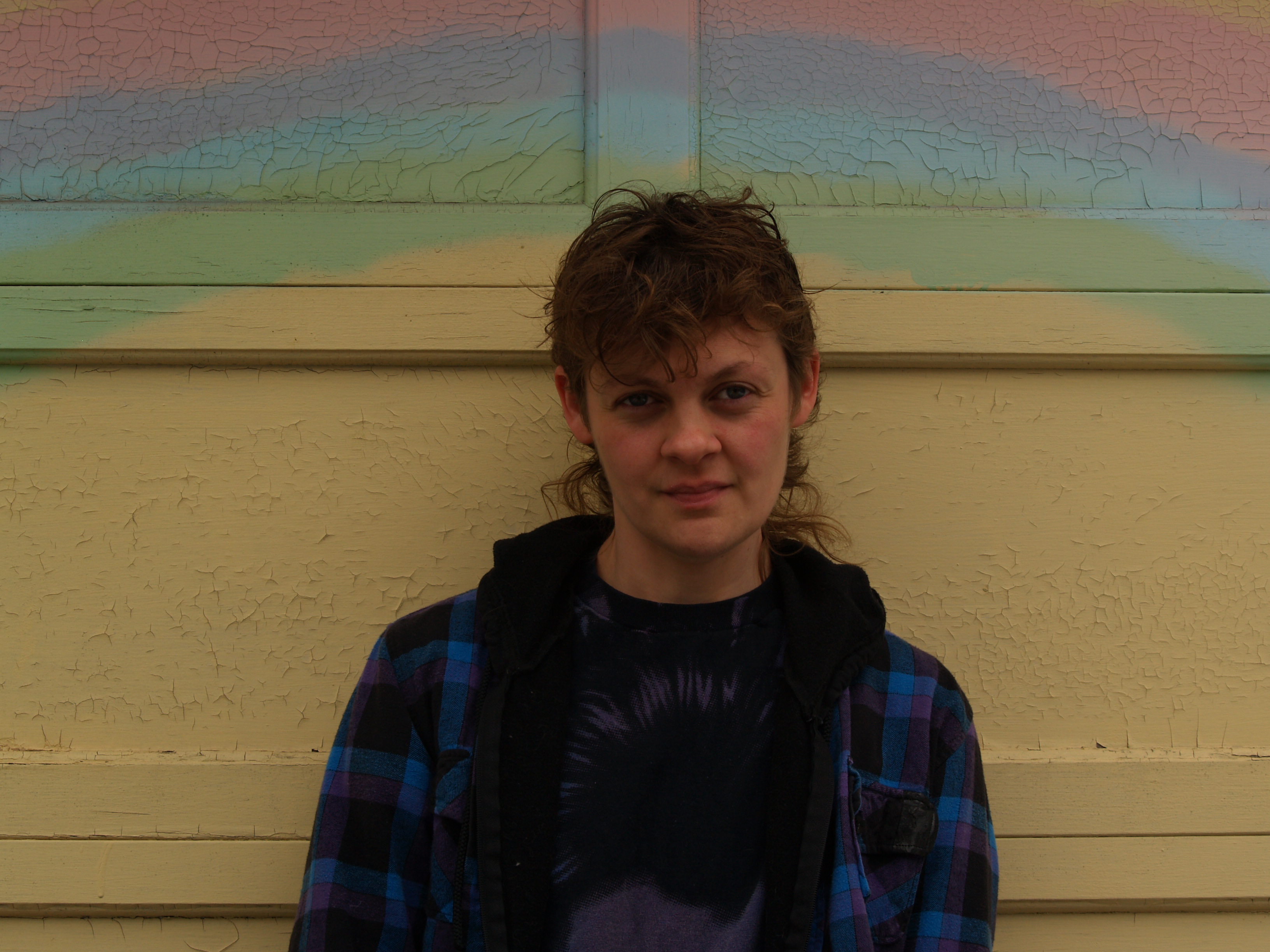
1.75 years on testosterone

one year on testosterone
To celebrate this milestone, I figured I’d post an (edited) email reply I sent an internet friend. They asked, essentially, how I finally made the decision to start testosterone. They were wondering if I felt a hormonal imbalance prior to starting T. I said,
_______________________________
I came out to the principal of my school (workplace)
Posted: March 11, 2015 Filed under: coming out | Tags: coming out, gender identity, genderqueer, janitors, lgbtq, mental health, non-binary, queer, school, trans, transgender, transition, work 20 CommentsThis blog is largely about working as a janitor and about living as a non-binary person. I’ve struggled with the chronicling-of-my-job side of it, and with melding the two aspects of my identity. Largely this is because I am not out at work. It’s hard to write about work if I feel a block. Also I’m not always sure what to share about work… I feel tentative about it.
I am out in other areas of my life – friends all use male pronouns; relatives at least know I prefer male pronouns. In new situations, I plan to let people know about male pronouns whenever I feel like I comfortably can. But work has been a challenge, in my mind.
A big part of that is, what would I be asking for, exactly? Male pronouns, and a name change down the road. What about bathrooms? What about my appearance? I won’t be looking any different, as opposed to other trans-people who transition from one gender to the other. Is this too much to ask for? And what about kids and parents? Where do they fit in? I see teachers getting on board (Maybe? One day?), but how much can I hope for it to trickle down to students and their parents? Does it matter to me that much?
Right now, this is hurting my head. BUT, a couple of weeks ago, I took a first step! I had been wanting to fill the principal in about my recent hospitalization and absence. At the time it happened, I was vague and just left it at I was hospitalized. I did want to let her know the nature of the occurrence and just touch base about where I’m at. I figured it would be a good time to also give her a heads up about my trans-identity. I didn’t plan to ask for any accommodations or change-overs at this time – just wanted to let her know.
So I waited for a good time after school when she was still in the building. I’d been psyching myself up for a few days, so the day I decided I could do it, it was definitely going to happen. It wasn’t perfect – I knew she was getting ready for a kindergarten registration event that evening, but it kinda had to be NOW! I kept it short, knowing she had other things.
I just popped in her office, said I’d like to touch base about where I’m at – she asked me how I was doing and I said, “Much better.” Which was kinda true in the moment, but not true later on. I’ve been on a roller coaster with new med adjustments and things, but I didn’t get into all of that. I just told her that the reason I went out was that due to personal stress and work stress, I could sense my thoughts getting extremely confused and disorganized. I sought out help from my therapist, and she’s the one who brought me to the hospital. I’m on new meds, for now at least (the principal asked about side effects) and seeing my therapist more often for the time being. The principal was open and supportive.
She started to wrap things up by talking about cleaning for tonight (with the event), so I knew I had to jump in with my other purpose before the moment passed. I said, “I do have another thing to bring up, about where I’m at. I wanted to let you know that I identify as transgender.” I went on to specify that most people who ID this way transition from one gender to the other, and I don’t feel that – I feel like I am in the middle. That I’ve been in this process for years, and work is the last place. That I’m on testosterone but such a low dose that my appearance won’t be changing. That I prefer male pronouns and plan to change my name at some point. She listened intently and asked what I needed. I said nothing right now, just time to maybe talk to other people within the school and come out on my own terms. Maybe at some point an email but nothing right now. Just eventually a name and pronoun change. I asked her if she had any context for knowing about trans-people, and she said yes. And that was about it. I wrapped it up really quickly and told her thank you. She said thank you to me too.
I don’t know what this means other than one tiny step. Right now everything has felt so hard, this feels like nothing. I think in time, it may feel like I opened doors up to take further steps, but as of now, it just feels like something I got out of the way.
Here’s to happier days ahead. I should be happy about this, and hopefully it will sink in later…
Being transgender while hospitalized
Posted: February 23, 2015 Filed under: coming out | Tags: Androgel, coming out, gender identity, genderqueer, hospital, hospitalization, lgbtq, medical treatment, mental health, non-binary, queer, testosterone, trans, transgender 2 CommentsI was in the hospital for 4 nights (5 days) a little over a month ago, for psychiatric reasons. Although this was a very trying time and I was in an extremely vulnerable head-space, I was mostly treated with respect and dignity (as much as seemed possible, given the conditions). In terms of my trans-status, I was treated with respect and dignity across the board.
While in the Emergency / Admittance Area, my family and friends present must have spoken behind-the-scenes, on my behalf about the fact that I am transgender, because I didn’t mention it at all at that point. My friend later told me the intake leader (don’t know his exact title) told her that he has a transgender son.
Also my partner later told me there was signage throughout the hospital about their non-discrimination policies. I found this to be accurate in the way they run things. Everything was by schedule and protocol, no special treatment and in general no immediate response to a want (like, “can I get a pencil?” “Can I get a snack” elicited a quicker response.) At times, I found the ways they were doing things to be confusing, and I wasn’t explicitly told how things are run (when mealtimes are, when med times are, what is allowed and not allowed, etc.) I just picked up that information as I went along, as best I could. Not sure why that kind of stuff was never conveyed to me, but it all did make sense in terms of treating everyone fairly.
I got the sense that not every staff member got the memo about male pronouns, but the more “important” positions definitely did, and they took the lead on that when conversing with other staff members. For example, one of the team leaders asked an overnight staff person to “open the shower area for him,” and that staff member said, “What?” and looked confused. The team leader just repeated herself and no problem arose.
I was in an extremely fuzzy, drug induced state the first 24 hours of my stay. As I started to pull out of that and notice my surroundings, I picked up on certain things. If you woke up early enough to make it to the morning meeting at 8am, you could get non-decaffeinated coffee and also information about the day! I was surprised how few people came to the meeting (it felt like one of the highlights of each day.)
On the first day I was capable of making it to the meeting, I was still very much in my head and not at all with it. An out-of-character-for-me event happened. I interrupted the team leader 1 minute into the meeting. I stood up and went to the front of the room. I said I’m new here and introduced myself. I said I’m transgender and could everyone use male pronouns? (If only all comings-out could be this easy!!!!! I feel really proud of myself for this one.) Another patient asked excitedly, “What’s transgender? That means you were born a girl, right?” He seemed ready to continue conversing at length, but another staff member made attempts to derail him and get the meeting back on track, which worked immediately. I wasn’t done with my spiel yet though. I concluded with, “And there are no knives allowed – I heard that early on!” before sitting back down.
I also chatted with another patient about my transgender identity at one point.
The first day I was there, I did not have access to Androgel, but that seemed part of protocol – it takes time to clear personal belongings including prescriptions, maybe? I did not yet have my street clothes or reading material or slippers either. The second day, the nurse brought my Androgel and seemingly played dumb with how to apply it and how much. I told her I apply 1-2 pumps daily (I apply 1 pump, but my prescription states 1-2 pumps). I told her it’s supposed to be applied to your upper arms, but I do my thighs. I told her I have to go into my bathroom (in private) to apply the gel, and she waited for me. The other times she came with it, she referred to it as a spray and also as a patch. She was vague about my dosing. She let me do my thing and then hand it back to her. Although this all felt confusing, I think it was an attempt to convey, “this is your thing and we trust that you will take care of it. We don’t care what you are doing in this regard.” It felt validating.
Although the hospital was far from a pleasant experience, and I would say there were a couple of instances while I was in the emergency department in which I was treated as less than a person with dignity, in terms of my trans-status, they got it right, every step of the way.
100th post / We just paid off our house!
Posted: February 19, 2015 Filed under: Uncategorized | Tags: adulthood, androgyny, gender identity, genderqueer, homeowning, hormone replacement therapy, lgbtq, mortgage, non-binary, trans, transgender, writing 6 CommentsThis is a 2 for 1 celebratory post – the title says it all!
I started this blog a year and a half ago, largely inspired by Micah’s blog, Neutrois Nonsense to start writing my own story. When I started testosterone, I was overly concerned with the physical changes, and I couldn’t find an answer to my question anywhere. That question: is it possible to be on T long-term, at a dose high enough to make a difference yet low enough to not induce physical changes?
The answer, I’ve found out through personal experience, is YES. Of course everyone is different, but this is a great option for non-binary people who feel more-or-less OK with their appearance yet feel like something is off, something about their world might be improvable. Testosterone could be that thing that makes a world of difference. It was for me.
To celebrate my 100th post, here’s an excerpt of some jottings-down I did before starting this blog:
“I wanna start a blog. I already have a name for it and an address on WordPress. But I have yet to make my first entry. I suppose I’m unsure of how to approach it. I want it to be attractive and interesting to others. I want it to be long lasting. I wanna keep coming up with things to say, but as of now, I can’t envision that. It’s just one step at a time though – I shouldn’t worry about mapping the entire project out…”
And that’s how it’s been. I don’t have a backlog of ideas or drafts started. I just take it week by week, and see what’s out there (or just in my head) to write about. So far this has worked out for me. There is very little pre-planning. I don’t think it’d be sustainable, personally, if there were. I am obsessive by nature, and this is one of the few things that I’m not stressing out about. That’s why it works.
Like the title suggests, I’m also celebrating having paid off our mortgage! I bought this house we live in 8 years ago, and now we own own it. Feels good! How did we do this on two working-class salaries? It wasn’t through help from anyone or an inheritance or lottery win. It was through prioritizing, saving, and strategizing.
1. We live in a city with a low cost of living: One of the reasons I like where I live is that things are affordable. I don’t make much money, but it feels like my money goes far.
2. I am a cheapskate: This is, honestly, the biggest factor in having been able to save so much, and it’s just part of my nature. I don’t tend to buy a lot of new stuff. I get clothes from thrift stores, mostly. We don’t go out to eat a whole lot – my partner mainly cooks at home. We don’t go out to bars or coffee shops all that much, unless it’s to socialize. Socializing at other peoples’ homes is so much better anyway! Coffee, tea, beer, etc. is so much cheaper in-house. You can, in fact have really high quality coffee, tea, beer, etc. at home if you avoid stopping at Dunkin’ Donuts daily.
3. We lived with housemates for years: From the time I bought the house, to just a year ago, we always lived with 2 other people. Those people changed over the years; it really helped aid in a sense of community with others, and also financially. We would have group outings and dinners once in a while. We did a holiday photo and newsletter every year. We hosted a Kraftnite every Sunday evening. I wouldn’t trade in those experiences for anything. At the same time though, it’d be so tough to go back! Now that it’s been just my partner and me for a year, I feel spoiled. It’s nice to feel like we have the house to ourselves. It helped us pay down the mortgage all that much quicker.
In addition, my partner is learning how to drive, and she just purchased a car. We are entering “adulthood” like never before, lately. I cannot wait to be a passenger in her car! (I kinda dislike driving.)

 janitorqueer